Best Roofing Materials for Hawaii's Climate
Choosing roofing materials for Hawaii requires different thinking than the mainland. The same sunshine and ocean air that make these islands paradise also create harsh conditions that can cut roof life in half. A material that lasts 30 years in Oregon might only make it 15 here.
Whether you're building new, replacing a failing roof, or researching future options, this guide breaks down how each major roofing material performs in Hawaii. We'll cover six options - from budget-friendly to premium - so you can match the right material to your home, budget, and specific conditions on Oahu or the neighbor islands.
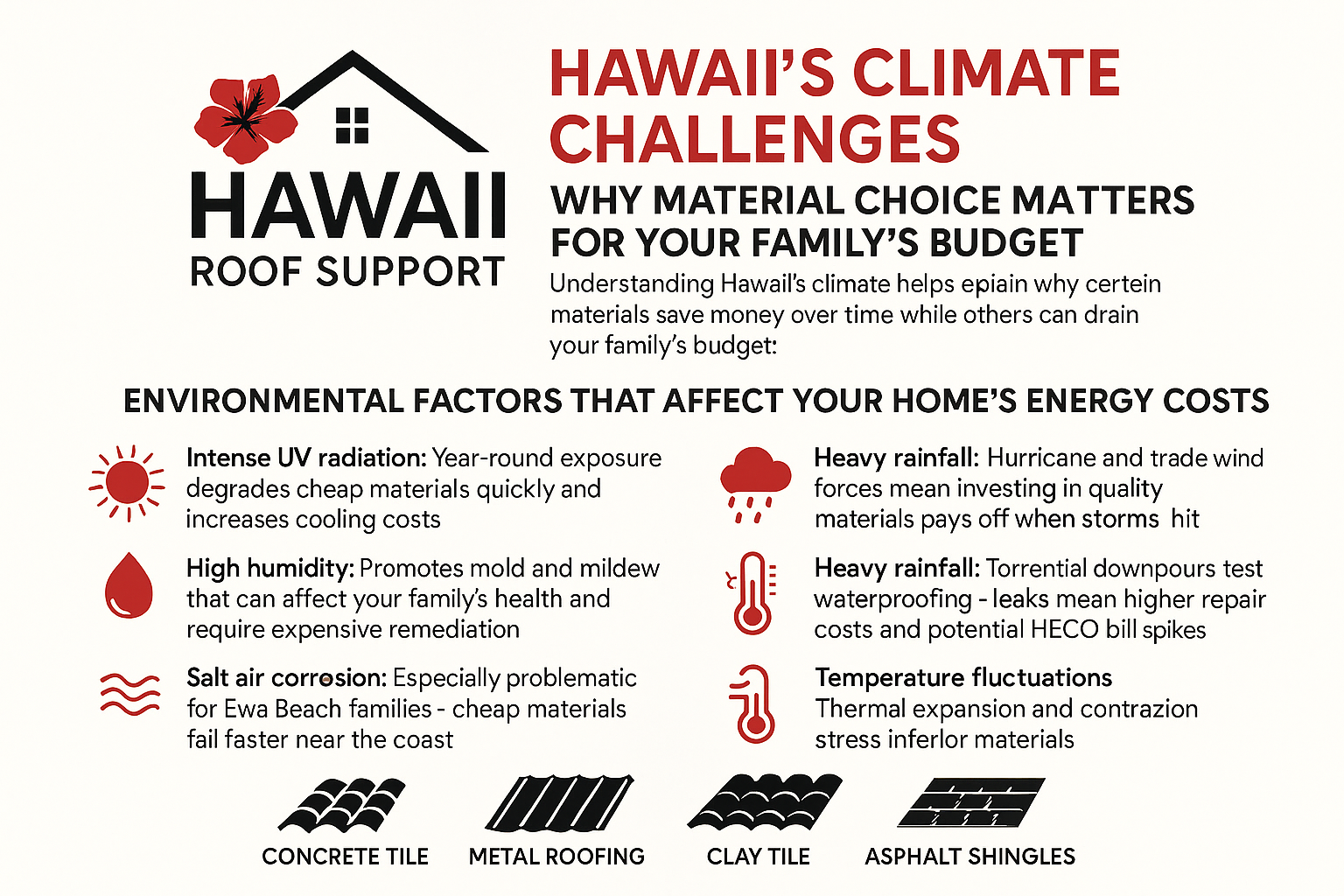
What Your Roof Faces in Hawaii
You already know the climate. Here's what it means for your roof:
UV and Heat: Closer to the equator means more intense UV that breaks down materials faster. Roof surfaces regularly hit 150°F, causing constant expansion and contraction that fatigues materials over time.
Consistent Wind: Trade winds of 10-25 mph work on roofing materials daily - lifting shingle edges, loosening fasteners. When Kona storms bring 50-60+ mph gusts, fatigued materials fail.
Salt Air: Coastal exposure corrodes metal components fast. Standard galvanized fasteners can rust within a few years, losing holding strength.
Moisture: High humidity promotes mold, mildew, and algae growth. Windward sides can see 100+ inches of rain annually.
1. Most Affordable: Asphalt Shingles
Asphalt shingles are the most popular choice in Hawaii, offering an attractive combination of affordability and availability. Every roofing supplier stocks them, every contractor installs them regularly.
Pros
- Lower upfront cost - Significantly less than metal, tile, or premium alternatives
- Wide availability - Easy to find materials and contractors, keeping prices competitive
- Variety - From basic three-tab to architectural shingles that mimic wood or slate
- Easy repairs - Damaged shingles can be replaced quickly and inexpensively
- Insurance familiarity - Adjusters understand these systems; claims processing is straightforward
Cons
- Shorter Hawaii lifespan - Shingles rated 25-30 years on the mainland last only 15-20 years here due to UV exposure
- Heat absorption - Dark shingles transfer heat into your attic, making AC work harder
- Wind vulnerability - Basic three-tab shingles are more prone to damage than heavier architectural options
- Algae growth - Dark streaks common, especially on north-facing or shaded slopes
Expected Lifespan
Plan on 15-20 years for quality architectural shingles. Basic three-tab may only last 10-15 years. Premium shingles from GAF, CertainTeed, or Owens Corning outperform economy options.
2. Most Durable: Metal Roofing
Metal roofing has grown significantly in popularity across Hawaii over the past two decades. It offers exceptional durability, excellent wind resistance, and a lifespan that often exceeds the life of the home itself.
Pros
- Exceptional wind resistance - Properly installed, can withstand 140+ mph winds; may qualify for insurance discounts
- Long lifespan - 40-70 years, potentially lasting the rest of your time in the home
- Energy efficiency - Reflects solar radiation, reducing heat transfer and cooling costs
- Fire resistant - Non-combustible, valuable in drier areas
- Low maintenance - No shingles to replace, no granules to lose, nothing to rot
- Environmentally friendly - Contains recycled content and is fully recyclable
Cons
- Higher upfront cost - Expect 2-3 times more than asphalt
- Coastal corrosion concerns - Standard steel rusts quickly in salt air; requires aluminum or marine-grade coatings
- Rain noise - Creates more sound than asphalt or tile; proper underlayment reduces this
- Denting - Can dent from falling branches or coconuts (cosmetic, not functional)
- Fewer installers - Requires different techniques; look for specialists
Best for Coastal Areas
For oceanfront homes: Aluminum is naturally corrosion-resistant. If choosing steel, look for Galvalume coatings and PVDF (Kynar) paint finishes. Stainless steel fasteners are essential.
3. Longest Lasting: Concrete and Clay Tile
Tile roofing has a long history in Hawaii, dating back to early Asian and Mediterranean architectural influences. Both concrete and clay tile remain popular for traditional, Spanish, or tropical styles.
Pros
- Exceptional longevity - 50-100 years; clay tiles can outlast the structure they protect
- Outstanding heat resistance - Thermal mass and air gap keep homes noticeably cooler
- Excellent wind resistance - Weight helps tiles stay put during storms
- Fire resistant - Non-combustible
- Low maintenance - Won't rot, rust, or degrade from UV
- Premium aesthetic - Adds curb appeal and property value
Cons
- Heavy - Weighs 5-10 times more than asphalt; many homes need structural reinforcement
- High upfront cost - 3-4 times more than asphalt, including potential structural modifications
- Fragile tiles - Individual tiles can crack from impacts or improper walking
- Specialized installation - Fewer qualified contractors; improper installation leads to leaks
- Complex repairs - Matching older tiles can be challenging
Structural Considerations
Before considering tile, have your structure evaluated by a qualified professional. For existing homes, you may need reinforced rafters or other modifications. Concrete tiles are generally lighter than clay but still significantly heavier than alternatives.
4. Best for Flat Sections: TPO, EPDM, and Modified Bitumen
Many Hawaii homes feature flat or low-slope roof sections - lanais, additions, carports. These require different materials because they don't shed water as readily.
When to Use
Flat roofs are common in Hawaii residential architecture for covered lanais, room additions, and contemporary styles. The key challenge is water management - flat roofs hold water longer, increasing leak risk.
Comparing Options
TPO (Thermoplastic Polyolefin) - Most popular choice. White/light-colored for heat reflection. Heat-welded seams create strong bonds. 15-25 year lifespan.
EPDM (Synthetic Rubber) - Typically black (more heat absorption). Very flexible, handles building movement well. Glued seams are more susceptible to failure. 15-20 year lifespan.
Modified Bitumen - Asphalt reinforced with plastic or rubber. Good waterproofing, handles foot traffic well. 10-20 year lifespan.
For Hawaii's climate, white TPO often makes the most sense - heat reflection reduces cooling costs and welded seams provide reliability.
5. Best of Both Worlds: Synthetic and Composite Roofing
These engineered products combine the best properties of various materials while minimizing drawbacks.
What's Available
Synthetic slate and shake - Made from rubber, plastic, or fiber cement. Mimic natural appearance with better durability and lower weight. Resist fire, impact, and UV better than natural materials.
Stone-coated steel - Steel panels coated with stone granules bonded in acrylic. Metal's wind resistance and longevity with traditional tile or shake appearance.
Advantages
- Cost less than natural slate or cedar while lasting longer than asphalt
- Lighter than tile, often requiring no structural modifications
- Generally better wind resistance than asphalt
The Catch
Limited track record. While lab testing is promising, we don't have 50 years of Hawaii installations to evaluate. Some products that tested well have disappointed in real-world applications. Research specific products carefully and look for installations at least 10-15 years old.
6. Why It's Rare Here: Wood Shakes
Wood shakes and shingles are common in some mainland markets but rarely used in Hawaii - for good reasons.
Fire risk - Wood is combustible; many jurisdictions restrict or prohibit it due to brush fire concerns.
Moisture and rot - Hawaii's consistent humidity accelerates deterioration even in naturally rot-resistant cedar.
Termite exposure - Hawaii has severe termite pressure. Using wood for roofing increases risk significantly.
Short lifespan - A cedar roof lasting 30 years in a drier climate may only last 10-15 years here.
If you love the wood look, consider synthetic alternatives that mimic the appearance without the drawbacks.
How to Choose the Right Material
Budget Reality Check
- Asphalt: $15,000-$30,000 for most Hawaii homes
- Metal: $25,000-$50,000+
- Tile: $50,000-$100,000+ (including structural modifications)
If budget is tight, quality asphalt properly installed beats cheap alternatives in any material. Also consider long-term economics - metal costing twice as much but lasting three times as long delivers better lifetime value.
Other Factors
- Architectural style and HOA requirements - Check association rules before deciding
- Insurance - Some materials qualify for premium discounts; contact your insurer first
- Solar compatibility - Metal is excellent (clamps attach without penetrating the surface); tile presents challenges and costs more to install around
Frequently Asked Questions
What is the best roofing material for Hawaii?No single best for every situation. Metal offers the best durability and wind resistance for those who can afford it. Quality asphalt remains solid for budget-conscious homeowners. Tile works well for certain styles when structural support exists.
How long do roofs last in Hawaii?Asphalt: 15-20 years. Metal: 40-70 years. Tile: 50+ years. Hawaii's UV and wind shorten all lifespans compared to mainland.
Is metal roofing worth the extra cost?For many homeowners, yes. Better lifetime value if you plan to stay long-term, plus wind resistance, energy efficiency, and low maintenance.
What materials resist hurricanes best?Metal with proper fastening (140+ mph). Quality architectural shingles (110-130 mph). All materials require proper installation to achieve rated resistance.
Should I get a lighter or darker colored roof?Lighter colors perform better - they reflect solar radiation and reduce cooling costs significantly over the roof's lifespan.
Do I need special materials for a coastal home?Yes. Aluminum or marine-grade coated steel for metal roofing. Stainless steel fasteners throughout. Standard galvanized products rust quickly.
Conclusion
For most Hawaii homeowners, the practical choice comes down to asphalt or metal. Asphalt offers lower upfront cost and easy availability - 15-20 years of solid performance at a price most budgets can handle. Metal costs more initially but delivers superior long-term value through exceptional durability, wind resistance, and energy efficiency.
Tile remains excellent for homes with appropriate style and structural support. Its longevity and aesthetic appeal justify the premium for homeowners who value these qualities.
Whatever material you choose, installation quality matters as much as material selection. Work with experienced contractors who understand Hawaii's specific challenges.
Oahu Roof Support helps homeowners navigate material selection and find qualified contractors. Whether you're replacing storm-damaged roofing or researching future options, we provide honest guidance based on what actually works in Hawaii conditions.
Questions about materials for your home? Contact Oahu Roof Support today.