Why Hawaii Is Especially Hard on Roofs
Before we dive into the 9 causes, you need to understand what your roof is up against every single day:
- Relentless UV radiation breaks down rubber and synthetic materials, causing them to crack and harden
- Trade winds and storm events create uplift pressure that loosens shingles and breaks seals
- Salt air and humidity accelerate corrosion on metal components and prevent proper drying
This combination means roofing components in Hawaii fail faster than on the mainland, often all around the same time.
The 9 Surprising Causes of Roof Leaks in Hawaii
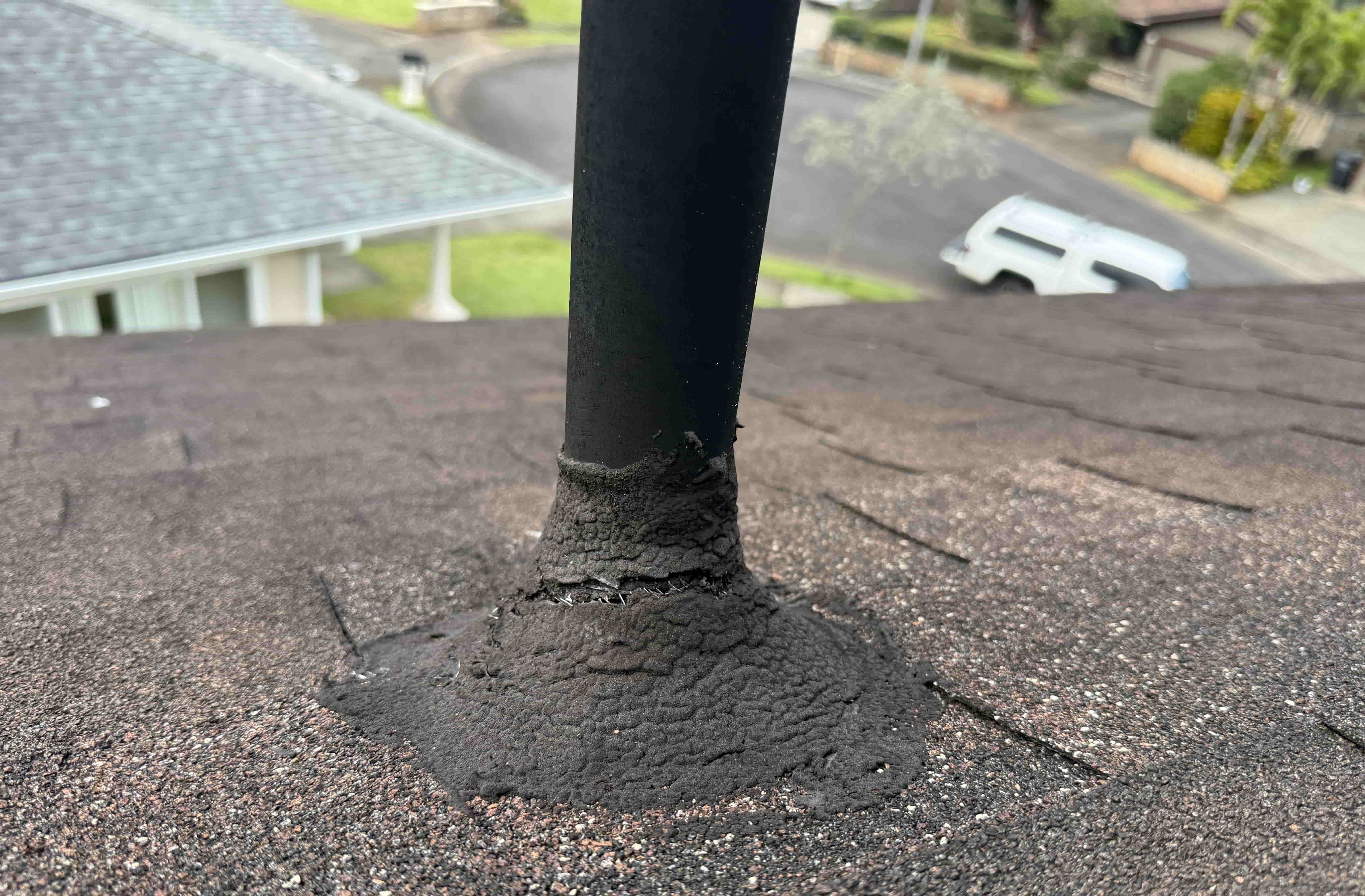
1. Failing Pipe Jacks and Boots
The surprise: Those small rubber collars around the pipes sticking through your roof are one of the most common leak sources in Hawaii, not your shingles.
Every home has plumbing vent pipes that extend through the roof. The rubber or neoprene boots sealing around them seem insignificant, but after 8-12 years of Hawaii's intense UV exposure, they crack, harden, and lose their seal. Water then runs straight down the pipe and into your home.
What to watch for: Cracked, brittle, or visibly deteriorated rubber around any pipe on your roof.
The fix: Deteriorating pipe boots need to be replaced with new ones, preferably upgraded versions with metal or UV-resistant materials designed for Hawaii's climate. This is a relatively inexpensive repair ($100-200 per boot) that prevents thousands in water damage. If your roof is over 10 years old, all pipe boots should be evaluated and likely replaced proactively.
2. Solar Panel and Water Heater Penetrations
The surprise: Your money-saving solar system could be costing you thousands in water damage.
Hawaii has one of the highest solar adoption rates in the nation. But every mounting bracket, rack, and connection point creates a penetration in your roof, sometimes dozens per system. Each one requires proper sealing, and those seals degrade over time just like everything else under our sun.
What to watch for: Staining or moisture near interior ceilings below solar equipment, especially after heavy rain.
The fix: All mounting penetrations need inspection by a roofing professional (not just a solar company) with any compromised areas resealed using high-quality, UV-resistant sealant. For older installations, mounts may need to be removed section by section to inspect the underlying roof and flashing. Some systems require upgraded flashing kits installed beneath the mounts for long-term protection.
3. Damaged or Deteriorating Vents
The surprise: Your bathroom exhaust fan might be the reason your ceiling is stained.
Bathroom vents, kitchen vents, attic ventilation, and dryer vents all pass through your roof. The boots and housings around these penetrations experience the same UV degradation as pipe jacks. Plastic housings crack, screens clog with debris, and seals fail, all without you noticing from ground level.
What to watch for: Water stains near bathrooms, kitchens, or laundry areas that appear after rain.
The fix: Cracked vent housings and deteriorated boots need replacement. Clogged screens should be cleaned and airflow verified. For bathroom and kitchen vents, damper flaps need to be checked since stuck-open dampers allow rain to enter directly. Metal vent housings are preferable where possible, as they withstand UV exposure better than plastic.
4. Old Seals and Cracked Caulking
The surprise: Dried-out caulk you can't even see is letting water pour into your home.
Throughout your roof, various seals and caulking protect vulnerable points around flashing, at penetrations, and where accessories meet roofing materials. Hawaii's intense sun causes these materials to dry out, shrink, and crack faster than anywhere else. What was once a flexible, watertight seal becomes a brittle failure point.
What to watch for: Visible cracking or gaps in any sealant on your roof, especially around edges and penetrations.
The fix: Old, failed caulking needs to be removed completely (not layered over) and replaced with fresh, high-quality polyurethane or silicone sealant rated for UV exposure and roofing applications. This should be part of regular roof maintenance every 3-5 years in Hawaii. A thorough inspection identifies all sealed areas and addresses them systematically rather than waiting for leaks to appear.
5. Failed Patches From Previous Repairs
The surprise: That "fixed" leak from years ago? It's probably leaking again.
Previous repairs, whether professional or DIY, don't always hold up. Improper materials, poor technique, or simply time can cause patches to fail. Quick fixes using roofing cement are especially problematic in Hawaii's harsh conditions, often failing within just a few years.
What to watch for: Recurring leaks in the same location, or water stains near areas you know were previously repaired.
The fix: Repeated patching rarely solves the problem. A proper assessment determines whether the underlying issue was ever correctly addressed. Often this means removing the failed repair material entirely, inspecting the roof deck for damage, and installing a proper repair using correct materials and techniques. For repeatedly problematic areas, replacing an entire roof section may be more cost-effective than endless repairs.
6. Wind-Lifted and Damaged Shingles
The surprise: Your shingles can be damaged without a single one blowing off.
Wind doesn't need to be hurricane-force to cause problems. Even moderate trade winds create uplift pressure that breaks the adhesive bonds between shingles. Once that bond fails, the shingle edge lifts during wind events, allowing water underneath. You might not see missing shingles, but cracked, creased, or lifted ones are quietly letting water in.
What to watch for: Shingles that appear raised, curled at edges, or have visible cracks, especially after strong wind events.
The fix: Isolated damage can be addressed by resealing or replacing individual shingles. However, if multiple shingles across your roof have lost their seal, spot repairs become a game of whack-a-mole. A professional assessment determines overall condition since widespread bond failure on an older roof often means it's time for replacement. After significant wind events, any damage should be documented with photos for potential insurance claims.
7. Gaps and Failures in Flashing
The surprise: The metal pieces you've probably never noticed are critical to keeping water out.
Flashing is the metal material installed at roof transitions, edges, and penetrations. Wind can lift and bend it, break its seals, or create gaps at corners. Common problem areas include chimneys, skylights, dormers, wall intersections, and roof edges. Improperly installed flashing can look fine while failing to keep water out.
What to watch for: Visible gaps, rust, lifted edges, or deteriorated sealant around any metal flashing on your roof.
The fix: Minor gaps can be resealed with appropriate roofing sealant. Bent or lifted flashing may be resecured if the material is still in good condition. However, rusted, corroded, or improperly installed flashing typically needs full replacement. This requires removing surrounding roofing materials, installing new flashing correctly, and reintegrating it with the roofing system.
8. Transition Areas Where Different Materials Meet
The surprise: Where your roof sections connect is where leaks love to start.
Many Hawaii homes have roofs with multiple sections, like a sloped shingle roof meeting a flat section over a garage. These transition zones are prime leak locations because different materials expand, contract, and waterproof differently. Age differences between roof sections make this even worse.
What to watch for: Water stains near additions, garage connections, or anywhere your roof changes material or angle.
The fix: Transition areas require specialized flashing and sealing techniques. A proper repair involves ensuring adequate overlap between materials, installing appropriate transition flashing, and using compatible sealants. If the transition was never done correctly initially, it may need to be rebuilt properly. For flat-to-sloped transitions, the flat roof membrane must extend far enough up the slope and be securely terminated under the shingles.
9. "Roof Leaks" That Aren't From Your Roof At All
The surprise: That ceiling stain might have nothing to do with your roof.
Not every water stain comes from above. Water entering around windows or through exterior walls can travel along framing and drip onto your ceiling far from the entry point. Leaking pipes in your attic, condensation from AC lines, and bathroom fixture problems can all mimic roof leaks.
What to watch for: Leaks that occur without rain, appear near exterior walls or windows, or have a consistent drip pattern regardless of weather.
The fix: The source needs to be correctly identified before any money is spent on roof repairs. Window caulking, weatherstripping, exterior wall penetrations, and plumbing or AC lines in the attic all need evaluation. If the leak only happens during wind-driven rain from a certain direction, windows or walls are likely suspects. For AC condensation issues, drain lines need to be clear and ductwork insulation intact. A professional inspection determines whether the solution requires a roofer, plumber, or window contractor.
How to Find the Source of a Roof Leak
Water doesn't always drip straight down. It travels along rafters, runs down pipes, and follows unexpected paths. Here's how to track it:
- Note the stain's location relative to roof features above it (vents, pipes, edges, transitions)
- Inspect from the attic during daylight and look for light coming through or water stains on the underside of the roof deck
- Follow staining upstream along rafters toward the roof surface
- Observe during active rain to trace water paths (with caution)
- Call a professional for difficult leaks since experienced roofers use water testing and thermal imaging to pinpoint elusive problems
Preventing Roof Leaks Before They Start
- Get professional inspections every 2-3 years (annually if your roof is over 15 years old)
- Clear debris from valleys and around penetrations where moisture gets trapped
- Fix small problems immediately since a $150 pipe boot replacement prevents thousands in water damage
- Inspect after major weather events for new or accelerated damage
- Include solar systems in maintenance because those penetrations need attention too
When to Call a Professional
- Active leaking, visible damage, or ceiling water stains
- Roof over 15 years old without recent inspection
- Any discomfort working at heights
- Unable to identify where a leak is coming from
Frequently Asked Questions
What is the most common cause of roof leaks in Hawaii?Failing pipe jacks and boots are among the most common. After 8-12 years of UV exposure, the rubber cracks and fails. Other frequent causes include solar penetrations, deteriorating vents, and cracked caulking.
Can solar panels cause roof leaks?Yes. Each mounting bracket creates a penetration that requires proper sealing, and those seals can fail over time.
How often should I have my roof inspected in Hawaii?Every 2-3 years, or annually if your roof is over 15 years old. Hawaii's climate accelerates wear on all roofing components.
Why does my roof only leak during certain rain conditions?This often indicates problems with flashing, window seals, or areas where wind-driven rain pushes water under materials.
How long do pipe boots last in Hawaii?Typically 8-12 years before UV exposure causes cracking. If your roof is over 10 years old, pipe boots should be inspected and likely replaced preventively.
Protect Your Home Before the Next Rain
Most roof leaks in Hawaii are preventable. The key is catching small problems before they turn into water damage, mold, and expensive repairs.
At Oahu Roof Support, we specialize in thorough roof inspections that identify every vulnerable point on your roof, from aging pipe boots and cracked caulking to failing flashing and compromised solar penetrations. We serve homeowners across Mililani, Ewa Beach, Pearl City, Kapolei, and all of Oahu.
Don't wait for water stains to appear on your ceiling.
Schedule Your Free Roof Inspection Today!
Call us or fill out the form below to have one of our local roofing experts evaluate your roof and give you honest answers about its condition. No pressure, no mainland contractors, just straightforward guidance from people who understand Hawaii roofs.