Why Attic Ventilation Matters in Hawaii
Hawaii's tropical climate creates unique challenges for attic ventilation. High humidity, intense sun, and warm temperatures year-round mean your attic can become a breeding ground for moisture problems, mold growth, and premature roof failure if ventilation isn't working properly.
When you're searching for a roofer near me to fix a vent problem, you need someone who understands Hawaii's specific conditions. Mainland ventilation standards don't always apply here, and improper repairs can make problems worse.
Heat Buildup: On sunny days, an poorly ventilated attic can reach temperatures of 150 degrees or higher. That extreme heat radiates down into your living space, forcing your AC to work overtime. It also bakes your roof shingles from below, dramatically shortening their lifespan. Proper ventilation can reduce attic temperatures by 20-40 degrees.
Moisture and Humidity: Hawaii's humid air carries moisture into your attic through every gap and opening. Without adequate ventilation to move that moist air out, condensation forms on rafters, insulation, and roof decking. Over time, this moisture leads to wood rot, mold growth, and structural damage that can cost thousands to repair.
Mold Prevention: Mold thrives in warm, humid, poorly ventilated spaces. An Oahu attic with failed vents is the perfect mold incubator. Once mold takes hold, it spreads quickly and can affect your indoor air quality and your family's health. Proper ventilation is your first line of defense.
Roof Lifespan: Shingles are designed to release heat from above, not absorb it from below. A superheated attic cooks your shingles from the underside, causing premature aging, curling, and granule loss. Proper ventilation can add years to your roof's life and protect your warranty coverage.
Energy Efficiency: When your attic stays cooler, your whole house stays cooler. Homeowners with properly ventilated attics often see noticeable reductions in their HECO bills, especially during summer months. The cost of vent repairs typically pays for itself in energy savings.
Types of Attic Vents We Repair and Install
Different homes need different ventilation solutions. We work with all types of attic vents and can repair, replace, or upgrade your system based on your home's specific needs:
Ridge Vents: Ridge vents run along the peak of your roof, allowing hot air to escape at the highest point where it naturally collects. When properly installed with adequate intake vents, ridge vents provide continuous ventilation across your entire attic. We repair damaged ridge vent caps, reseal failed connections, and replace deteriorated vent material. Ridge vents are often the most effective ventilation option for Hawaii homes because they work with natural convection.
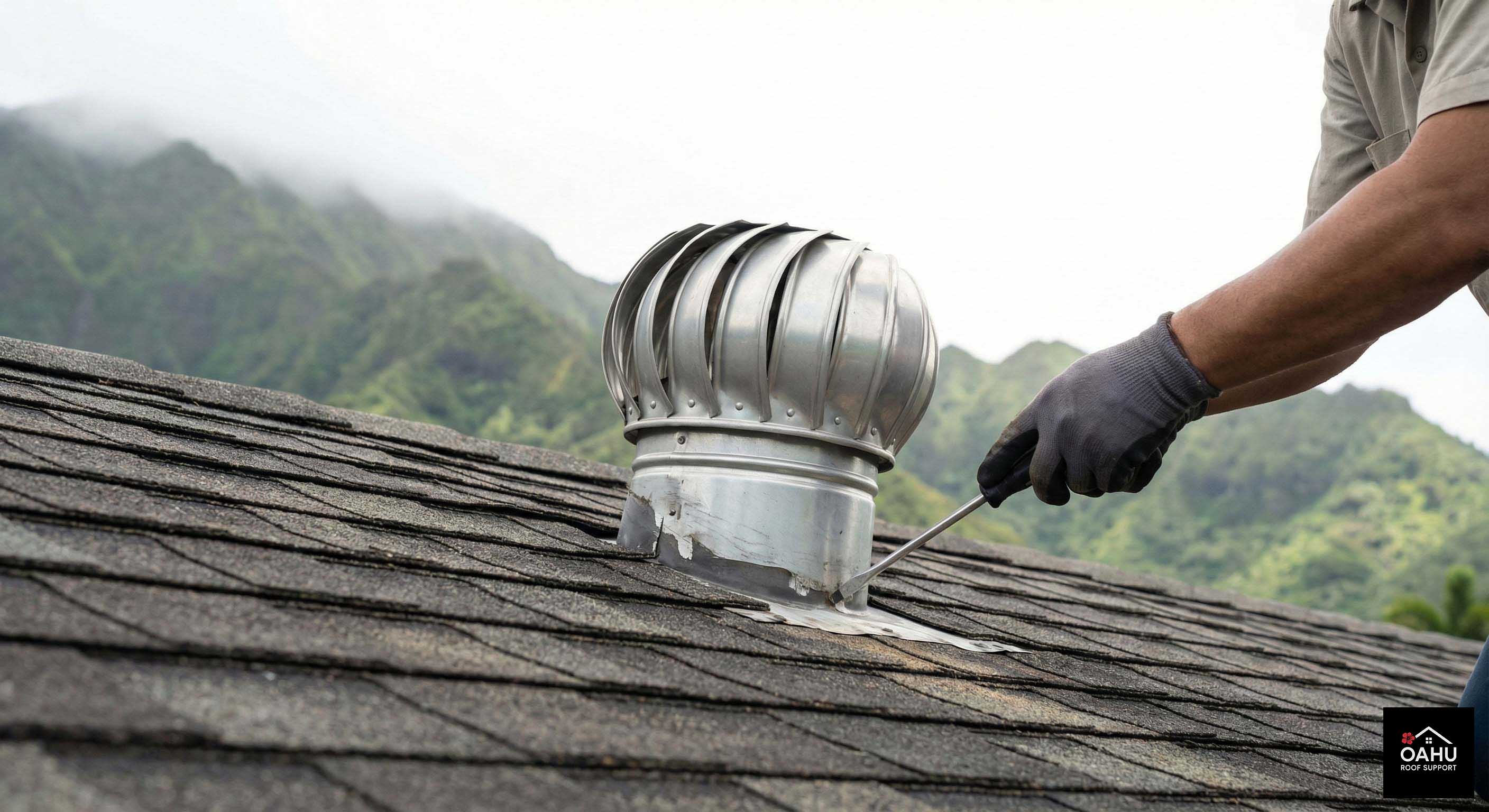
Turbine Vents (Whirlybirds): Turbine vents use wind power to actively pull hot air out of your attic. They're common on older Oahu homes and can move significant air volume when working properly. However, turbines have moving parts that wear out over time. We repair stuck or squeaky turbines, replace worn bearings, and install new units when repairs aren't cost-effective. In Hawaii's consistent trade winds, a working turbine vent can be highly effective.
Static Box Vents: Box vents (also called louver vents or turtle vents) are simple, no-moving-parts vents installed near the roof ridge. They rely on natural convection to release hot air. We repair damaged flashing around box vents, reseal failed connections, and replace rusted or deteriorated units. Multiple box vents are typically needed to provide adequate ventilation.
Power Vents: Electric-powered attic fans actively pull hot air out of your attic. They're effective but require electricity to operate. We repair failed motors, replace worn units, and can upgrade older power vents to more efficient solar-powered models. Solar attic fans make particular sense in Hawaii where sunshine is abundant and electricity costs are high.
Soffit Vents: Soffit vents provide intake air at the lowest point of your attic, under the roof overhang. Without adequate intake, exhaust vents can't work effectively. We clear blocked soffit vents, repair damaged screens, and install additional intake ventilation when needed. Many Hawaii homes have inadequate soffit ventilation, which limits the effectiveness of their exhaust vents.
Gable Vents: Gable vents are installed in the triangular wall section at the end of a pitched roof. They can serve as both intake and exhaust depending on wind direction. We repair damaged gable vent frames, replace deteriorated screens and louvers, and ensure proper sealing to prevent water intrusion during heavy rain.
Common Attic Vent Problems in Hawaii
Hawaii's environment is tough on roof vents. Salt air, UV exposure, humidity, and occasional storms all take their toll. Here are the problems we see most often:
Failed Flashing and Seals: Every roof vent is a penetration through your roof surface, and every penetration is a potential leak point. The flashing and sealants around vents deteriorate over time, especially in Hawaii's intense UV environment. Failed seals allow water intrusion during rain, leading to interior damage and mold growth. We reseal and reflash vent penetrations to restore watertight integrity.
Storm Damage: High winds can lift vent caps, crack plastic components, and tear flashing loose. Even if a vent looks intact from the ground, storm damage may have compromised its seal. We inspect for storm damage and document findings for insurance claims when applicable.
Rust and Corrosion: Salt air accelerates corrosion on metal vent components. Rusted turbine vents stop spinning, corroded flashing develops holes, and degraded fasteners lose their grip. We replace corroded components with materials rated for coastal environments.
Blocked or Restricted Vents: Debris, bird nests, insulation, and even paint can block vent openings and restrict airflow. A blocked vent is worse than no vent because it creates a false sense of security while providing no actual ventilation. We clear obstructions and install screens to prevent future blockage.
Improper Installation: Many vent problems trace back to improper original installation. Vents installed without adequate flashing, sealed with the wrong products, or positioned incorrectly will fail prematurely. We correct installation defects and bring vents up to proper standards.
Inadequate Ventilation: Some homes simply don't have enough vents to adequately ventilate their attic space. Building codes have changed over the years, and older homes may have been built with ventilation that was considered adequate at the time but doesn't meet current standards. We assess your total ventilation needs and recommend upgrades when necessary.
Signs Your Attic Vents Need Repair
How do you know if your attic vents are failing? Watch for these warning signs:
Hot Upstairs Rooms: If your second floor or rooms directly below the attic are noticeably hotter than the rest of your house, inadequate attic ventilation may be the cause. Your AC shouldn't have to fight against a superheated attic.
High Energy Bills: A sudden increase in your HECO bill, especially during warmer months, can indicate ventilation problems. When your attic can't release heat, your AC runs longer and harder to compensate.
Musty Odors: A musty smell in your home, especially noticeable in closets or rooms near the attic, often indicates moisture problems and potential mold growth in the attic space.
Visible Mold or Mildew: If you see mold on attic surfaces, ceiling corners, or around light fixtures, poor ventilation is likely contributing to the moisture conditions mold needs to grow.
Peeling Paint or Wallpaper: Moisture from a poorly ventilated attic can migrate into your living space, causing paint to peel and wallpaper to bubble, especially on ceilings and upper walls.
Ice Dams: While rare in Hawaii, homes at higher elevations can experience condensation issues that mimic ice dam symptoms. Water staining along roof edges or in soffits can indicate ventilation problems.
Roof Shingle Deterioration: Premature shingle aging, curling, or granule loss can indicate an overheated attic cooking your shingles from below. If your roof looks older than it should, ventilation may be the culprit.
Water Stains on Ceilings: Water stains that appear without obvious roof leaks may indicate condensation problems in the attic caused by inadequate ventilation.
Squeaking or Grinding Sounds: Turbine vents with worn bearings make noise when they spin. A squeaky whirlybird is telling you it needs attention before it fails completely.
Attic Vent Services Across All of Oahu
Whether you need emergency vent repair or a complete ventilation upgrade, we serve homeowners across the entire island:
Mililani and Mililani Mauka: Central Oahu's elevation and exposure to trade winds make proper ventilation essential. Many Mililani homes built in the 1970s and 1980s have original turbine vents that are past their service life. We help Mililani homeowners upgrade to modern ventilation systems that work with the area's consistent winds.
Ewa Beach and Kapolei: West Oahu's intense afternoon sun creates extreme attic heat. Homes in Ewa Beach and Kapolei benefit significantly from upgraded ventilation, and many homeowners see immediate improvements in comfort and energy bills after vent repairs. We recommend high-capacity ventilation solutions for these hot, sunny communities.
Pearl City and Waipahu: Older housing stock in Pearl City and Waipahu often has outdated or inadequate ventilation. Homes built before modern building codes may have minimal venting that doesn't meet current standards. We assess existing ventilation and recommend cost-effective upgrades to improve comfort and protect roof longevity.
North Shore (Haleiwa, Kahuku, Laie): Salt air exposure accelerates corrosion on metal vent components. North Shore homes need ventilation equipment rated for coastal environments and more frequent inspection to catch corrosion before it causes failures. We use corrosion-resistant materials and installation methods suited to the coastal environment.
Kaneohe and Kailua: The Windward side's higher humidity makes proper ventilation even more critical for moisture control. Homes in Kaneohe and Kailua are particularly susceptible to mold growth in poorly ventilated attics. We prioritize moisture management and ensure adequate airflow to prevent condensation and mold.
Waianae Coast: Extreme sun exposure means Waianae attics get exceptionally hot. Combined with the area's lower rainfall, dust and debris can accumulate in vents and restrict airflow. We clear blocked vents, repair sun-damaged components, and recommend ventilation solutions that handle the intense heat.
Honolulu and Hawaii Kai: Varied microclimates across Honolulu mean ventilation needs differ from neighborhood to neighborhood. A home in humid Manoa has different requirements than a home in sunny Hawaii Kai. We assess your specific conditions and recommend ventilation solutions matched to your location.
Insurance Coverage for Vent Damage
Storm damage to attic vents may be covered by your homeowners insurance. If high winds, falling debris, or other covered events damaged your vents, you may be able to file a claim rather than paying out of pocket.
What's Typically Covered: Wind damage that lifts or breaks vent components, debris impacts that crack or dent vents, and water damage resulting from storm-damaged vents are generally covered by standard homeowners policies. The key is documenting that damage resulted from a specific weather event rather than gradual wear and deterioration.
Our Documentation Process: We inspect your vents and document any storm-related damage with photos and detailed notes. This documentation supports your insurance claim and helps adjusters understand what repairs are needed. We can identify the difference between storm damage and normal wear, ensuring your claim includes only legitimate covered damage.
Claim Filing Assistance: We help you file your claim correctly and can meet with your insurance adjuster to walk them through our findings. Having a knowledgeable advocate present ensures vent damage doesn't get overlooked as part of a larger roof claim.
Beyond Just Vents: Vent damage often occurs alongside other roof damage during storms. If we find damaged vents, we also inspect for wind damage to shingles, flashing, and other components. A comprehensive inspection may reveal damage that qualifies for more extensive repairs or even full roof replacement under your policy.
Working With Your Insurance Company
We work with all major insurance carriers serving Oahu homeowners:
State Farm. Allstate. FICOH (First Insurance Company of Hawaii). Island Insurance. DTRIC. And all other Hawaii homeowners insurance providers.
Each insurance company has different documentation requirements and claim processes. Our experience working with these carriers means we know what they're looking for and how to present your claim for the best chance of approval.
Understanding Your Coverage: Vent repairs alone may not exceed your deductible, making a standalone claim impractical. However, when vent damage is part of larger storm damage to your roof, including it in a comprehensive claim makes sense. We help you understand when filing a claim makes financial sense and when paying out of pocket is the better option.
The Vent Repair Process
Understanding what happens during a vent repair helps you know what to expect:
Inspection: We start with a thorough inspection of your existing ventilation system, including all exhaust vents, intake vents, and attic conditions. We check for damage, blockages, improper installation, and inadequate ventilation capacity. You receive a detailed report of our findings.
Recommendations: Based on our inspection, we recommend specific repairs or upgrades. We explain what's causing your problems and how our proposed solutions address them. If multiple options exist, we present them with honest assessments of cost versus benefit.
Repair Work: Our licensed contractors perform repairs according to manufacturer specifications and building codes. For flashing repairs, we use high-quality sealants rated for Hawaii's UV exposure. For component replacement, we use materials suited to your specific environment, whether coastal, humid, or high-heat.
Ventilation Balancing: Effective attic ventilation requires balance between intake and exhaust. If your intake is inadequate, adding more exhaust vents won't solve your problem. We ensure your ventilation system works as a complete system, not just individual components.
Final Inspection: After repairs are complete, we verify that vents are properly sealed, securely fastened, and functioning correctly. You receive documentation of work performed and recommendations for ongoing maintenance.
Most vent repairs are completed in a few hours to a single day, depending on the scope of work.
Ventilation Upgrades and Improvements
Sometimes repair isn't enough. If your home has inadequate ventilation or outdated vent technology, an upgrade may provide better long-term value than patching old equipment:
Solar Attic Fans: Solar-powered attic fans provide active ventilation without adding to your electric bill. They're particularly effective in Hawaii where sunshine is abundant. We install high-quality solar fans that operate automatically when the sun shines, pulling hot air out of your attic during the hottest parts of the day.
Ridge Vent Conversion: If your home has multiple box vents or turbines, converting to a continuous ridge vent system can improve ventilation and reduce potential leak points. Ridge vents provide more uniform ventilation and have no moving parts to fail.
Intake Ventilation Addition: Many Hawaii homes have inadequate soffit ventilation. Adding intake vents dramatically improves the effectiveness of your existing exhaust vents and creates proper airflow through your attic space.
Powered Ventilation: For homes with complex roof designs or limited passive ventilation options, powered attic fans may be the best solution. We can install electric or solar-powered fans sized appropriately for your attic volume.
Why Choose Oahu Roof Support for Vent Repairs
We're not a roofing contractor. We're your local advocate who ensures you get the best outcome for your attic ventilation needs:
Free Inspections: No obligation inspections for homeowners concerned about ventilation problems or wanting to check for storm damage. We document everything and give you honest advice about your options.
Insurance Expertise: We know how to document vent damage for insurance claims and can identify when vent problems are part of larger roof damage that should be claimed together. Getting your claim right the first time saves time and frustration.
Licensed Contractor Network: Every contractor we work with is licensed, insured, and experienced with Hawaii's specific ventilation challenges. They understand local conditions and use appropriate materials and methods for our climate.
Independence: We're not tied to any single roofing company. When you call a roofer directly, they send a commissioned salesman focused on selling their company's services. We can honestly assess whether you need repairs, an upgrade, or if your ventilation is actually fine. We have no incentive to sell you work you don't need.
Whole-System Approach: Ventilation problems often connect to other roof and attic issues. We look at the complete picture, including insulation, air sealing, and roof condition, not just the vents themselves. This comprehensive approach ensures the solution we recommend actually solves your problem.
Local Knowledge: We live here. We understand how Hawaii's humidity, trade winds, salt air, and intense sun affect attic ventilation. A solution that works on the mainland may not work here, and we know the difference.
Frequently Asked Questions About Attic Vent Repair in Hawaii
Why should I use Oahu Roof Support instead of calling a roofer directly?
When you call a roofing company directly, they send out a salesman. That salesman works on commission and represents one company. They may push unnecessary upgrades or miss opportunities to save you money through insurance claims. I'm independent, which means I can honestly assess your ventilation situation and recommend only the work you actually need. If your vents are fine, I'll tell you that. A company salesman has no incentive to walk away from a potential sale.
Do I pay more by going through Oahu Roof Support?
No. Roofing companies build sales commissions into their pricing whether you call them directly or come through a referral. You're paying for that salesman either way. The difference is that I can get you competitive pricing from multiple contractors and ensure you're not paying for unnecessary work. You're not adding a middleman, you're replacing a biased company salesman with an independent advocate.
How much does attic vent repair cost in Hawaii?
Simple repairs like resealing flashing or clearing blockages typically run $150 to $400. Replacing a turbine vent or box vent costs $200 to $500 including labor. Ridge vent repair or installation ranges from $400 to $1,500 depending on roof length and accessibility. Complete ventilation system upgrades can range from $1,000 to $3,000 or more. We provide detailed quotes before any work begins, and storm-damaged vents may be covered by insurance.
How do I know if my attic vents are working properly?
Warning signs of ventilation problems include hot upstairs rooms, high energy bills, musty odors, visible mold, peeling paint on ceilings, and premature roof shingle aging. You can also check your attic on a sunny day. If it's significantly hotter than outside temperature (more than 10-20 degrees), ventilation may be inadequate. A free inspection can identify specific problems and recommend solutions.
Can vent damage be covered by insurance?
Yes, if the damage resulted from a covered event like wind, storms, or debris impact. Insurance typically doesn't cover vents that have simply worn out over time. We document storm damage and help you file claims correctly. Vent damage is often part of larger roof damage that may qualify for more extensive repairs under your policy.
How often should attic vents be inspected?
We recommend inspecting your ventilation system annually and after any significant storm. Turbine vents with moving parts need more frequent attention than static vents. Coastal homes should be inspected more frequently due to accelerated corrosion from salt air. Regular inspection catches small problems before they become expensive repairs.
What's the best type of attic vent for Hawaii?
It depends on your roof design, attic size, and location. Ridge vents work well for most homes because they have no moving parts and provide continuous ventilation. Turbine vents are effective in areas with consistent trade winds. Solar attic fans are excellent for homes with high heat gain and adequate sun exposure. We assess your specific situation and recommend the ventilation approach that makes sense for your home.
Will fixing my attic vents lower my energy bills?
Usually, yes. Proper attic ventilation can reduce attic temperatures by 20-40 degrees on hot days. That means less heat radiating into your living space and less work for your AC. Many homeowners notice improved comfort and lower HECO bills after ventilation repairs or upgrades. The energy savings often pay for vent repairs within a year or two.
Can I repair attic vents myself?
Some minor maintenance like clearing debris from vent openings can be done safely by homeowners. However, repairs involving flashing, roof penetrations, or working at heights should be done by licensed professionals. Improper repairs can void roof warranties, create new leak points, and pose safety risks. A professional repair costs less than fixing DIY mistakes.
How long do attic vent repairs take?
Most vent repairs are completed in a few hours to a single day. Simple repairs like resealing or replacing a single vent take just a couple of hours. More extensive work like ridge vent installation or multiple vent replacements may take a full day. Your contractor will give you a specific timeline based on the scope of work.
What if I'm not happy with the contractor's work?
Because I'm independent, I have real accountability. If a contractor in my network does poor work, I remove them from my network and find someone to make it right. A roofing company salesman can't fire their own employer. My reputation depends on connecting you with contractors who do quality work, so I'm selective about who I recommend and I follow up to ensure you're satisfied.
Should I repair my vents or replace my whole roof?
It depends on your roof's overall condition. If your roof is relatively new and vents are the only problem, repair makes sense. If your roof is aging and you're having multiple issues, addressing everything together through a replacement may be more cost-effective, especially if insurance covers storm damage. We assess the whole picture and give you honest advice about the best path forward.
Schedule Your Free Attic Vent Inspection Today
Proper attic ventilation protects your roof, your comfort, and your energy bills. Whether you've noticed warning signs of ventilation problems, suspect storm damage to your vents, or just want to ensure your system is working properly, we're here to help.
Whether you're in Mililani, Ewa Beach, the North Shore, Kaneohe, Waianae, Honolulu, or anywhere else on Oahu, we serve your community with honest assessments and access to qualified contractors who understand Hawaii's unique ventilation challenges.
What happens when you reach out:
Fill out the form below or call us directly. We'll contact you within 24 hours to schedule. Your inspection is typically completed within 48 hours. You'll receive a detailed assessment, insurance claim guidance if applicable, and a clear recommendation for repairs or upgrades.
Prefer to call? Reach us directly at 808-766-8023