When Minutes Matter: Emergency Roof Services
A roof emergency doesn't wait for business hours. When a storm tears off shingles, a tree crashes through your roof, or you discover water pouring into your home, you need help now. Not tomorrow. Not next week. Now.
We provide 24/7 emergency response across Oahu. When you call with a roof emergency, we mobilize immediately to secure your property and prevent further damage. Every hour your roof stays exposed means more water damage, more mold risk, and more costly repairs.
Rapid Response: We understand that emergency means emergency. When you call our emergency line, you reach a real person who can dispatch help. We don't make you wait until Monday or put you on a callback list. If your roof is compromised, we're on our way.
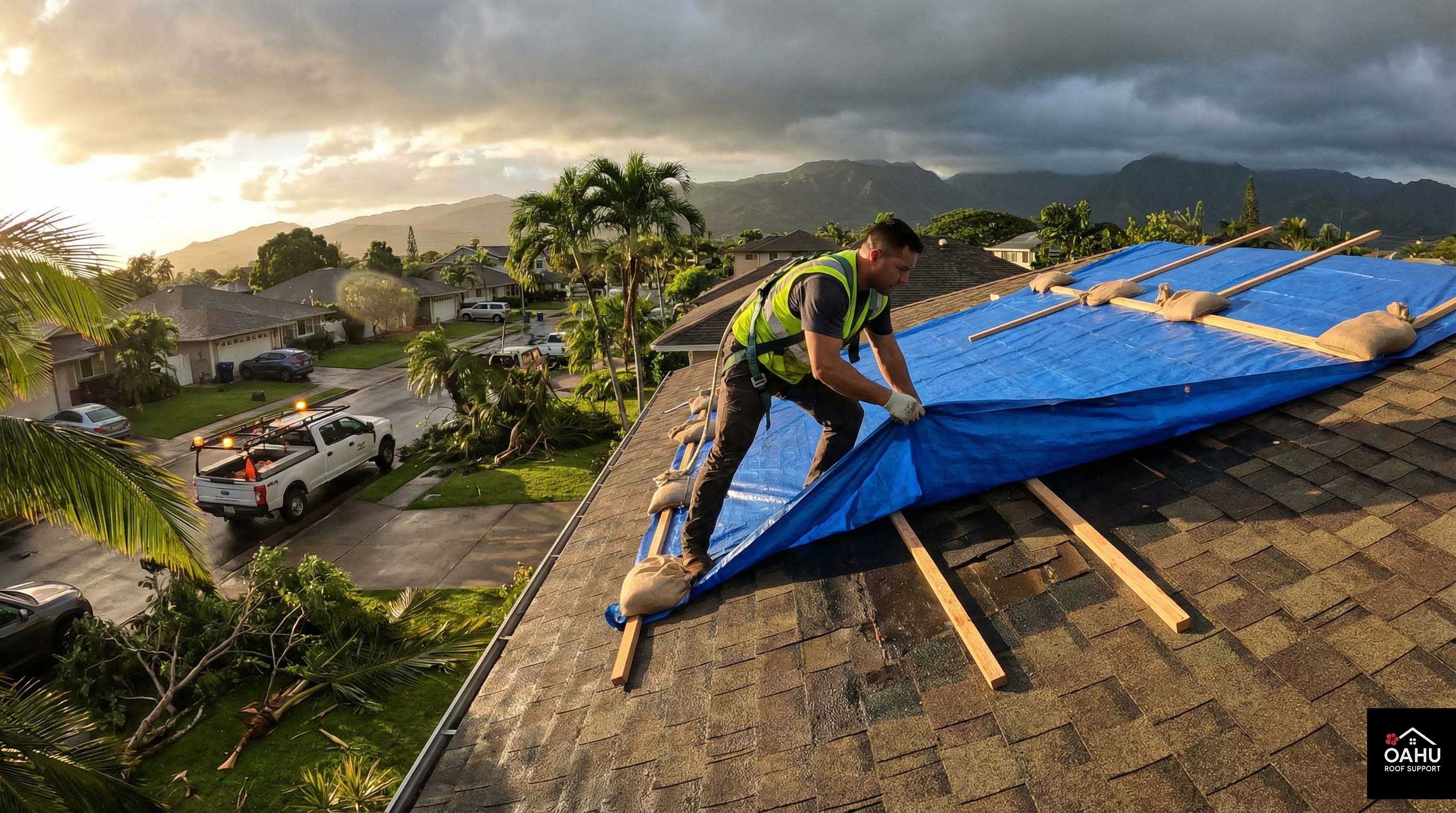
Immediate Securing: The first priority in any roof emergency is stopping the damage. We deploy tarps, emergency patches, and temporary repairs to secure your home against further water intrusion. Getting your home protected quickly limits the scope of damage and the cost of permanent repairs.
24/7 Availability: Storms don't check the calendar. Neither do falling trees or sudden roof failures. Our emergency services are available around the clock, including nights, weekends, and holidays. When disaster strikes at 2 AM on a Sunday, we answer the phone.
Insurance Documentation: Even in an emergency, proper documentation matters. We photograph and document damage before and after emergency repairs, providing the evidence you need for insurance claims. This documentation can make the difference between a smooth claim and a denied one.
Types of Roof Emergencies We Handle
We respond to all types of roof emergencies across Oahu:
Storm Damage: Hawaii's tropical storms and hurricanes can devastate roofs in minutes. High winds lift shingles, tear off sections of roofing, and drive rain into exposed areas. Even storms that don't make direct landfall can produce damaging winds across the island. If a storm has damaged your roof, we respond immediately to secure your home.
Fallen Trees and Debris: When a tree or large branch crashes through your roof, the damage is immediate and obvious. But the ongoing damage from exposure can be even worse than the initial impact. We remove debris safely, secure the opening, and prevent further damage while you arrange permanent repairs.
Sudden Leaks: Sometimes roof failures aren't dramatic. A leak that starts during a rainstorm can dump gallons of water into your home before you even notice. If you discover water pouring through your ceiling, call immediately. We can often locate and stop the leak before catastrophic damage occurs.
Wind Damage: High winds don't have to be part of a named storm to damage your roof. Kona winds, strong trade wind days, and localized wind events can lift shingles, break tile, and compromise your roof's integrity. If you see shingles in your yard or notice your roof looks different after a windy day, call for an emergency assessment.
Structural Failures: Sagging rooflines, collapsed sections, and structural failures require immediate attention. These situations can be dangerous, and the damage worsens rapidly. We assess the situation, secure the area, and coordinate emergency structural repairs.
Fire Damage: Roof damage from fires, whether from the fire itself or from firefighting efforts, leaves your home exposed. We respond to fire-damaged roofs to secure the structure and prevent secondary damage from weather exposure.
Failed Previous Repairs: Sometimes "repairs" by unqualified contractors fail catastrophically. If a previous patch or repair has let go and your home is now exposed, we treat it as the emergency it is and respond accordingly.
Our Emergency Response Process
When you call with a roof emergency, here's what happens:
Step 1: Immediate Assessment. When you call our emergency line, we gather essential information about your situation. What happened? Is anyone injured? Is the home occupied? Is there active water intrusion? This information helps us dispatch the right resources and prioritize response.
Step 2: Rapid Dispatch. We immediately contact our emergency response contractors and dispatch help to your location. Depending on the emergency type and your location, response times are typically within hours, not days.
Step 3: On-Site Evaluation. When our team arrives, they quickly evaluate the damage and determine the best approach to secure your home. Safety comes first. If there are structural concerns or hazards, we address those before proceeding with repairs.
Step 4: Emergency Securing. We deploy whatever measures are needed to protect your home from further damage. This may include tarping, emergency patches, debris removal, or temporary structural support. The goal is to stop the immediate crisis and prevent additional damage.
Step 5: Documentation. We photograph and document all damage before and after emergency repairs. This documentation is critical for your insurance claim. We note the apparent cause of damage, the extent of the problem, and the emergency measures taken.
Step 6: Next Steps. Once your home is secured, we discuss next steps. This typically includes a full damage assessment once conditions allow, insurance claim filing, and planning for permanent repairs. The emergency repair buys you time to make informed decisions about permanent solutions.
Emergency Tarping and Temporary Repairs
The most common emergency intervention is tarping. A properly installed tarp can protect your home for weeks or even months while you arrange permanent repairs and navigate the insurance process.
Professional Tarping: Emergency tarping isn't just throwing a blue tarp over the hole. Proper tarping requires securing the tarp to withstand wind, ensuring complete coverage of damaged areas, and creating proper water runoff so the tarp doesn't collect water and cause additional damage. Our crews know how to tarp roofs correctly.
Tarp Quality: Not all tarps are equal. We use heavy-duty tarps rated for extended outdoor exposure, not the thin tarps from the hardware store that shred in the first wind. Quality tarps properly installed can protect your home until permanent repairs are completed.
Securing Methods: Tarps must be secured to withstand Hawaii's winds. We use appropriate anchoring methods including sandbags, lumber, and mechanical fasteners as needed. A tarp that blows off in the next storm is worse than useless. Our tarps stay put.
Coverage Area: Effective tarping extends well beyond the visible damage. Water travels, and a tarp that only covers the obvious hole may miss entry points that aren't visible. We tarp generously to ensure complete protection.
Duration: Emergency tarps are temporary by nature, but "temporary" can mean different things. A properly installed quality tarp can protect your home for months if needed. This gives you time to work with insurance, select a contractor, and schedule permanent repairs without rushing into decisions.
What to Do When You Have a Roof Emergency
If you're experiencing a roof emergency right now, here's what to do:
Ensure Safety First: If there's structural damage, get everyone out of the affected area. Don't enter rooms with sagging ceilings. If you see or smell electrical problems, turn off power to affected areas if you can do so safely. Your safety is more important than your stuff.
Call for Help: Call our emergency line at 808-766-8023. Don't wait to see if it gets worse. The sooner we respond, the less damage occurs. Have your address ready and be prepared to describe what happened.
Protect What You Can: If you can safely do so, move valuables, electronics, and furniture away from the affected area. Put down towels, buckets, or containers to catch water. Cover furniture with plastic if available. But don't risk injury to save belongings.
Document the Damage: If it's safe to do so, take photos and videos of the damage. Document water intrusion, damaged belongings, and the source of the problem if visible. This documentation helps with insurance claims. But don't climb on your roof or put yourself at risk for photos.
Contact Your Insurance: Most policies require prompt notification of damage. Call your insurance company's claims line to report the incident. Note the claim number and adjuster information. We can help you navigate the claims process once the emergency is handled.
Don't Attempt DIY Repairs: In an emergency, the temptation to climb up and fix it yourself is strong. Resist it. Damaged roofs are dangerous. Wet surfaces are slippery. Structural integrity may be compromised. Let professionals handle emergency repairs.
Emergency Roof Services Across All of Oahu
We provide 24/7 emergency response across the entire island:
Mililani and Mililani Mauka: Central Oahu's elevation exposes homes to direct storm impact. When tropical systems approach, Mililani often experiences high winds before other areas. We respond quickly to Mililani emergencies, understanding that storm damage in this area can be severe.
Ewa Beach and Kapolei: West Oahu's newer construction is generally built to modern wind codes, but no roof is storm-proof. When damage occurs in Ewa Beach or Kapolei, we respond rapidly to secure homes and protect your investment.
Pearl City and Waipahu: Older homes in Pearl City and Waipahu may be more vulnerable to storm damage. Original roofing materials and decades of wear can mean faster failure when storms hit. We prioritize emergency response to protect these homes from cascading damage.
North Shore (Haleiwa, Kahuku, Laie): The North Shore faces powerful winter storms and is often first to experience incoming weather systems. Remote location can mean longer response times from some contractors, but we maintain relationships with North Shore-based crews for faster emergency response.
Kaneohe and Kailua: The Windward side's heavy rainfall means water intrusion happens fast when roofs are compromised. We respond quickly to Windward emergencies because every minute of exposure means more water damage in this high-rainfall area.
Waianae Coast: The Waianae Coast can be underserved by some contractors. We ensure emergency response is available to Waianae, Makaha, and surrounding communities. Your location shouldn't determine whether you can get emergency help.
Honolulu and Hawaii Kai: Urban Honolulu presents unique emergency response challenges including traffic, access, and high-rise considerations. We navigate these challenges to provide rapid response throughout the city. Hawaii Kai's exposed location can experience wind damage even from distant storms.
Insurance Coverage for Emergency Repairs
Emergency repairs are typically covered by homeowners insurance when the damage results from a covered event. Understanding how insurance handles emergencies helps you make good decisions under pressure.
Emergency Repairs Are Covered: Insurance policies generally cover reasonable emergency repairs necessary to prevent further damage. Tarping, emergency patches, and temporary repairs to secure your home are legitimate claim expenses. Keep receipts and documentation for all emergency work.
Duty to Mitigate: Your insurance policy likely includes a duty to mitigate damage. This means you're required to take reasonable steps to prevent additional damage after an incident. Emergency repairs fulfill this obligation. Failing to protect your home from further damage could jeopardize your claim for the full damage.
Documentation Is Critical: Insurance claims live and die on documentation. Our emergency response includes thorough documentation of conditions before and after emergency repairs. Photos, videos, and written descriptions of damage provide the evidence you need to support your claim.
Separate from Permanent Repairs: Emergency repairs and permanent repairs are typically handled as separate aspects of your claim. Emergency work secures your home now. Permanent repairs restore your roof to pre-damage condition. Both are covered, but they may be processed differently.
Claim Filing Assistance: Once the immediate emergency is handled, we help you navigate the insurance claim process. We can meet with adjusters, supplement claims if initial estimates are inadequate, and ensure your emergency repairs don't jeopardize your permanent repair coverage.
Working With Your Insurance Company
We work with all major insurance carriers serving Oahu homeowners:
State Farm. Allstate. FICOH (First Insurance Company of Hawaii). Island Insurance. DTRIC. And all other Hawaii homeowners insurance providers.
Each insurance company has different claim processes and documentation requirements. Our experience working with these carriers means we know what they need and how to present your emergency and subsequent damage claim effectively.
Understanding Emergency Coverage: Most policies cover emergency repairs without prior authorization. You don't need to wait for adjuster approval to protect your home. Document everything and keep receipts, but don't delay emergency repairs waiting for insurance permission.
Deductibles: Your deductible applies to the total claim, not separately to emergency and permanent repairs. Emergency repair costs are part of your overall claim and count toward meeting your deductible.
After the Emergency: Planning Permanent Repairs
Once your home is secured, it's time to plan permanent repairs. Emergency repairs buy you time, but they're not permanent solutions.
Full Damage Assessment: After conditions stabilize, we conduct a complete damage assessment. Emergency response focuses on stopping immediate damage. A thorough assessment identifies all damage, including problems that weren't visible during the emergency response.
Insurance Claim Process: We help you navigate the insurance claim from initial filing through final settlement. This includes documenting damage, meeting with adjusters, reviewing estimates, and filing supplements if the initial estimate is inadequate.
Contractor Selection: With the emergency handled, you have time to select the right contractor for permanent repairs. We connect you with licensed, qualified contractors who specialize in your roof type and can work with your insurance company.
Quality Permanent Repairs: Permanent repairs should restore your roof to pre-damage condition or better. We ensure repairs are done correctly with appropriate materials and proper installation. Cutting corners on permanent repairs leads to problems down the road.
Warranty Protection: Permanent repairs should come with appropriate warranties. Depending on the scope of work, this may include manufacturer warranties on materials and contractor warranties on workmanship. We ensure you get proper warranty coverage.
Why Choose Oahu Roof Support for Emergency Repairs
When your roof fails, you need help you can trust. Here's why Oahu homeowners call us for emergencies:
True 24/7 Response: Our emergency line is answered around the clock. Not a voicemail. Not a callback service. A real person who can dispatch help immediately. When you have water pouring through your ceiling at midnight, you need someone who answers.
Rapid Mobilization: We maintain relationships with emergency response contractors across Oahu. When you call, we can dispatch help quickly because we have crews ready to respond. We don't make you wait while we figure out who to call.
Insurance Expertise: Emergency situations are stressful, and making insurance mistakes under pressure can cost you. We document everything properly and help you navigate the claim process. Our experience with Hawaii insurance carriers means we know how to protect your interests.
No Pressure Sales: In an emergency, some contractors see an opportunity to sell you things you don't need while you're panicked. We're not a roofing contractor, we're your advocate. We focus on solving your emergency, not selling you a new roof. Permanent repair decisions can wait until you're not in crisis mode.
Full-Service Follow-Through: Emergency response is just the beginning. We stay with you through the entire process, from emergency securing through insurance claims through permanent repairs. You don't have to figure out the next steps on your own.
Local Knowledge: We know Oahu. We know which areas get hit hardest by different storm types. We know the challenges of accessing different neighborhoods. We know which contractors can respond quickly to which areas. This local expertise means faster, better emergency response.
Frequently Asked Questions About Emergency Roof Repair
What qualifies as a roof emergency?
A roof emergency is any situation where your home is exposed to ongoing damage. Active leaks during rain, visible holes or missing sections, structural damage, or any situation where water can enter your home qualifies. If you're unsure, call us. We'd rather dispatch for something that turns out to be minor than have you wait while damage worsens.
How quickly can you respond?
Response times depend on the emergency type, your location, and current demand. For active emergencies with ongoing damage, we typically have crews on-site within hours. During major storm events affecting many homes, response times may be longer, but we triage based on severity and respond to the most critical situations first.
How much does emergency roof repair cost?
Emergency repair costs vary based on the situation. Basic tarping typically runs $300 to $800. More complex emergency repairs involving debris removal, multiple tarps, or structural securing can range from $800 to $2,500 or more. Emergency repairs are typically covered by insurance when damage results from covered events. We provide documentation to support your claim.
Will my insurance cover emergency repairs?
Yes, emergency repairs to prevent further damage are typically covered when the underlying damage is from a covered event like storms, wind, or falling trees. Insurance policies generally require you to mitigate damage, so emergency repairs aren't just covered, they're expected. Keep receipts and documentation for all emergency work.
Do I need to wait for insurance approval before emergency repairs?
No. You should not wait for insurance approval to secure your home. Most policies allow reasonable emergency repairs without prior authorization. Document everything, keep receipts, and file your claim promptly. Waiting for approval while damage worsens could actually jeopardize your claim.
What should I do while waiting for emergency response?
Ensure everyone's safety first. Stay out of rooms with sagging ceilings or structural damage. If safe, move valuables away from water intrusion and place containers to catch water. Document damage with photos if you can do so safely. Don't attempt to climb on your roof or make repairs yourself.
Can you help if a tree fell on my roof?
Yes. Fallen trees are one of the most common roof emergencies. We coordinate debris removal and emergency securing of the damaged area. For large trees, we work with tree removal specialists to safely remove the debris before tarping and securing the roof.
What happens after the emergency repairs?
Emergency repairs are temporary. After securing your home, we conduct a full damage assessment, help you file insurance claims, and connect you with qualified contractors for permanent repairs. You'll have time to make informed decisions about permanent repairs without the pressure of ongoing damage.
Why should I use Oahu Roof Support instead of calling a roofer directly?
In an emergency, some roofing companies see an opportunity to pressure you into expensive decisions while you're panicked. We're not a roofing contractor, we're your advocate. We focus on solving your emergency and protecting your interests, not selling you a new roof. Once the emergency is handled, you can make permanent repair decisions without pressure.
Do you provide emergency services for commercial buildings?
Yes. We provide 24/7 emergency response for commercial properties as well as residential. Commercial emergencies often involve larger areas, business interruption concerns, and different roofing systems. We have contractors equipped to handle commercial-scale emergency response.
What if I already have a tarp on my roof that's leaking?
Failed tarps are common, especially if they weren't properly installed. We can assess your current tarp, repair or replace it as needed, and ensure proper installation to protect your home. A leaking tarp is still an emergency because your home is still being damaged.
Do you respond during active storms?
We begin responding as soon as conditions are safe for our crews. During active severe weather, we may need to wait until conditions improve to safely access your property. However, we take calls during storms and queue responses so we can dispatch immediately when conditions allow. Your call at 3 AM during a storm means you're first in line when we can safely respond.
Call Now for Emergency Roof Repair
If you're experiencing a roof emergency, don't wait. Every minute your home is exposed means more damage, more risk, and higher repair costs. Call our emergency line now and we'll dispatch help immediately.
24/7 Emergency Line: 808-766-8023
We respond to emergencies across all of Oahu including Mililani, Ewa Beach, Pearl City, the North Shore, Kaneohe, Waianae, Honolulu, and everywhere in between. When your roof fails, we're here to help.
When you call:
You'll reach a real person, not a voicemail. Tell us what happened and where you're located. We'll dispatch emergency crews immediately. Your home will be secured and protected from further damage. We'll document everything for your insurance claim. You'll have support through the entire process from emergency through permanent repairs.
Don't wait for the damage to get worse. Call now: 808-766-8023