Flat Roof Specialists for Hawaii's Climate
Flat roofs and low-slope roofing systems require specialized knowledge that many roofers don't have. While pitched roofs shed water quickly through gravity, flat roofs rely entirely on membrane integrity and proper drainage to keep water out. When problems develop, you need contractors who understand flat roof systems.
Hawaii's climate presents unique challenges for flat roofs. Intense UV exposure degrades membrane materials faster than in temperate climates. Heavy tropical rains test drainage systems and seam integrity. High humidity promotes biological growth that can damage roofing materials. When you're searching for a roofer near me to fix your flat roof, you need someone who understands these Hawaii-specific challenges.
Membrane Expertise: Flat roofs use membrane systems including TPO, EPDM, PVC, and modified bitumen. Each material has different properties, failure modes, and repair requirements. We work with contractors who specialize in membrane roofing and understand how to properly repair each system type.
Commercial and Residential: Flat roofs are common on Hawaii commercial buildings, but many residential properties also have flat or low-slope sections. Carports, additions, lanais, and modern architectural designs often incorporate flat roofing. We handle flat roof repairs for both commercial properties and homes.
Life Extension Focus: Not every flat roof problem requires replacement. Proper repairs and maintenance can extend the life of your membrane system by years or even decades. We focus on cost-effective solutions that maximize the return on your existing roof investment.
Advanced Sealants and Materials: Flat roof repair requires the right materials for each application. We use commercial-grade sealants, patches, and coating systems designed for Hawaii's UV exposure and weather conditions. Hardware store products fail quickly in our climate. Professional materials last.
Common Flat Roof Problems We Repair
Flat roofs develop characteristic problems that differ from pitched roof issues. Understanding these problems helps you recognize when repairs are needed:
Blistering
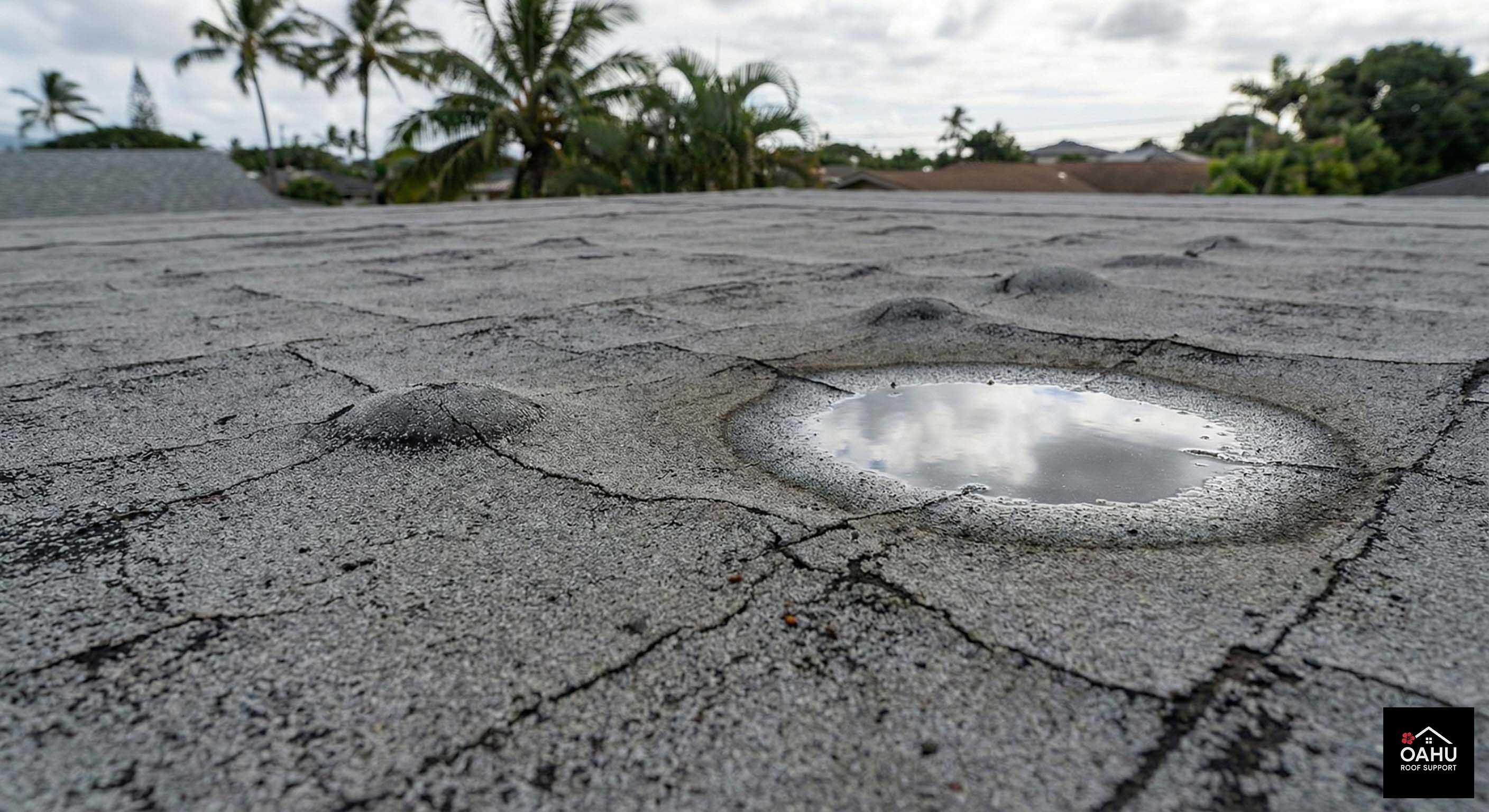
Blisters form when air or moisture gets trapped between membrane layers or between the membrane and substrate. Hawaii's intense sun heats these pockets, causing them to expand and create raised bubbles in the roof surface.
Why Blisters Matter: Small blisters may seem cosmetic, but they weaken the membrane and often grow over time. When blisters rupture, they create openings for water intrusion. Even intact blisters can cause membrane failure as the material stretches and thins.
How We Repair Blisters: Depending on size and condition, we either cut out blistered sections and patch with new membrane, or we flatten and reseal blisters using appropriate adhesives. The right approach depends on your membrane type and the blister's characteristics.
Cracks and Splits
Membrane cracking occurs as roofing materials age and lose flexibility. Hawaii's UV exposure accelerates this aging process. Cracks typically appear first at stress points like corners, penetrations, and areas of building movement.
Why Cracks Matter: Even hairline cracks allow water penetration. Once water gets beneath the membrane, it causes substrate damage, promotes mold growth, and accelerates further membrane deterioration. What starts as a small crack can quickly become a major problem.
How We Repair Cracks: We clean and prepare cracked areas, then apply appropriate patching materials based on your membrane type. For TPO and PVC, this may involve heat-welded patches. For EPDM, we use compatible adhesives and tape systems. For modified bitumen, torch-applied or cold-applied patches restore integrity.
Ponding Water
Ponding occurs when water remains on your roof for more than 48 hours after rain stops. Flat roofs should actually have slight slope to drains or edges, but settling, poor design, or blocked drainage can create areas where water pools.
Why Ponding Matters: Standing water accelerates membrane deterioration, adds structural load, promotes biological growth, and creates leak risks. Ponded areas are often the first to fail. In Hawaii's rainy climate, ponding problems are especially serious because the water returns frequently.
How We Address Ponding: Solutions depend on the cause. We may clear blocked drains, install additional drainage, apply tapered insulation to correct slope, or install crickets to direct water flow. Sometimes coating systems can help bridge minor ponding areas.
Seam Failures
Single-ply membranes like TPO, EPDM, and PVC are installed in sheets that must be joined at seams. These seams are often the first failure point. Adhesive failures, inadequate welds, and membrane shrinkage can all cause seam separation.
Why Seam Failures Matter: Failed seams are direct paths for water entry. Even small seam separations allow significant water intrusion during rain. Seam failures tend to propagate, with small separations growing into major problems if not addressed.
How We Repair Seams: For heat-welded membranes (TPO, PVC), we re-weld failed seams using proper equipment and technique. For EPDM, we apply appropriate primers and seam tape. For all membrane types, we address the underlying cause of failure to prevent recurrence.
Punctures and Tears
Foot traffic, dropped tools, blown debris, and animal activity can puncture flat roof membranes. Hawaii's tropical birds and occasional mongoose can cause surprising damage to exposed roofing materials.
Why Punctures Matter: Any breach in the membrane allows water entry. Even small punctures can allow significant water intrusion over time, damaging insulation and substrate beneath the membrane.
How We Repair Punctures: We clean the damaged area, apply primer if required, and install patches appropriate to your membrane type. Proper patches extend well beyond the damaged area to ensure watertight repairs.
Flashing Failures
Flashings are the transitions between your roof membrane and walls, penetrations, equipment, and edges. These detail areas are responsible for more leaks than the field membrane. Flashing failures are extremely common.
Why Flashings Fail: Flashings must accommodate building movement, thermal expansion, and different material types. The sealants and terminations used in flashing details deteriorate over time, especially in Hawaii's UV-intense environment.
How We Repair Flashings: We remove failed sealants, clean and prepare surfaces, install new flashing materials compatible with your membrane, and apply appropriate termination sealants. Proper flashing repair often involves more work than the field membrane because details matter.
Membrane Shrinkage
Some membrane materials, particularly older EPDM installations, can shrink over time. Shrinkage pulls the membrane away from edges, flashings, and penetrations, creating openings for water entry.
Why Shrinkage Matters: Shrinkage-related failures occur at the most critical areas of your roof, where the membrane meets walls and penetrations. These failures can be difficult to permanently repair because the membrane continues to pull.
How We Address Shrinkage: For minor shrinkage, we can extend flashings and add transition strips to maintain waterproofing. Severe shrinkage may indicate the membrane is approaching end of life, and replacement may be more cost-effective than continued repairs.
Flat Roof Membrane Types We Repair
Different membrane systems require different repair approaches. We work with all major flat roof types:
TPO (Thermoplastic Polyolefin)
TPO has become the most common flat roofing material for new installations. Its heat-welded seams and energy-efficient white surface make it popular for Hawaii applications.
Common TPO Problems: Seam failures from improper welding, membrane crazing from UV exposure, and punctures are the most common issues. Older or lower-quality TPO can become brittle and crack.
TPO Repair Approach: We use heat welding for seam repairs and patches, ensuring proper temperature and technique for strong bonds. TPO repairs require clean, dry conditions and compatible materials.
EPDM (Ethylene Propylene Diene Monomer)
EPDM rubber roofing has decades of track record on flat roofs. Its black surface absorbs rather than reflects heat, which actually protects the material from UV degradation.
Common EPDM Problems: Seam tape failures, shrinkage, and adhesive deterioration are typical EPDM issues. The adhesives used in EPDM installation can fail over time, particularly at seams and flashings.
EPDM Repair Approach: We use EPDM-specific primers, adhesives, and seam tape. Proper surface preparation is critical for EPDM repairs. We clean and prepare surfaces carefully before applying repair materials.
PVC (Polyvinyl Chloride)
PVC offers excellent chemical resistance and durability. It's often specified for restaurants, food processing, and other applications with chemical exposure.
Common PVC Problems: Seam failures and membrane brittleness in older installations are typical issues. PVC remains stable for decades but can eventually become less flexible.
PVC Repair Approach: Like TPO, PVC repairs typically involve heat welding. PVC requires specific welding temperatures different from TPO. We use compatible materials and proper technique for lasting repairs.
Modified Bitumen
Modified bitumen builds on traditional built-up roofing technology with polymer modifications for improved flexibility and durability. It's common on older commercial buildings and some residential flat sections.
Common Modified Bitumen Problems: Blistering, splitting, and seam failures are typical issues. The granule surface can erode over time, reducing UV protection.
Modified Bitumen Repair Approach: Repairs may use torch-applied, cold-applied, or self-adhered patch materials depending on the original installation method. Proper repair extends the existing material in kind.
Built-Up Roofing (BUR)
Traditional built-up roofing using alternating layers of bitumen and reinforcing fabric is still found on many older buildings. While rarely installed new today, BUR roofs can last decades with proper maintenance.
Common BUR Problems: Blistering, cracking, and surface erosion are typical aging issues. Damaged gravel surfacing exposes underlying materials to UV damage.
BUR Repair Approach: We use compatible materials to repair damaged sections while maintaining the multi-layer protection that makes BUR effective. Coating systems can extend BUR life significantly.
Roof Coating Systems for Flat Roofs
Coating systems offer a cost-effective way to extend flat roof life, improve energy efficiency, and address minor problems without full replacement:
Silicone Coatings: Silicone roof coatings provide excellent UV protection and ponding water resistance. They're particularly well-suited to Hawaii's conditions. Silicone coatings can add 10-15 years of life to aging membrane roofs.
Acrylic Coatings: Acrylic coatings offer good reflectivity and UV protection at lower cost than silicone. They work best on roofs with positive drainage where ponding isn't an issue.
Polyurethane Coatings: Polyurethane coatings provide impact resistance and durability. They're often used in high-traffic areas or where physical damage is a concern.
Coating Benefits: Beyond life extension, coatings improve energy efficiency through increased reflectivity, reducing cooling costs significantly in Hawaii's climate. A reflective coating can reduce roof surface temperature by 50 degrees or more compared to dark membrane.
Coating Limitations: Coatings aren't appropriate for all roofs. Severely damaged membranes, roofs with extensive ponding, or materials approaching end of life may need replacement rather than coating. We assess your roof honestly and recommend coating only when it makes sense.
Flat Roof Repair Across All of Oahu
We provide flat roof repair services for commercial and residential properties across the entire island:
Downtown Honolulu: Commercial buildings throughout downtown rely on flat roof systems. Urban access challenges, neighboring building considerations, and historic preservation requirements are familiar territory for our contractor network.
Kakaako and Ala Moana: The mix of new development and established commercial properties in Kakaako presents diverse flat roof repair needs. Salt air exposure from ocean proximity requires appropriate material selection.
Industrial Areas: Mapunapuna, Sand Island, and airport-adjacent industrial properties often have large flat roof footprints with heavy equipment loads and potential chemical exposure. We work with contractors experienced in industrial flat roof repair.
Mililani and Central Oahu: Residential properties with flat carport roofs, additions, and modern designs need flat roof expertise. We handle residential flat roof repairs with the same attention to detail as commercial work.
Ewa Beach and Kapolei: West Oahu's intense sun accelerates membrane aging. Reflective coatings and UV-resistant materials are particularly valuable in this area. We recommend appropriate solutions for the west side's demanding conditions.
Kaneohe and Kailua: Higher rainfall on the Windward side means drainage is critical for flat roofs. Ponding problems are more serious when rain is frequent. We prioritize proper drainage in Windward flat roof repairs.
North Shore and Waianae: Coastal exposure requires corrosion-resistant materials and careful attention to salt air effects. We specify appropriate materials for coastal flat roof repairs.
Insurance Coverage for Flat Roof Repairs
Storm damage to flat roofs may be covered by your property insurance. Understanding coverage helps you make informed decisions about repairs:
What's Typically Covered: Wind damage that lifts or tears membrane, debris impacts that puncture roofing, and water damage resulting from storm-damaged roofs are generally covered. Damage from hurricanes, tropical storms, and severe weather events qualifies for coverage.
What's Typically Not Covered: Normal wear, maintenance issues, and gradual deterioration aren't covered by insurance. Ponding water from poor design, blistering from age, and seam failures from normal aging are generally considered maintenance issues rather than covered losses.
The Gray Areas: Sometimes storm events accelerate existing problems. A seam that was weakening may fail completely during a storm. Determining what's storm damage versus pre-existing conditions can be complex. Proper documentation and professional assessment help clarify coverage.
Our Documentation Process: We document flat roof conditions thoroughly, distinguishing between storm damage and pre-existing conditions. This honest assessment protects your interests whether you're filing a claim or paying out of pocket.
Commercial Claims: Commercial flat roof claims involve larger dollar amounts and more detailed documentation requirements. We understand the commercial claim process and provide appropriate documentation.
Working With Your Insurance Company
We work with all major insurance carriers serving Oahu properties:
State Farm. Allstate. FICOH (First Insurance Company of Hawaii). Island Insurance. DTRIC. Travelers. Liberty Mutual. And all other Hawaii property insurance providers.
Each insurance company has different documentation requirements and claim processes. Our experience working with these carriers means we know what they need to process flat roof claims effectively.
Flat Roof Maintenance to Prevent Problems
Regular maintenance prevents many flat roof problems and extends roof life significantly:
Regular Inspections: Semi-annual inspections catch small problems before they become expensive repairs. After any significant storm, inspect for debris impacts and wind damage. We recommend professional inspections at least annually.
Drain Maintenance: Keep drains clear of debris. Blocked drains cause ponding, which accelerates membrane deterioration and adds structural load. Regular drain cleaning is one of the most important flat roof maintenance tasks.
Debris Removal: Remove leaves, branches, and debris that accumulate on flat roofs. Debris holds moisture against the membrane, blocks drains, and can damage roofing during wind events.
Penetration Sealing: Check sealants around penetrations regularly. Pipes, HVAC units, and other equipment create potential leak points. Resealing penetrations before failures occur prevents interior damage.
Traffic Management: Limit foot traffic on membrane roofs. When access is needed, use walk pads to protect the membrane. Ensure anyone accessing your roof knows how to avoid causing damage.
Prompt Repairs: Address small problems immediately. A small repair now prevents a major repair or replacement later. Don't wait for leaks to become obvious before taking action.
Why Choose Oahu Roof Support for Flat Roof Repairs
We're not a roofing contractor. We're your local advocate who ensures you get the best outcome for your flat roof repairs:
Free Inspections: No obligation inspections for property owners concerned about flat roof conditions. We document problems, identify causes, and provide honest recommendations without sales pressure.
Membrane Expertise: We work with contractors who specialize in flat roofing, not general roofers who occasionally handle flat work. Flat roof repair requires specific knowledge and materials that many roofers lack.
Insurance Expertise: We know how to document flat roof damage for insurance claims and understand what's typically covered versus what's considered maintenance. Honest assessment protects your interests.
Independence: We're not tied to any single roofing company or coating manufacturer. We can objectively recommend whether you need repairs, coating, or replacement. A company salesman will push their solution even when it's not the best fit.
Commercial and Residential: We handle flat roof repairs for properties of all sizes, from residential carport roofs to large commercial buildings. The same attention to detail applies regardless of project size.
Local Knowledge: We understand how Hawaii's climate affects flat roofs differently than mainland conditions. UV exposure, humidity, rainfall patterns, and salt air all factor into proper flat roof repair and material selection.
Frequently Asked Questions About Flat Roof Repair in Hawaii
Why should I use Oahu Roof Support instead of calling a roofer directly?
Many roofers don't specialize in flat roofing. They may use incorrect materials, improper techniques, or recommend replacement when repairs would suffice. I work with contractors who specialize in membrane roofing and understand flat roof systems. I can also objectively assess whether you need repairs, coating, or replacement without the pressure to sell one company's solution.
Do I pay more by going through Oahu Roof Support?
No. Roofing companies build their costs into pricing whether you call them directly or come through a referral. The difference is that I connect you with flat roof specialists rather than general roofers, and I can get competitive bids to ensure fair pricing. You're not adding a middleman, you're getting access to expertise you might not find on your own.
How much does flat roof repair cost in Hawaii?
Costs vary widely based on the problem and repair scope. Minor repairs like sealing small punctures or resealing flashings typically run $200 to $600. More extensive repairs involving membrane patching or seam repair range from $500 to $2,000. Coating systems for life extension run $3 to $7 per square foot depending on the coating type. We provide detailed assessments and quotes before any work begins.
How long do flat roof repairs last?
Properly done repairs using appropriate materials should last as long as the surrounding membrane. A quality patch on a roof with 15 years of remaining life should last those 15 years. Poor repairs using wrong materials may fail within months. This is why using contractors who specialize in your membrane type matters.
Should I repair my flat roof or replace it?
It depends on overall roof condition and the extent of problems. Localized damage on an otherwise sound roof should be repaired. Widespread problems, membrane approaching end of life, or extensive ponding issues may indicate replacement makes more sense. Coating systems can extend the life of aging but serviceable roofs. We assess your specific situation and provide honest recommendations.
Can ponding water be fixed without replacing the roof?
Often, yes. If ponding results from blocked drains, clearing them solves the problem. Minor ponding can be addressed with tapered insulation, crickets, or additional drains. Coating systems can help bridge small ponding areas. Severe ponding from structural issues or major design flaws may require more extensive solutions. We evaluate the cause and recommend appropriate fixes.
Will my insurance cover flat roof repairs?
Insurance covers damage from covered events like storms, wind, and debris impacts. Normal wear, maintenance issues, and age-related deterioration aren't covered. We document damage honestly, distinguishing between storm damage and pre-existing conditions. This protects you whether you're filing a claim or paying out of pocket.
What's the best flat roof material for Hawaii?
TPO offers excellent performance for most applications, with heat-welded seams and energy-efficient reflectivity. PVC is worth the premium for restaurants and buildings with chemical exposure. EPDM remains cost-effective for budget-conscious projects. The best choice depends on your specific building, budget, and priorities. We can assess your situation and recommend the appropriate system.
How often should flat roofs be inspected?
We recommend semi-annual inspections plus inspection after any significant storm. Flat roofs hide problems until leaks appear, so regular inspection catches issues before they cause interior damage. Annual professional inspection is a minimum for commercial properties.
Can I coat my flat roof instead of replacing it?
Coating can extend the life of aging but serviceable membranes by 10-15 years at roughly half the cost of replacement. However, coating isn't appropriate for all roofs. Severely damaged membranes, extensive ponding, or materials at end of life need replacement. We assess honestly and recommend coating only when it makes sense.
What if I'm not happy with the contractor's work?
Because I'm independent, I have real accountability. If a contractor in my network does poor work or uses wrong materials, I address it and find resolution. A roofing company salesman can't fire their own employer. My reputation depends on connecting you with contractors who do quality flat roof work.
Do you handle flat roofs on residential properties?
Yes. Many Oahu homes have flat roof sections including carports, additions, lanais, and modern architectural designs. We handle residential flat roof repairs with the same expertise and attention to detail as commercial work.
Schedule Your Free Flat Roof Inspection Today
Your flat roof protects your property, and proper maintenance and timely repairs protect your investment. Whether you've noticed ponding, leaks, or other problems, or you just want to assess your roof's condition, we're here to help.
Whether your property is in Downtown Honolulu, the industrial areas, Kapolei, or anywhere else on Oahu, we serve commercial and residential flat roofs across the island.
What happens when you reach out:
Fill out the form below or call us directly. We'll contact you within 24 hours to schedule. Your inspection is typically completed within 48 hours. You'll receive a detailed assessment of roof condition, honest recommendations for repairs or maintenance, and insurance claim guidance if applicable.
Prefer to call? Reach us directly at 808-766-8023