Why Leak Detection Is Harder Than It Looks
You see a water stain on your ceiling. The leak must be right above it, right? Almost never. Water is deceptive. It enters your roof at one point, then travels along rafters, sheathing, pipes, and wiring before finally dripping into your living space. The stain you see might be ten or twenty feet from where water actually enters.
This is why finding roof leaks requires more than a quick visual inspection. It requires understanding how water behaves, systematic investigation, and sometimes specialized techniques to pinpoint the actual entry point. Repairing the wrong spot wastes money and leaves the real problem unfixed.
Water Travels: Water follows the path of least resistance, which is rarely straight down. It runs along the top of rafters, follows electrical wires, travels down pipes, and can move horizontally for surprising distances before gravity finally pulls it through your ceiling.
Multiple Entry Points: What looks like one leak may actually be several. Water from different sources can converge at the same ceiling location, making it appear you have one problem when you have many. Finding all entry points is essential for complete repair.
Intermittent Leaks: Some leaks only appear under specific conditions: wind-driven rain from a certain direction, heavy downpours that overwhelm drainage, or temperature conditions that cause condensation. These intermittent leaks are especially challenging to locate.
Hidden Damage: By the time you notice a water stain, the leak may have been active for weeks or months. Water has been soaking insulation, wetting framing, and potentially growing mold in areas you can't see. Proper leak detection includes assessing this hidden damage.
Our Leak Detection Process
We use a systematic approach to find leaks others miss:
Interior Assessment
We start inside your home, examining water stains, damage patterns, and the path water has traveled. This interior evidence provides crucial clues about where to look on the roof.
Stain Analysis: The shape, size, and location of water stains tell us about leak behavior. Ring patterns suggest intermittent leaking. Large diffuse stains suggest sustained water flow. Multiple stains may indicate multiple entry points.
Damage Mapping: We map all visible water damage, noting relationships to roof features above. This mapping guides our exterior investigation.
Timeline Information: When does the leak appear? Only during heavy rain? During wind-driven rain? After prolonged wet periods? This timing information helps identify leak types.
Attic Inspection
The attic is where leak detection really happens. If your attic is accessible, it often reveals exactly where water is entering.
Water Trails: We trace water stains and trails on the underside of roof sheathing. These trails often lead directly to entry points. Fresh moisture indicates active leaks; old stains show historical leak paths.
Daylight Check: In a dark attic, any visible daylight through the roof indicates gaps where water can enter. We check around penetrations, at ridges, and along edges.
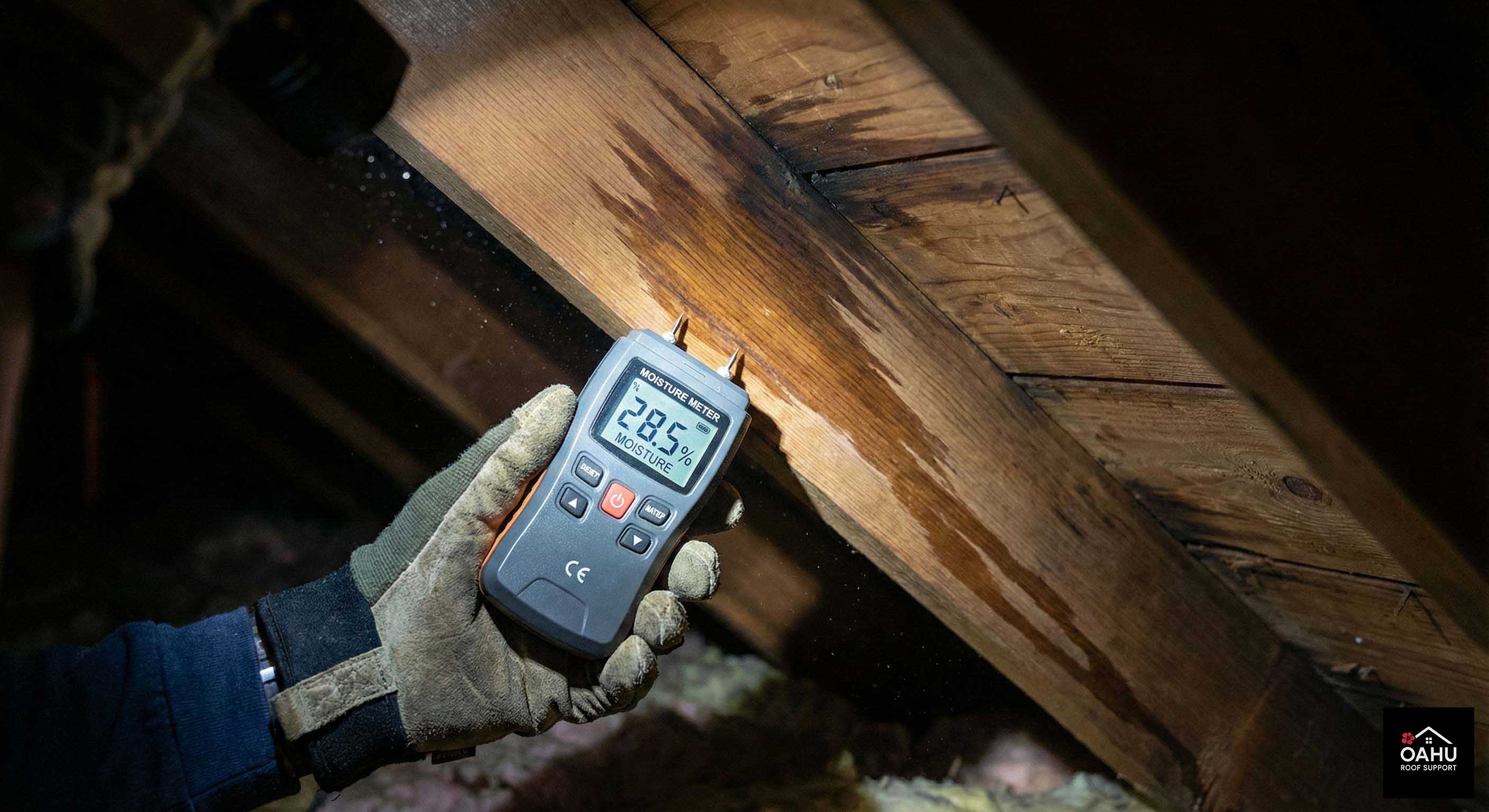
Moisture Detection: We check insulation and framing for moisture that may not be visible as staining. Wet insulation confirms leak location even when water trails aren't visible.
Decking Condition: We assess decking for rot, delamination, and damage that indicates prolonged water exposure. Decking condition helps determine leak duration and repair scope.
Penetration Check: Every roof penetration is a potential leak source. We examine around pipes, vents, and other penetrations from below for signs of water entry.
Exterior Roof Inspection
With interior evidence guiding us, we systematically inspect the roof surface:
Penetration Inspection: We examine every pipe jack, vent, and penetration for cracked boots, failed sealant, and corroded flashings. These are Hawaii's most common leak sources.
Flashing Examination: We inspect all flashings at walls, chimneys, skylights, and transitions. We look for lifted edges, failed sealant, rust, and separation.
Valley Inspection: Roof valleys channel significant water and are common leak points. We check for debris accumulation, worn valley metal, and proper shingle integration.
Field Inspection: We examine the roof field for damaged, missing, or deteriorated materials. Wind-lifted shingles, cracked tiles, and worn areas can all allow water entry.
Edge and Ridge Examination: We inspect ridge caps, hip caps, and roof edges for damage, lifting, and seal failure.
Correlation
We correlate interior evidence with exterior findings to identify the actual leak source:
Position Matching: We verify that exterior problems align with interior damage, accounting for water travel paths.
Multiple Source Identification: When interior damage suggests multiple leaks, we identify all corresponding exterior entry points.
Condition Assessment: We evaluate whether identified problems fully explain the observed damage or if additional investigation is needed.
Advanced Detection Techniques
When standard inspection doesn't reveal the leak source, we employ advanced techniques:
Controlled Water Testing
The most reliable method for finding elusive leaks is controlled water testing. We systematically apply water to isolated roof sections and watch for water appearance inside.
Isolation Method: We test one area at a time, starting low on the roof and working upward. This isolates the leak source rather than wetting the entire roof.
Sustained Application: We apply water for extended periods, as some leaks only appear after materials are saturated. A quick spray may not reveal slow leaks.
Interior Monitoring: While water is applied outside, we monitor the attic or ceiling for water appearance. This direct observation confirms exactly where water enters.
Documentation: When water testing reveals the leak, we document the exact location for repair.
Moisture Meters
Electronic moisture meters detect elevated moisture in materials even when water isn't visibly present:
Non-Invasive Scanning: We scan sheathing, framing, and other materials to identify moisture patterns without damaging anything.
Moisture Mapping: By taking readings across an area, we can map moisture distribution, which often points to the entry location.
Hidden Moisture: Moisture meters find wet materials that visual inspection misses, especially in insulated spaces.
Infrared Thermography
Thermal imaging cameras detect temperature differences that indicate moisture presence:
Temperature Patterns: Wet materials have different thermal properties than dry materials. Infrared cameras visualize these differences, revealing moisture patterns invisible to the eye.
Large Area Scanning: Thermal imaging can scan large areas quickly, identifying problem zones for closer investigation.
Non-Invasive: Like moisture meters, thermal imaging detects problems without damaging materials.
Common Leak Locations in Hawaii
Our experience across thousands of Oahu roofs has taught us where leaks most commonly occur:
Pipe Jacks and Penetrations
Pipe jacks are Hawaii's number one leak source. The rubber boots that seal around plumbing vents degrade rapidly in our intense UV environment, cracking and allowing water entry. Every pipe, vent, and penetration is a potential leak point.
Detection Clues: Water stains near bathrooms or kitchens often trace to plumbing vent pipe jacks. Leaks that appear during any rain, not just heavy rain, suggest penetration failures.
Wall Transitions
Where roofs meet walls, step flashings and counter flashings must work together to prevent leaks. These transitions are complex and frequently fail.
Detection Clues: Water stains on walls below roof-wall intersections, or ceiling stains near where roofs meet upper-story walls, suggest flashing failures at transitions.
Valleys
Roof valleys concentrate water from two roof planes into a single channel. This concentrated flow, combined with debris accumulation, makes valleys common leak points.
Detection Clues: Leaks that worsen significantly during heavy rain often originate in valleys. Stains below where two roof planes meet point to valley problems.
Skylights
Skylights are large, complex penetrations with multiple potential failure points. Flashing failures, seal degradation, and improper installation all cause skylight leaks.
Detection Clues: Water around skylight frames, stains on walls below skylights, or water during wind-driven rain suggest skylight issues.
Chimney Flashings
Chimneys require complex flashing systems including step flashings, counter flashings, and often cricket installations. Any component can fail.
Detection Clues: Water stains on ceilings or walls near chimneys, especially on the upslope side, indicate chimney flashing problems.
Ridge and Hip Caps
Ridge and hip caps seal the peaks where roof planes meet. Wind can lift caps, sealant can fail, and nails can back out, creating entry points.
Detection Clues: Leaks that appear during windy rain but not calm rain may indicate ridge or hip cap problems. Attic leaks near the roof peak suggest ridge issues.
Flat Roof Sections
Hawaii homes often have flat or low-slope sections for lanais, carports, or additions. These areas experience ponding, membrane deterioration, and seam failures.
Detection Clues: Leaks from flat sections often appear directly below the problem since flat roofs don't allow water to travel far. Leaks that worsen after prolonged rain suggest ponding issues.
Gutter-Related Leaks
Clogged or damaged gutters can cause water backup that enters behind fascia boards or under roof edges.
Detection Clues: Water stains on fascia, soffit damage, or leaks at the very edge of the roof may indicate gutter-related water intrusion.
Leak Detection Across All of Oahu
We provide leak detection services across the entire island:
Windward Side (Kaneohe, Kailua): The Windward coast's heavy, frequent rainfall means leaks cause damage fast. Roofs here are constantly challenged, and finding leaks quickly prevents extensive water damage. We prioritize Windward leak detection because delays are costly.
North Shore (Haleiwa, Kahuku, Laie): Winter storms bring driving rain that finds any weakness. Leaks that only appear during storm conditions require understanding of wind-driven rain behavior. We trace North Shore leaks even when they're intermittent.
Mililani and Central Oahu: Central Oahu homes face varied conditions and often have aging roofing materials. We detect leaks in roofs of all ages and types throughout Mililani and surrounding areas.
Ewa Beach and Kapolei: West Oahu is drier overall, but Kona weather brings significant rain. Leaks in Ewa Beach and Kapolei may go unnoticed longer, making thorough detection and damage assessment especially important.
Waianae Coast: Coastal exposure plus occasional heavy weather creates unique leak patterns. We understand Waianae conditions and find leaks appropriate to the area's challenges.
Honolulu and Hawaii Kai: From older Honolulu homes with original roofing to newer Hawaii Kai construction, we detect leaks across all housing types throughout the metro area.
Leak Detection and Insurance Claims
Proper leak detection supports insurance claims when storm damage is involved:
Damage Documentation: Our detection process thoroughly documents both the leak source and resulting damage. This documentation supports insurance claims for covered events.
Storm Correlation: When leaks result from storm damage, we document the connection between the storm event and the leak. This correlation is important for claim approval.
Hidden Damage Assessment: Insurance claims should cover all damage, including hidden moisture damage in insulation and framing. Our detection process identifies this hidden damage for inclusion in claims.
We Work With All Carriers: We work with all major insurance carriers serving Oahu, including State Farm, Allstate, FICOH, Island Insurance, DTRIC, and all other Hawaii homeowners insurance providers.
After Detection: Repair Solutions
Finding the leak is half the battle. We also provide repair solutions:
Targeted Repairs: Once we've identified the exact leak source, we can repair it precisely. No guessing, no unnecessary work, just fixing the actual problem.
Complete Solutions: When detection reveals multiple problems or underlying issues, we recommend comprehensive solutions that address everything, not just the obvious leak.
Prevention: After repair, we can recommend maintenance and monitoring to prevent future leaks at the same or other vulnerable locations.
Licensed Contractors: For repairs exceeding Hawaii's current $1,500 handyman limit, we have licensed contractors in our network to handle the work properly. If House Bill 442 passes raising this limit to $2,500, we'll continue ensuring work is done by appropriately licensed professionals when required.
Why Choose Oahu Roof Support for Leak Detection
We're not just looking at your roof. We're solving your leak problem:
Systematic Approach: We don't guess. Our detection process methodically traces leaks from interior evidence through attic inspection to exterior source identification. This systematic approach finds leaks others miss.
Advanced Techniques: When visual inspection isn't enough, we employ water testing, moisture meters, and thermal imaging to find elusive leaks.
Hawaii Experience: We know where Hawaii roofs leak. Our experience with local conditions, materials, and construction practices helps us find leaks faster.
Complete Assessment: We don't just find the entry point. We assess all resulting damage, including hidden moisture in insulation and framing, so you understand the full scope.
Repair Capability: Once we find the leak, we can fix it. No handoff to another contractor, no starting over with explanations. Detection flows directly into repair.
Insurance Support: When storm damage caused your leak, we document everything for insurance claims. Our detection documentation supports full coverage for legitimate damage.
Frequently Asked Questions About Leak Detection
Why can't I just look for the leak myself?
You can look, but roof leaks are deceptive. Water travels far from where it enters before appearing inside. Without systematic investigation and often attic access, you're likely to identify the wrong spot. Repairing the wrong location wastes money and leaves the real leak unfixed.
How much does leak detection cost?
Basic leak detection inspection runs $150 to $300 depending on roof size and accessibility. Complex investigations requiring extensive water testing or specialized equipment may cost more. If detection leads to repairs through us, detection costs are often credited toward the repair.
How long does leak detection take?
Most leak detection inspections take 1-2 hours. Complex situations with multiple potential sources or difficult access may take longer. Water testing, if needed, adds time but provides definitive results.
What if you can't find the leak?
Rarely happens with our systematic approach, but if a leak proves truly elusive, we'll recommend next steps, which might include extended water testing or waiting for the next rain event to monitor in real-time. We don't charge for unsuccessful detection.
Do I need to be home during leak detection?
Ideally, yes. We need interior access to examine water damage patterns and often attic access to trace leak paths. You should be available to show us where water appears and answer questions about leak timing and behavior.
Can you find leaks that only happen sometimes?
Yes, intermittent leaks are actually common. Leaks that only appear during wind-driven rain, heavy downpours, or specific conditions require understanding those conditions. Our detection process accounts for intermittent leak behavior.
What if I have multiple leaks?
Our detection process identifies all active leaks, not just the most obvious one. We correlate all interior damage with exterior sources to ensure every leak is found.
My roof looks fine from the ground. Can there still be a leak?
Absolutely. Many leak sources aren't visible from ground level. Failed pipe jack boots, separated flashings, and cracked sealant often look fine from a distance but are failing up close.
Will leak detection damage my roof or ceiling?
Our methods are non-invasive. Visual inspection, moisture meters, and thermal imaging don't damage anything. Water testing uses your roof as it's designed to be used. We don't cut holes or remove materials during detection.
What's the difference between leak detection and a roof inspection?
A general roof inspection assesses overall condition. Leak detection is focused investigation to find specific water entry points. When you have an active leak, you need detection, not general inspection.
Can you detect leaks in flat roofs?
Yes. Flat roof leak detection uses similar principles but accounts for how water behaves on low-slope surfaces. Ponding areas, membrane seams, and penetrations are key investigation points.
Will my insurance cover leak detection?
If the leak results from covered storm damage, detection costs may be included in your claim as part of necessary investigation. We document detection work for insurance purposes when applicable.
Schedule Your Leak Detection Inspection Today
A roof leak doesn't fix itself, and the damage grows every time it rains. The sooner you find the actual source, the sooner you can stop the damage. Whether you have an obvious drip or a mysterious stain, we'll find where water is getting in.
Whether you're in Kaneohe, Mililani, Ewa Beach, the North Shore, Honolulu, or anywhere else on Oahu, we provide leak detection services across the entire island.
What happens when you reach out:
Fill out the form below or call us directly. We'll contact you within 24 hours to schedule. Your inspection includes interior assessment, attic inspection when accessible, systematic exterior examination, and clear identification of all leak sources with repair recommendations.
Prefer to call? Reach us directly at 808-766-8023