Low-Slope Roofing Experts for Hawaii Homes
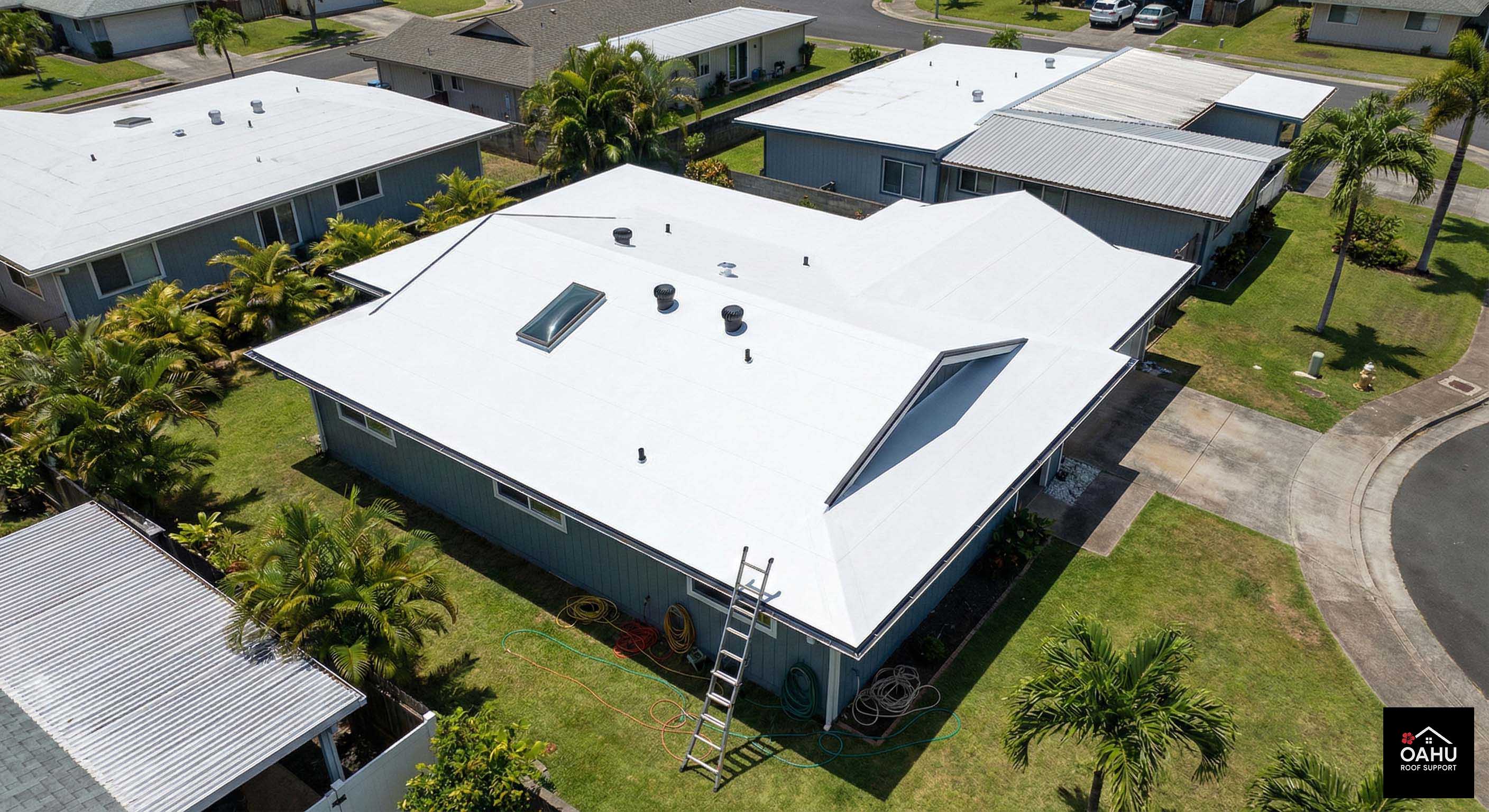
Low-slope roofs are everywhere in Hawaii. Carports, lanais, room additions, covered patios, and modern architectural designs all feature roofs with minimal pitch. These roofs require different materials and installation techniques than traditional pitched roofs, and many general roofers don't have the expertise to install them correctly.
When you're searching for a roofer near me to handle your lanai roof, carport, or addition, you need contractors who specialize in low-slope applications. The wrong materials or improper installation leads to ponding water, premature leaks, and costly repairs.
Hawaii-Specific Challenges: Our tropical climate is particularly demanding on low-slope roofs. Intense UV exposure degrades roofing materials faster than mainland conditions. Heavy tropical rains test drainage and waterproofing. High humidity promotes mold and biological growth. Salt air accelerates corrosion of fasteners and flashings. We specify materials and installation methods designed for these conditions.
Residential Focus: While commercial buildings often have dedicated flat roof contractors, residential low-slope sections are frequently installed by roofers without proper expertise. We connect homeowners with contractors who understand membrane roofing and low-slope installation requirements.
Proper Drainage Design: Low-slope doesn't mean flat. Proper installation includes adequate slope to drains or edges, preventing the ponding water that causes most low-slope roof failures. We ensure your roof sheds water correctly from day one.
Seamless Integration: Low-slope sections must tie into your main roof properly. The transition between pitched and low-slope sections is often where leaks occur. We ensure proper flashing and waterproofing at all transitions.
Common Low-Slope Roof Applications
Low-slope roofing is used throughout Oahu homes in various applications:
Lanai Roofs
Hawaii's indoor-outdoor lifestyle means lanais are essential living spaces. Whether you have a covered lanai, enclosed lanai, or screened room, the roof protecting this space needs proper low-slope installation.
Lanai Challenges: Lanai roofs often connect to the main house at various angles, creating complex flashing requirements. Many lanais were added after original construction, and the quality of that addition varies widely. Older lanai roofs are common sources of leaks that affect both the lanai and adjacent interior spaces.
Lanai Solutions: We install new lanai roofs using appropriate membrane systems and ensure proper integration with your main roof. For existing lanai roofs, we can repair, re-roof, or apply coating systems depending on current conditions.
Carport Roofs
Carports are ubiquitous in Hawaii, protecting vehicles from sun and rain while adding covered outdoor space. Carport roofs are typically simple low-slope structures, but they still require proper installation and materials.
Carport Challenges: Many carports were built to minimal standards, with inadequate slope and budget materials. Older carport roofs often develop ponding, leaks, and structural issues. The covered space means leaks directly damage vehicles and stored items.
Carport Solutions: We install carport roofs with proper slope for drainage, quality membrane materials rated for UV exposure, and adequate structural support. For existing carports, we assess conditions and recommend repair, re-roofing, or replacement as appropriate.
Room Additions
When homeowners add bedrooms, bathrooms, or other enclosed spaces, the addition often features a low-slope roof that ties into the existing structure. These additions require careful attention to waterproofing where new meets old.
Addition Challenges: Roof transitions are leak-prone areas. Additions built without permits may have substandard roofing. Even permitted additions may have been roofed by contractors without low-slope expertise. Water intrusion at addition roofs often goes unnoticed until significant damage has occurred.
Addition Solutions: We ensure addition roofs are properly integrated with existing structures, with appropriate flashing, membrane selection, and drainage. For problematic existing additions, we can re-roof with proper materials and techniques.
Covered Patios and Entertainment Areas
Outdoor entertainment spaces, covered cooking areas, and pool cabanas often feature low-slope roofs. These structures enhance your outdoor living but need proper roofing to function year-round.
Patio Challenges: Outdoor structures may receive less attention than the main house, leading to deferred maintenance and premature failure. Proximity to pools, barbecues, and other elements creates additional stress on roofing materials.
Patio Solutions: We install durable low-slope roofing appropriate for outdoor structures, with materials selected for the specific environment. Chemical-resistant membranes near pools and cooking areas, UV-resistant materials for sun-exposed locations.
Modern Architectural Designs
Contemporary home designs often incorporate flat and low-slope roof sections as architectural features. These modern aesthetics require proper execution to function correctly in Hawaii's climate.
Modern Design Challenges: Architectural designs may prioritize appearance over practical drainage. Complex roof geometry creates multiple transition points. Designers may specify materials without understanding Hawaii's specific requirements.
Modern Design Solutions: We work with homeowners and builders to ensure modern designs are executed with appropriate materials and proper drainage. Function and form can coexist with proper planning and installation.
Commercial Low-Slope Sections
Many commercial buildings combine pitched and low-slope sections. Covered walkways, equipment platforms, and architectural features often use low-slope construction.
Commercial Challenges: Commercial low-slope sections may carry heavy equipment loads, require frequent access, or face chemical exposure. Leaks in commercial spaces can disrupt business operations and damage inventory.
Commercial Solutions: We specify commercial-grade materials appropriate for the specific use, with durability for traffic and loads. Proper drainage and waterproofing protect business operations.
Low-Slope Roofing Materials We Install
Proper material selection is critical for low-slope roof performance. We work with all major low-slope roofing systems:
Modified Bitumen
Modified bitumen is an excellent choice for residential low-slope applications. It builds on proven asphalt technology with polymer modifications for improved flexibility and durability.
APP Modified Bitumen: Atactic polypropylene (APP) modified bitumen offers excellent UV resistance and high-temperature performance. It's well-suited to Hawaii's sunny conditions. APP sheets are typically torch-applied for strong, waterproof seams.
SBS Modified Bitumen: Styrene-butadiene-styrene (SBS) modified bitumen offers superior flexibility and low-temperature performance. While Hawaii doesn't have cold weather concerns, SBS flexibility accommodates building movement well. SBS can be torch-applied, cold-applied, or self-adhered.
Modified Bitumen Advantages: Modified bitumen provides multi-layer protection, handles foot traffic well, and offers straightforward repair. The granule surface protects against UV while providing a finished appearance. It's cost-effective for residential low-slope applications.
TPO (Thermoplastic Polyolefin)
TPO single-ply membrane offers excellent performance for low-slope applications, with energy efficiency benefits particularly valuable in Hawaii.
TPO Advantages: Heat-welded seams create waterproof bonds stronger than the membrane itself. White TPO reflects solar radiation, reducing cooling costs and surface temperatures. TPO offers excellent value for performance.
TPO Considerations: TPO requires specialized installation equipment and technique. Not all roofers can properly install TPO, making contractor selection important. We work with certified TPO installers.
EPDM (Ethylene Propylene Diene Monomer)
EPDM rubber roofing has a long track record for low-slope applications, offering durability and ease of repair.
EPDM Advantages: Proven performance over decades. Relatively easy to repair. Cost-effective for many applications. The black surface actually protects against UV degradation through absorption rather than reflection.
EPDM Considerations: Seams are adhered rather than welded, making installation technique critical. EPDM can shrink over time, pulling away from edges and penetrations. Proper installation and quality materials minimize these concerns.
PVC (Polyvinyl Chloride)
PVC membrane offers premium performance with excellent chemical resistance, making it ideal for specific applications.
PVC Advantages: Superior chemical resistance for areas near pools, outdoor kitchens, or other chemical exposure. Heat-welded seams like TPO. Excellent fire resistance. Long service life.
PVC Considerations: Higher cost than TPO or EPDM. Worth the premium for applications requiring chemical resistance. We recommend PVC where conditions justify the investment.
Metal Roofing for Low-Slope
Standing seam and specialized low-slope metal panels can work on roofs with adequate pitch, typically 2:12 or greater.
Metal Advantages: Exceptional longevity, often 40-70 years. Low maintenance. Clean, modern appearance. Excellent for Hawaii's conditions when properly installed with appropriate coatings.
Metal Considerations: Requires adequate slope for water shedding. Higher initial cost offset by longevity. Must use appropriate fasteners and coatings for Hawaii's salt air environment.
Roof Coatings
Coating systems can extend the life of existing low-slope roofs or provide additional protection on new installations.
Silicone Coatings: Excellent UV protection and ponding water resistance. Can add 10-15 years to aging roofs. Ideal for Hawaii's conditions.
Acrylic Coatings: Good reflectivity and UV protection at lower cost. Best for roofs with positive drainage. Not recommended where ponding occurs.
Preventing Ponding Water on Low-Slope Roofs
Ponding water is the enemy of low-slope roofs. Water that remains on your roof for more than 48 hours after rain accelerates membrane deterioration, promotes biological growth, and adds structural load. Proper installation prevents ponding from the start.
Adequate Slope: Even "flat" roofs should have slope toward drains or edges. The minimum recommended slope is 1/4 inch per foot, though more is better. We design and install low-slope roofs with proper pitch for positive drainage.
Proper Drain Placement: Drains should be located at low points where water naturally collects. Undersized or poorly placed drains lead to ponding even on roofs with adequate slope. We ensure drainage systems match roof design.
Tapered Insulation: For existing roofs with ponding problems, tapered insulation systems can create slope where none exists. This solution adds cost but can save a roof that would otherwise need replacement.
Cricket Installation: Crickets are raised sections that direct water around obstacles or toward drains. Properly installed crickets prevent ponding behind HVAC units, skylights, and other obstructions.
Scupper and Overflow Systems: Edge drainage through scuppers provides an alternative to interior drains. Overflow scuppers provide backup drainage if primary systems become blocked.
Low-Slope Roofing Across All of Oahu
We provide low-slope roofing installation and repair for residential and commercial properties across the entire island:
Mililani and Mililani Mauka: Many Mililani homes feature carports and lanais with low-slope roofs dating to original construction in the 1970s and 1980s. These aging roofs often need replacement with modern materials. We help Mililani homeowners upgrade to durable, properly draining low-slope systems.
Ewa Beach and Kapolei: West Oahu's intense sun is particularly demanding on low-slope roofs. Reflective membranes like white TPO provide significant energy savings in this sunny area. We recommend materials optimized for west side conditions.
Pearl City and Waipahu: Established neighborhoods with diverse housing stock include many low-slope additions and carports of varying quality. We assess existing conditions and recommend appropriate solutions, from repairs to complete replacement.
Kaneohe and Kailua: Higher rainfall on the Windward side makes proper drainage essential. Ponding problems are more serious when rain is frequent. We prioritize slope and drainage in Windward low-slope installations.
North Shore: Coastal exposure requires materials rated for salt air and high humidity. We specify appropriate membranes and corrosion-resistant accessories for North Shore low-slope roofs.
Waianae Coast: Extreme sun exposure accelerates material aging. Quality UV-resistant materials and reflective surfaces extend roof life in Waianae's demanding conditions.
Honolulu and Hawaii Kai: Urban and suburban neighborhoods feature everything from historic properties with added low-slope sections to modern homes with architectural flat roofs. We handle the full range of Honolulu low-slope applications.
Insurance Coverage for Low-Slope Roof Work
Storm damage to low-slope roofs may be covered by your homeowners insurance. Understanding coverage helps you make informed decisions:
What's Typically Covered: Wind damage that lifts or tears membrane, debris impacts, and water damage resulting from storm-damaged roofs are generally covered by homeowners policies. Damage from tropical storms, hurricanes, and severe weather qualifies for coverage.
What's Typically Not Covered: Normal wear, maintenance issues, and gradual deterioration aren't covered. Ponding from inadequate slope, membrane aging, and seam failures from normal use are considered maintenance rather than covered losses.
Lanai and Carport Coverage: Attached structures like lanais and carports are typically covered under your homeowners policy. Detached structures may be covered under other structures provisions with different limits. Review your policy or ask your agent about specific coverage.
Our Documentation Process: We document low-slope roof conditions thoroughly, identifying storm damage versus pre-existing conditions. Honest assessment protects your interests whether filing a claim or paying out of pocket.
Working With Your Insurance Company
We work with all major insurance carriers serving Oahu homeowners:
State Farm. Allstate. FICOH (First Insurance Company of Hawaii). Island Insurance. DTRIC. And all other Hawaii homeowners insurance providers.
Each insurance company has different claim processes and documentation requirements. Our experience with these carriers helps ensure your claim is handled efficiently.
The Low-Slope Installation Process
Proper installation is critical for low-slope roof performance. Here's what to expect:
Assessment and Design: We evaluate the structure, determine appropriate materials, and design for proper drainage. For new construction or additions, we coordinate with builders. For re-roofing, we assess existing conditions and plan the replacement.
Structural Verification: Low-slope roofs must support their own weight plus water, equipment, and occasional foot traffic. We verify structural adequacy and recommend reinforcement if needed.
Substrate Preparation: The surface beneath your membrane must be clean, dry, and properly prepared. This may include installing new decking, adding insulation, or preparing existing surfaces.
Membrane Installation: We install your selected membrane system according to manufacturer specifications. Proper seaming, adequate overlap, and correct fastening ensure long-term performance.
Flashing and Details: Edges, penetrations, and transitions require careful flashing installation. Most leaks occur at details rather than field membrane. We give these areas extra attention.
Drainage Verification: After installation, we verify that water drains properly across the entire roof surface. Any ponding areas are addressed before the job is complete.
Final Inspection and Documentation: We inspect the completed installation, provide warranty documentation, and give you maintenance recommendations for long roof life.
Why Choose Oahu Roof Support for Low-Slope Roofing
We're not a roofing contractor. We're your local advocate who ensures you get the best outcome for your low-slope roofing project:
Free Inspections: No obligation inspections for homeowners with lanai, carport, or addition roofing concerns. We assess conditions and provide honest recommendations.
Specialized Expertise: We work with contractors who specialize in low-slope and membrane roofing, not general roofers who occasionally handle flat work. Proper installation requires specific knowledge many roofers lack.
Material Matching: We recommend the right material for each application. Modified bitumen for residential carports, TPO for energy efficiency, PVC for chemical resistance. No one-size-fits-all solutions.
Insurance Navigation: We document storm damage properly and help you navigate the claim process. Our experience with Hawaii carriers ensures efficient claim handling.
Independence: We're not tied to any single roofing company or material manufacturer. We can objectively recommend the best solution for your specific situation without sales pressure.
Local Knowledge: We understand how Hawaii's climate affects low-slope roofs and which materials perform best in our conditions. This local expertise informs better recommendations.
Frequently Asked Questions About Low-Slope Roofing in Hawaii
Why should I use Oahu Roof Support instead of calling a roofer directly?
Many roofers don't specialize in low-slope work. They may use inappropriate materials, install without proper slope, or fail to properly flash transitions. I work with contractors who understand membrane roofing and low-slope requirements. I can also objectively recommend the best material for your specific application without pushing one company's products.
Do I pay more by going through Oahu Roof Support?
No. Roofing companies include their costs in pricing regardless of how you find them. The difference is that I connect you with low-slope specialists rather than general roofers, and I can get competitive bids to ensure fair pricing. You're getting access to expertise you might not find on your own.
How much does low-slope roofing cost in Hawaii?
Costs vary based on material, size, and complexity. Modified bitumen typically runs $6 to $10 per square foot installed. TPO ranges from $7 to $12 per square foot. PVC runs $9 to $15 per square foot. Metal low-slope systems range from $12 to $20+ per square foot. These are rough ranges; we provide detailed quotes for specific projects.
What's the best material for my lanai roof?
For most lanai applications, modified bitumen offers excellent value with proven performance. TPO is worth considering for larger lanais where energy efficiency matters. If your lanai is near a pool or outdoor kitchen, PVC's chemical resistance may be valuable. We assess your specific situation and recommend the best fit.
What's the best material for my carport roof?
Modified bitumen is typically the best choice for carport roofs. It handles the occasional foot traffic, provides reliable waterproofing, and offers good value. For larger carports or those with solar panel potential, TPO or metal may be worth considering.
How long does low-slope roofing last in Hawaii?
Properly installed modified bitumen lasts 15-25 years. TPO and PVC typically last 20-30 years. Metal can last 40+ years. Hawaii's UV exposure is more demanding than mainland conditions, making quality materials and proper installation even more important for longevity.
Can low-slope roofs support solar panels?
Yes, with proper planning. The membrane must be able to handle penetrations or ballasted mounting systems. TPO and PVC work well with solar installations. We can specify roofing appropriate for future solar if that's in your plans.
Why is my low-slope roof ponding water?
Ponding typically results from inadequate slope, blocked drains, or structural settling. Some older installations simply weren't built with proper drainage. Solutions range from clearing drains to installing tapered insulation to complete re-roofing with proper slope. We assess the cause and recommend appropriate solutions.
Will my insurance cover low-slope roof replacement?
Insurance covers damage from covered events like storms and wind. Normal wear and maintenance issues aren't covered. If storm damage has compromised your lanai or carport roof, you may have a claim. We document conditions honestly to support legitimate claims.
How do I maintain my low-slope roof?
Keep drains clear of debris. Remove leaves and branches that accumulate. Inspect after storms for damage. Check sealants around penetrations annually. Address small problems before they become large ones. Professional inspection every year or two catches issues early.
What if I'm not happy with the contractor's work?
Because I'm independent, I have real accountability. If a contractor in my network does poor work, I address it. A roofing company salesman can't fire their own employer. My reputation depends on connecting you with contractors who do quality low-slope work.
Can you match my existing low-slope roof with a new section?
Yes, though matching aging materials with new can be challenging. For additions or expansions, we recommend materials compatible with your existing roof and proper transitions between old and new sections. Sometimes re-roofing the entire low-slope area provides better results than patchwork.
Schedule Your Free Low-Slope Roof Inspection Today
Your lanai, carport, or addition deserves proper roofing that keeps water out and lasts for years. Whether you're dealing with an aging roof, ponding problems, or planning new construction, we're here to help.
Whether you're in Mililani, Ewa Beach, Kaneohe, Honolulu, or anywhere else on Oahu, we serve homeowners and commercial properties across the island with low-slope roofing expertise.
What happens when you reach out:
Fill out the form below or call us directly. We'll contact you within 24 hours to schedule. Your inspection is typically completed within 48 hours. You'll receive a detailed assessment of roof condition, material recommendations, and a clear path forward for repair or replacement.
Prefer to call? Reach us directly at 808-766-8023