Hawaii's Climate Demands Expert Leak Repair
Roof leaks in Hawaii aren't like roof leaks on the mainland. Our tropical climate brings intense, driving rain that exploits every weakness in your roofing system. Trade wind showers, sudden downpours, and extended rainy seasons test your roof constantly. When a leak develops, it needs expert diagnosis and permanent repair, not a quick patch that fails in the next storm.
When you're searching for a roofer near me to fix a leak, you need someone who understands leak behavior: how water travels, where it enters versus where it appears, and what separates a temporary fix from a lasting repair. We connect you with leak repair specialists who trace problems to their source and fix them permanently.
Water Travels: The water stain on your ceiling is rarely directly below the leak. Water enters your roof at one point, then travels along rafters, sheathing, and other surfaces before dripping into your living space. Finding the actual entry point requires experience and systematic investigation.
Multiple Entry Points: What appears to be one leak may actually be several. Water from different sources can converge at the same spot, making it appear you have one problem when you have many. Thorough inspection identifies all entry points.
Hidden Damage: By the time you see a water stain, the leak may have been active for weeks or months. Water damage spreads unseen through insulation, framing, and sheathing. Proper leak repair includes assessing and addressing this hidden damage.
Permanent vs. Temporary: Anyone can slap sealant on a roof and call it a repair. But if the underlying problem isn't addressed, the leak returns. We focus on permanent repairs that solve the root cause, not temporary patches that delay the inevitable.
Common Causes of Roof Leaks in Hawaii
Understanding what causes leaks helps you identify problems early and understand repair needs:
Failed Pipe Jacks and Penetrations
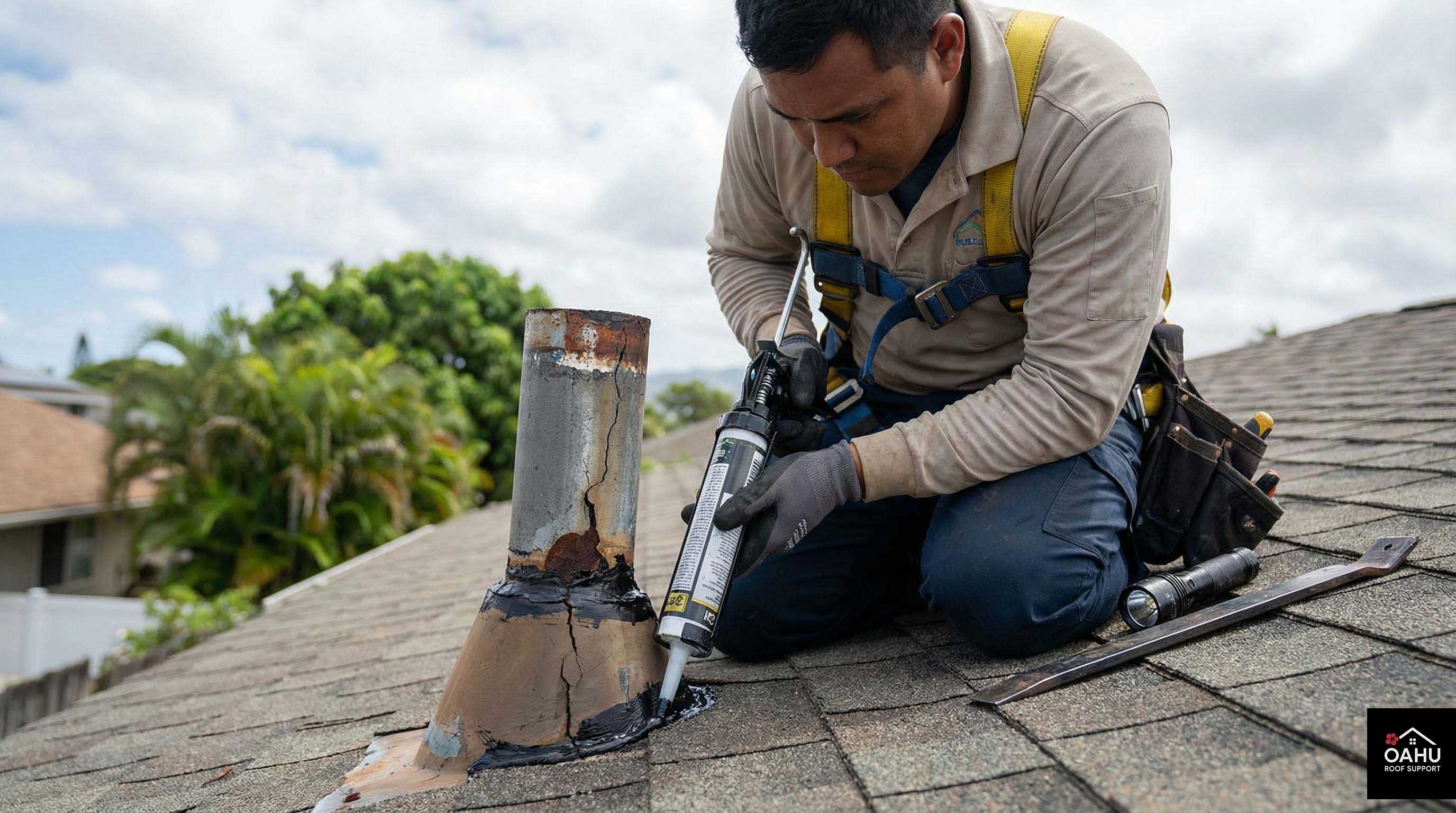
Pipe jacks are Hawaii's number one leak source. The rubber boots that seal around plumbing vents, exhaust pipes, and other penetrations degrade rapidly in our intense UV environment. When they crack, water goes straight into your home.
Warning Signs: Water stains near bathrooms or kitchens (where plumbing vents are located), visible cracks in rubber boots, rusted metal flashings around pipes.
The Fix: We replace failed pipe boots with UV-resistant materials appropriate for Hawaii conditions. For coastal properties, we specify corrosion-resistant metal flashings.
Damaged or Missing Shingles
Wind lifts shingles, breaking adhesive seals and sometimes tearing them away entirely. The exposed underlayment and deck beneath become leak points, especially during heavy rain.
Warning Signs: Shingles in your yard after wind events, visible gaps or dark spots on your roof, granules accumulating in gutters.
The Fix: We match and replace damaged shingles, ensuring proper integration with surrounding materials. If damage is widespread, we assess whether repair or re-roofing makes more sense.
Cracked or Failed Flashing
Flashings are the metal pieces that seal transitions: where your roof meets walls, around chimneys, in valleys, and at edges. When flashings crack, separate, or corrode, water finds its way in.
Warning Signs: Leaks near walls, chimneys, or skylights. Visible rust, gaps, or lifted edges on metal flashings. Water stains that appear during wind-driven rain but not during calm showers.
The Fix: We repair or replace failed flashings using appropriate materials. Aluminum flashings for coastal properties, proper step and counter flashing at walls, and correct valley installation techniques.
Valley Leaks
Roof valleys channel large volumes of water and are common leak points. Debris accumulation, worn valley metal, and improper installation all cause valley leaks.
Warning Signs: Leaks that worsen during heavy rain, water stains below where two roof planes meet, visible debris or wear in valleys.
The Fix: We clear debris, repair or replace valley flashings, and ensure proper water flow through valleys. Sometimes valley design improvements prevent recurring problems.
Skylight Leaks
Skylights are complex penetrations with multiple potential leak points. Flashing failures, seal deterioration, and improper installation all cause skylight leaks.
Warning Signs: Water around skylight edges, condensation inside skylights (may indicate seal failure), stains on walls beneath skylights.
The Fix: We repair or replace skylight flashings, reseal frames, or recommend skylight replacement when the unit itself has failed.
Flat Roof Problems
Flat and low-slope roof sections on Hawaii homes are prone to specific issues: ponding water, membrane deterioration, and seam failures.
Warning Signs: Leaks from flat carport, lanai, or addition roofs. Standing water visible after rain. Blistered, cracked, or separated membrane.
The Fix: We repair membrane damage, address drainage issues, and apply coating systems when appropriate. Some flat roof problems require section replacement.
Tile Roof Leaks
Tile roofs are durable but not immune to leaks. Cracked tiles, deteriorated underlayment, and failed flashings all allow water entry. The underlayment beneath tile often fails before the tile itself.
Warning Signs: Water stains despite tile appearing intact, cracked or broken tiles, debris from deteriorated underlayment in gutters.
The Fix: We replace cracked tiles, repair underlayment where accessible, and address flashing issues. Widespread underlayment failure may require tile removal and underlayment replacement.
Metal Roof Leaks
Metal roofs rarely leak through the panels themselves, but fasteners, seams, and penetrations can fail. Exposed fastener systems are particularly prone to washer deterioration and fastener-related leaks.
Warning Signs: Leaks at seams or around fasteners, rust stains, loose or missing fasteners, failed sealant at penetrations.
The Fix: We replace failed fasteners and washers, reseal seams, and address penetration flashings. Widespread fastener failure may indicate the roof is approaching end of life.
Ice Dam Effects (Rare in Hawaii)
While Hawaii doesn't have traditional ice dams, our high-elevation areas can experience frost. More commonly, wind-driven rain creates similar effects, pushing water uphill and under shingles.
Warning Signs: Leaks only during wind-driven rain, water intrusion high on roof during storms.
The Fix: Proper underlayment, adequate shingle exposure, and good sealing techniques prevent wind-driven rain intrusion.
Our Leak Detection Process
Finding the actual leak source is often the hardest part of leak repair. Here's how we approach it:
Interior Assessment
We start inside, examining water stains, damaged areas, and the path water has traveled. This gives us initial clues about where to look on the roof. We note the relationship between leak locations and roof features above.
Attic Inspection
If accessible, the attic reveals crucial information. We look for water trails on rafters and sheathing, daylight through the roof, moisture damage, and signs of mold. Water stains on the underside of sheathing often lead directly to entry points.
Roof Inspection
We systematically inspect the roof surface, starting with areas identified from interior and attic assessment. We examine penetrations, flashings, valleys, and any damaged or deteriorated materials. We photograph and document all findings.
Water Testing
For elusive leaks, we may use controlled water testing. By isolating roof sections and applying water with a hose, we can identify exactly where water enters. This methodical approach finds leaks that visual inspection misses.
Documentation
We document all findings with photos and detailed notes. This documentation supports insurance claims when applicable and ensures repair crews address all identified issues.
Permanent Leak Repairs
Identifying the leak is half the battle. Proper repair ensures it doesn't return:
Root Cause Resolution: We fix the actual cause, not just the symptom. If a flashing leaked because it was improperly installed, we don't just seal it; we reinstall it correctly.
Quality Materials: We use materials appropriate for Hawaii conditions. UV-resistant sealants, corrosion-resistant metals, and durable components that won't fail prematurely.
Proper Techniques: Leak repair requires understanding how roofing systems work. Shingles overlap in specific ways. Flashings integrate with other components. We ensure repairs work with your roofing system, not against it.
Hidden Damage: When leaks have caused secondary damage, we address it. Rotted decking, wet insulation, and mold can't be ignored. Complete repair means addressing all damage, not just stopping the water.
Verification: After repairs, we verify the fix. This may include water testing, especially for stubborn or complex leaks. You'll know the leak is actually fixed, not just temporarily patched.
Emergency Leak Response
Some leaks can't wait. When water is actively entering your home, you need immediate help:
24/7 Response: For active leaks causing ongoing damage, we provide emergency response. Call us at 808-766-8023 for urgent situations.
Temporary Protection: If permanent repairs can't be completed immediately due to weather or material availability, we implement temporary protection to stop active water intrusion. This may include tarping, emergency sealing, or other measures.
Damage Mitigation: Your insurance policy typically requires you to mitigate damage. Taking prompt action to stop water intrusion protects your home and supports your insurance claim.
Follow-Up Repairs: Emergency measures are followed by proper permanent repairs as soon as conditions allow. Temporary fixes are just that; they're not substitutes for correct repair.
Leak Repair Across All of Oahu
We provide leak detection and repair services across the entire island:
Windward Side (Kaneohe, Kailua): The Windward coast receives more rainfall than anywhere else on Oahu. Leaks here cause damage quickly because roofs rarely dry out completely. We respond promptly to Windward leak calls and emphasize thorough repair to prevent recurring problems during frequent rain.
North Shore (Haleiwa, Kahuku, Laie): Winter storms bring heavy rain and high winds to the North Shore. Leaks during storm season need fast attention. We're experienced with North Shore conditions and specify corrosion-resistant materials for lasting repairs.
Mililani and Central Oahu: Central Oahu's mix of older and newer homes presents varied leak challenges. Aging pipe jacks, wind-damaged shingles, and deteriorated flashings are common issues we address for Mililani homeowners.
Ewa Beach and Kapolei: While drier than the Windward side, West Oahu still experiences significant rain, especially during Kona weather. When leaks occur, they often go unnoticed until substantial damage has accumulated. Thorough inspection identifies all affected areas.
Waianae Coast: Coastal exposure combines with occasional heavy rain to create challenging conditions. We specify appropriate materials for Waianae leak repairs that handle both salt air and weather events.
Honolulu and Hawaii Kai: Urban Honolulu's diverse housing stock includes everything from historic homes to modern construction, each with different leak vulnerabilities. Hawaii Kai's coastal exposure requires appropriate material selection for lasting repairs.
Insurance Coverage for Leak Damage
Understanding insurance coverage helps you navigate leak-related claims:
Sudden vs. Gradual: Insurance typically covers sudden, accidental damage but not gradual deterioration. A roof damaged in a storm is covered; a roof that slowly wore out is not. However, water damage inside your home from any roof leak may be covered, depending on your policy.
Storm-Related Leaks: If wind, debris, or other storm damage caused your leak, both the roof repair and resulting interior damage are typically covered. Documentation of the storm event and damage strengthens your claim.
Interior Damage: Even when the roof leak itself isn't covered (due to age or wear), your policy may cover the resulting interior damage under "resulting loss" provisions. We help you understand what's claimable.
Duty to Mitigate: Your policy requires you to take reasonable steps to prevent further damage. Prompt leak repair demonstrates you've met this obligation. Ignoring a known leak can jeopardize coverage for resulting damage.
Documentation: We photograph and document all damage, noting apparent causes and conditions. This documentation supports your claim and helps adjusters understand what occurred.
Working With Your Insurance Company
We work with all major insurance carriers serving Oahu homeowners:
State Farm. Allstate. FICOH (First Insurance Company of Hawaii). Island Insurance. DTRIC. And all other Hawaii homeowners insurance providers.
Each carrier handles leak claims differently. Our experience with these companies helps ensure appropriate documentation and claim handling for your situation.
Preventing Future Leaks
Once we've repaired your leak, these steps help prevent future problems:
Regular Inspection: Inspect your roof annually and after major storms. Catching small problems early prevents leaks. Pay special attention to penetrations, flashings, and areas that have leaked before.
Gutter Maintenance: Clogged gutters cause water backup that can lead to leaks. Keep gutters clear of debris, especially during fall and after storms.
Tree Management: Overhanging branches drop debris, rub against roofing, and fall during storms. Keep trees trimmed away from your roof.
Attic Ventilation: Proper ventilation prevents moisture buildup that can accelerate roof deterioration. If your attic is excessively hot or humid, ventilation improvements may be warranted.
Prompt Repairs: Don't ignore small problems. A lifted shingle, cracked pipe boot, or loose flashing only gets worse with time. Small repairs prevent big leaks.
Professional Maintenance: Periodic professional inspection catches issues you might miss. We can inspect your roof annually and identify problems before they cause leaks.
Why Choose Oahu Roof Support for Leak Repair
We're not a roofing contractor. We're your local advocate who ensures you get the best outcome for your leak repair needs:
Expert Leak Detection: Finding the actual leak source is often the hardest part. We use systematic methods to identify all entry points, not just obvious problems.
Free Inspections: No obligation leak inspections for concerned homeowners. We assess your situation and provide honest recommendations at no charge.
Permanent Repairs: We focus on fixing root causes, not applying temporary patches. Our repairs are designed to last, using appropriate materials and proper techniques.
Insurance Navigation: We document damage appropriately for insurance claims, help you understand what's covered, and work with adjusters to ensure fair treatment.
Independence: We're not tied to any roofing company. We recommend what you actually need: targeted repair when repair makes sense, or broader assessment when leak patterns indicate systemic problems.
Emergency Response: For active leaks causing ongoing damage, we provide prompt response to stop water intrusion and protect your home.
Frequently Asked Questions About Roof Leak Repair
Why should I use Oahu Roof Support instead of calling a roofer directly?
Leak repair requires finding the actual source, not just patching where water appears. Many roofers do surface repairs without thorough investigation, and the leak returns. I ensure systematic leak detection, proper documentation for insurance, and permanent repairs that address root causes. I also provide independent assessment of whether you need targeted repair or more comprehensive work.
Do I pay more by going through Oahu Roof Support?
No. Roofing companies include their costs in pricing regardless of how you find them. The difference is that I ensure thorough leak detection and proper repair. You're getting expert diagnosis and lasting fixes, not quick patches that fail.
How much does leak repair cost?
Costs vary based on the leak source and complexity. Simple repairs like resealing flashings or replacing a pipe jack run $200 to $500. More complex repairs involving multiple areas, deck damage, or extensive flashing work range from $500 to $2,000+. We provide accurate quotes after identifying all issues.
How do you find where the leak is coming from?
We use a systematic process: interior assessment to understand where water appears, attic inspection to trace water paths, thorough roof inspection focusing on likely entry points, and water testing when needed. This methodical approach finds leaks that casual inspection misses.
Will my insurance cover leak repair?
It depends on the cause. Storm damage (wind, debris, hail) is typically covered. Age-related wear is typically not covered. Interior water damage from roof leaks may be covered regardless of cause, depending on your policy. We help you understand what's claimable and document appropriately.
How quickly can you respond to an active leak?
For emergency situations with water actively entering your home, we provide same-day response when possible. Call 808-766-8023 for urgent leaks. We can implement temporary protection immediately and schedule permanent repairs promptly.
Why does my ceiling leak in one spot but you found the problem somewhere else?
Water travels. It enters your roof at one point, then runs along rafters, sheathing, and other surfaces before dripping through your ceiling. The stain you see may be many feet from the actual entry point. This is why thorough inspection is essential.
Can you repair a leak permanently, or will it come back?
Properly repaired leaks don't come back. The key is identifying and fixing the root cause, not just patching symptoms. If a flashing failed because of movement, we address the movement. If a pipe jack cracked from UV, we install UV-resistant replacement. Proper diagnosis leads to permanent repair.
How long will the repair last?
A proper repair lasts as long as the surrounding roof. If your roof has 20 years of remaining life, a quality repair should last those 20 years. We use appropriate materials and techniques for lasting results, not temporary fixes.
Should I worry about mold from a leak?
Yes, mold is a legitimate concern. Hawaii's warm, humid climate promotes mold growth wherever moisture accumulates. If your leak has been active for an extended period, we assess for mold and recommend remediation if needed. Prompt leak repair prevents mold development.
What if the leak only happens during certain types of rain?
This is actually valuable diagnostic information. Leaks only during heavy rain suggest volume-related issues (overwhelmed drainage, saturated materials). Leaks during wind-driven rain suggest directional vulnerabilities (wind pushing water uphill). We use this information to focus our investigation.
What if I'm not happy with the contractor's work?
Because I'm independent, I have real accountability. If a contractor in my network does inadequate work or the leak returns, I address it and find resolution. My reputation depends on connecting homeowners with contractors who fix leaks permanently.
Schedule Your Free Leak Inspection Today
A roof leak won't fix itself, and it won't get better with time. Water damage spreads, mold grows, and repair costs increase the longer you wait. Whether you have an active leak, suspect a problem, or want to investigate a water stain, we're here to help.
Whether you're in Kaneohe, Mililani, Ewa Beach, the North Shore, Waianae, Honolulu, Hawaii Kai, or anywhere else on Oahu, we provide leak detection and repair services across the island.
What happens when you reach out:
Fill out the form below or call us directly. We'll contact you within 24 hours to schedule. For active leaks, call 808-766-8023 for faster response. Your inspection includes thorough leak detection, documentation for insurance if applicable, and clear recommendations for permanent repair.
Prefer to call? Reach us directly at 808-766-8023