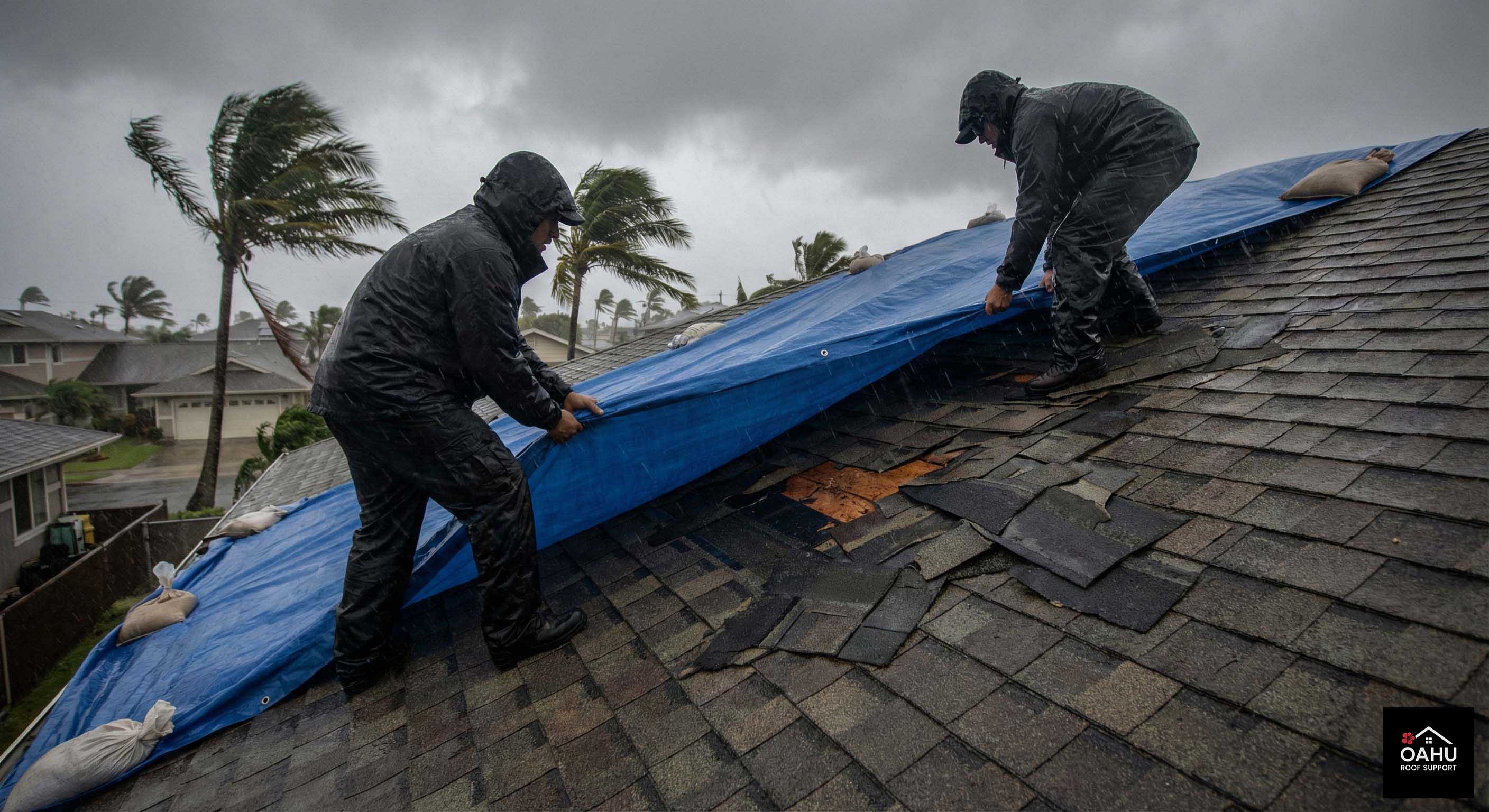
Emergency roof tarping across Oahu. Stop water entry immediately. Professional tarp installation while waiting for repairs or insurance. 24/7 response. Call 808-766-8023.
BOOK FREE CONSULTATION
When your roof is compromised and rain is coming, you can't wait days or weeks for permanent repairs. Water entering your home causes damage that compounds by the hour. Emergency tarping provides immediate protection, stopping water intrusion while you arrange for proper repairs or work through the insurance process.
When you're searching for a roofer near me for emergency help, response time matters. A professional tarp installed today prevents thousands of dollars in additional damage that would occur waiting until next week. We respond quickly because we understand what's at stake.
Immediate Protection: A properly installed tarp stops water entry within hours of your call. While not a permanent solution, quality tarping provides reliable protection for weeks or even months while you arrange repairs.
Damage Prevention: Every hour water enters your home, damage spreads. Insulation saturates, drywall deteriorates, mold begins growing, and structural components weaken. Tarping stops this cascade of damage immediately.
Insurance Requirement: Your insurance policy requires you to mitigate damage. Failing to protect your home after roof damage can jeopardize your claim. Professional tarping demonstrates you've met your obligation to prevent further loss.
Bridge to Repairs: Tarping buys time. Time for insurance adjusters to inspect. Time for contractors to schedule repairs. Time for materials to arrive. Without tarping, you'd face ongoing damage during these necessary delays.
Various emergencies call for immediate tarping:
Tropical storms, hurricanes, and severe weather can damage roofs across entire neighborhoods. High winds tear off shingles, lift tiles, and peel back metal panels. Flying debris punches holes in roofing. When storms damage your roof, tarping provides immediate protection.
Post-Storm Demand: After major storms, every roofer on the island is overwhelmed with calls. Permanent repairs may be weeks away. Tarping protects your home during this high-demand period when repair scheduling is difficult.
Trees fall on roofs during storms and sometimes without warning. Large branches can penetrate roofing and even damage structural components. Tarping covers the damaged area and any openings created by debris impact.
After Tree Removal: Even after the tree or branch is removed, the roof damage remains. Tarping protects the exposed area until repairs can be completed.
High winds don't require a named storm to damage roofs. Strong trade winds, Kona winds, and localized gusts can lift shingles, displace tiles, and compromise roof integrity. Wind damage often goes unnoticed until rain reveals the problem.
Sometimes roofs fail without obvious external cause. Aged materials give way, previous repairs fail, or hidden damage finally manifests. When unexpected failures occur, tarping stops water entry while you assess the situation.
Roof fires or fires that spread to roofing leave openings that need immediate protection. After fire department clearance, tarping prevents water damage from rain entering fire-damaged areas.
If you're in the middle of a roofing project and unexpected delays occur, whether from weather, material shortages, or contractor issues, tarping protects your home until work can resume.
Insurance claims take time. Adjusters must inspect. Estimates must be approved. Contractors must be scheduled. Tarping protects your home during this process, which can take weeks or longer.
You might be tempted to throw a tarp on your roof yourself. Here's why professional installation is worth it:
Roof work is dangerous, especially on damaged roofs. Wet surfaces, damaged decking, and compromised structural elements create hazards. Professionals have safety equipment, training, and experience working on damaged roofs. Falls from roofs cause serious injuries and deaths every year.
A tarp that blows off in the next wind gust provides no protection. Professional installation includes:
Proper Sizing: We use tarps large enough to extend well beyond the damaged area on all sides, ensuring complete coverage.
Secure Attachment: We anchor tarps using appropriate methods for your roof type. This includes weighted systems, mechanical fastening, and secure tie-downs that hold through subsequent weather.
Water Channeling: We install tarps to channel water away from damaged areas, not just cover them. Proper slope and positioning prevent water pooling.
Edge Sealing: We secure tarp edges to prevent wind from getting underneath, which can tear tarps loose or create billowing that allows water entry.
Hardware store tarps often aren't rated for roof applications. We use heavy-duty tarps designed for extended outdoor exposure:
UV Resistance: Hawaii's sun degrades cheap tarps quickly. We use UV-stabilized materials that maintain integrity for months.
Weight and Durability: Heavier tarps resist wind better and last longer. We use minimum 10-mil thickness for roof applications.
Size: We carry tarps in sizes appropriate for roof coverage, not undersized consumer tarps that require problematic seaming.
Professional tarping includes documentation that supports your insurance claim:
Before Photos: We document the damage before tarping.
Installation Photos: We document the tarping process and completed installation.
Detailed Records: We provide records of materials used, installation date, and coverage area.
This documentation proves you took appropriate steps to mitigate damage, supporting your claim.
When you call for emergency tarping, here's what happens:
We answer emergency calls 24/7. We'll gather basic information about your situation and dispatch help as quickly as possible. For active emergencies during daylight hours, we typically arrive within hours.
Before anyone goes on your roof, we assess safety conditions. Structural integrity, electrical hazards, and other dangers are evaluated. If conditions are too dangerous for immediate tarping, we'll explain the situation and determine when work can safely proceed.
We inspect the damage to understand what needs to be covered. We identify all affected areas, not just the obvious ones. We photograph and document damage for insurance purposes.
We install appropriately sized tarps to cover all damaged areas with adequate overlap. Tarps are secured using methods appropriate for your roof type and the expected weather conditions. We ensure water will channel away from damaged areas.
Before leaving, we verify the installation is secure and complete. We check attachment points, edge sealing, and overall coverage. We make adjustments as needed to ensure reliable protection.
We provide documentation of the damage and tarping for your insurance claim, including photos and a description of work performed.
We explain what to watch for and how to proceed with permanent repairs. If you need help with insurance claims or repair scheduling, we're here to assist.
A properly installed, quality tarp provides protection for extended periods:
Weeks to Months: Under normal conditions, professional tarping remains effective for 30-90 days or longer. This provides ample time for insurance processing and repair scheduling.
Factors Affecting Duration:
Weather: Severe weather can stress tarps. After major storms, we recommend inspection to verify continued integrity.
Sun Exposure: UV radiation degrades tarp materials over time. West and south-facing installations experience more UV stress.
Wind: Constant trade winds create ongoing stress on tarp attachments. Secure installation minimizes wind effects.
Tarp Quality: We use heavy-duty, UV-resistant tarps that outlast consumer-grade materials significantly.
Inspection and Maintenance: We recommend periodic inspection, especially after storms. If a tarp shows wear or damage, we can repair or replace it to maintain protection.
Not Permanent: Tarping is emergency protection, not permanent repair. Even the best tarp will eventually fail. Plan for permanent repairs rather than relying on tarping indefinitely.
Understanding how tarping relates to insurance helps you navigate the claims process:
Your homeowners policy includes a "duty to mitigate" clause requiring you to take reasonable steps to prevent further damage after a loss. Tarping a damaged roof is a textbook example of appropriate mitigation. Failing to protect your home can result in denial of claims for additional damage that could have been prevented.
Emergency tarping costs are generally covered as part of your claim when the underlying damage is covered. If wind damaged your roof (a covered peril), the cost of tarping to prevent further damage is typically included in your claim.
Keep all receipts and documentation of tarping costs for your claim.
You don't need insurance company approval before tarping. In fact, waiting for approval while damage continues could be held against you. Act promptly to protect your home, document what you do, and submit costs with your claim.
Professional tarping documentation helps your claim in several ways:
Photos of damage before tarping show what occurred. Records of tarping installation demonstrate mitigation efforts. Detailed documentation prevents disputes about pre-existing conditions versus covered damage.
We work with all major insurance carriers serving Oahu:
State Farm. Allstate. FICOH (First Insurance Company of Hawaii). Island Insurance. DTRIC. And all other Hawaii homeowners insurance providers.
Our documentation meets the requirements of these carriers, supporting smooth claim processing.
We provide emergency tarping services across the entire island:
Windward Side (Kaneohe, Kailua): The Windward coast's frequent rain makes tarping especially urgent. A damaged roof on the Windward side faces constant water exposure. We prioritize Kaneohe and Kailua emergencies because delay means damage.
North Shore (Haleiwa, Kahuku, Laie): Winter storms hit the North Shore hard. Post-storm tarping demand is high. We respond quickly to North Shore calls and understand the urgency during storm season.
Mililani and Central Oahu: Central Oahu experiences significant weather events, and many homes have aging roofs vulnerable to damage. We provide rapid response to Mililani and surrounding areas.
Ewa Beach and Kapolei: West Oahu may be drier, but storm damage still occurs, and Kona weather brings significant rain. We serve Ewa Beach and Kapolei with the same urgency as rainier areas.
Waianae Coast: The Waianae Coast faces occasional severe weather and has housing stock of varying conditions. We provide emergency tarping throughout the Waianae area.
Honolulu and Hawaii Kai: Urban Honolulu and coastal Hawaii Kai both experience weather events requiring emergency response. We serve the entire Honolulu area with rapid tarping services.
Tarping protects your home, but it's the beginning of the process, not the end:
If you haven't already, file your claim promptly. Provide documentation of the damage and tarping. Report the loss as soon as possible; delays can complicate claims.
Begin working toward permanent repairs. Get estimates, schedule contractors, and understand the scope of work needed. The sooner you start this process, the sooner your home is fully protected.
Check your tarp periodically, especially after storms or high winds. Look for tears, loosening, or displacement. If you notice problems, call us for inspection or re-tarping.
Insurance adjusters need to inspect damage. Tarps can be temporarily lifted or partially removed for inspection, then resecured. We can assist with this process if needed.
If extended time will pass before repairs, consider how upcoming weather might affect your tarp. Before major storms, have tarping inspected to ensure it will hold.
Even with tarping in place, assess interior damage. Water that entered before tarping may have affected insulation, drywall, or other materials. Document interior damage for your claim.
We're not a roofing contractor. We're your local advocate who ensures you get the protection you need when you need it:
24/7 Emergency Response: Roof emergencies don't wait for business hours. We answer calls around the clock and respond as quickly as conditions allow.
Professional Installation: Our tarping is done right, using proper materials and techniques that provide reliable protection. No amateur installations that blow off in the next storm.
Quality Materials: We use heavy-duty, UV-resistant tarps designed for extended roof coverage. Our materials last months, not days.
Insurance Documentation: We document everything for your insurance claim: damage photos, installation records, and detailed notes. This documentation supports your claim and proves you took appropriate action.
Safety First: We don't take unnecessary risks, and we don't put you at risk. Professional crews with proper equipment handle dangerous roof work safely.
Full-Service Follow-Up: We don't just tarp and disappear. We help you navigate insurance claims, schedule permanent repairs, and monitor tarping condition until your roof is properly fixed.
How quickly can you respond to an emergency?
We answer emergency calls 24/7. During daylight hours with safe conditions, we typically arrive within 2-4 hours. After-hours emergencies are handled as quickly as safely possible. During major storm events with high demand, we prioritize based on severity and work through calls as fast as we can.
How much does emergency tarping cost?
Basic tarping typically runs $300 to $800 depending on damage extent and roof accessibility. Larger or more complex jobs range from $800 to $2,500+. Emergency/after-hours calls may incur additional charges. These costs are typically covered by insurance when the underlying damage is a covered loss.
Will my insurance cover tarping costs?
Yes, when the roof damage is from a covered event (storm, wind, fallen tree, etc.), emergency tarping costs are typically covered as part of your claim. Keep all receipts and documentation. We provide detailed records to support your claim.
Do I need insurance approval before tarping?
No. Your policy requires you to mitigate damage, and waiting for approval while water enters your home works against you. Tarp first, document everything, and submit costs with your claim. Prompt action protects your home and demonstrates you met your mitigation obligation.
How long will the tarp protect my roof?
Professional tarping typically remains effective for 30-90 days under normal conditions. Quality materials and proper installation extend this timeframe. However, tarping is temporary protection. Plan for permanent repairs rather than relying on tarping indefinitely.
Can I install a tarp myself?
We don't recommend it. Roof work is dangerous, especially on damaged roofs. Falls cause serious injuries. Additionally, improper installation often fails in subsequent weather, leaving you unprotected. Professional tarping is safer, more reliable, and provides documentation for insurance.
What if the tarp blows off or gets damaged?
Call us immediately. We'll inspect and re-tarp as needed. After major storms, we recommend having tarping checked even if it appears intact. Periodic inspection catches problems before they result in water entry.
Can the tarp be removed for insurance adjuster inspection?
Yes. Tarps can be temporarily lifted or partially removed for inspection, then resecured. We can assist with this process to ensure proper reinstallation after inspection.
Do you tarp commercial buildings too?
Yes. We provide emergency tarping for commercial and residential properties of all sizes. Large commercial tarping may require additional equipment and time, but we handle jobs of any scale.
What if it's not safe to go on my roof?
Safety comes first. If conditions are too dangerous (severe structural damage, ongoing storm, electrical hazards), we'll explain the situation and determine when work can safely proceed. We don't take unnecessary risks with our crews or your property.
Will tarping damage my roof further?
Professional tarping uses appropriate attachment methods that minimize any additional impact. Some attachment points may be needed, but this is far preferable to ongoing water damage from an unprotected roof.
How do I prepare for your arrival?
Clear access to the damaged area if possible. Move vehicles away from the house to give crews working room. If you have photos of the damage, have them available. Otherwise, just be home so we can assess the situation and get to work.
If your roof is damaged and rain is threatening, don't wait. Every hour of delay is an hour of potential water damage, mold growth, and compounding problems. Emergency tarping stops the damage now.
Whether you're in Kaneohe, Mililani, the North Shore, Ewa Beach, Waianae, Honolulu, or anywhere else on Oahu, we provide emergency tarping across the entire island.
For emergencies, call us directly at 808-766-8023
We answer 24/7. We'll gather information about your situation and dispatch help as quickly as safely possible. Professional tarping protects your home, supports your insurance claim, and gives you time to arrange proper repairs.
For non-emergency inquiries or to schedule a consultation about roof damage, fill out the form below and we'll contact you within 24 hours.
Oahu Roof Support provides handyman services for small repairs and maintenance. We are not a licensed contractor. In accordance with HRS § 444-2, all projects are limited to $1,500 (labor and materials) and do not include work requiring a building permit.