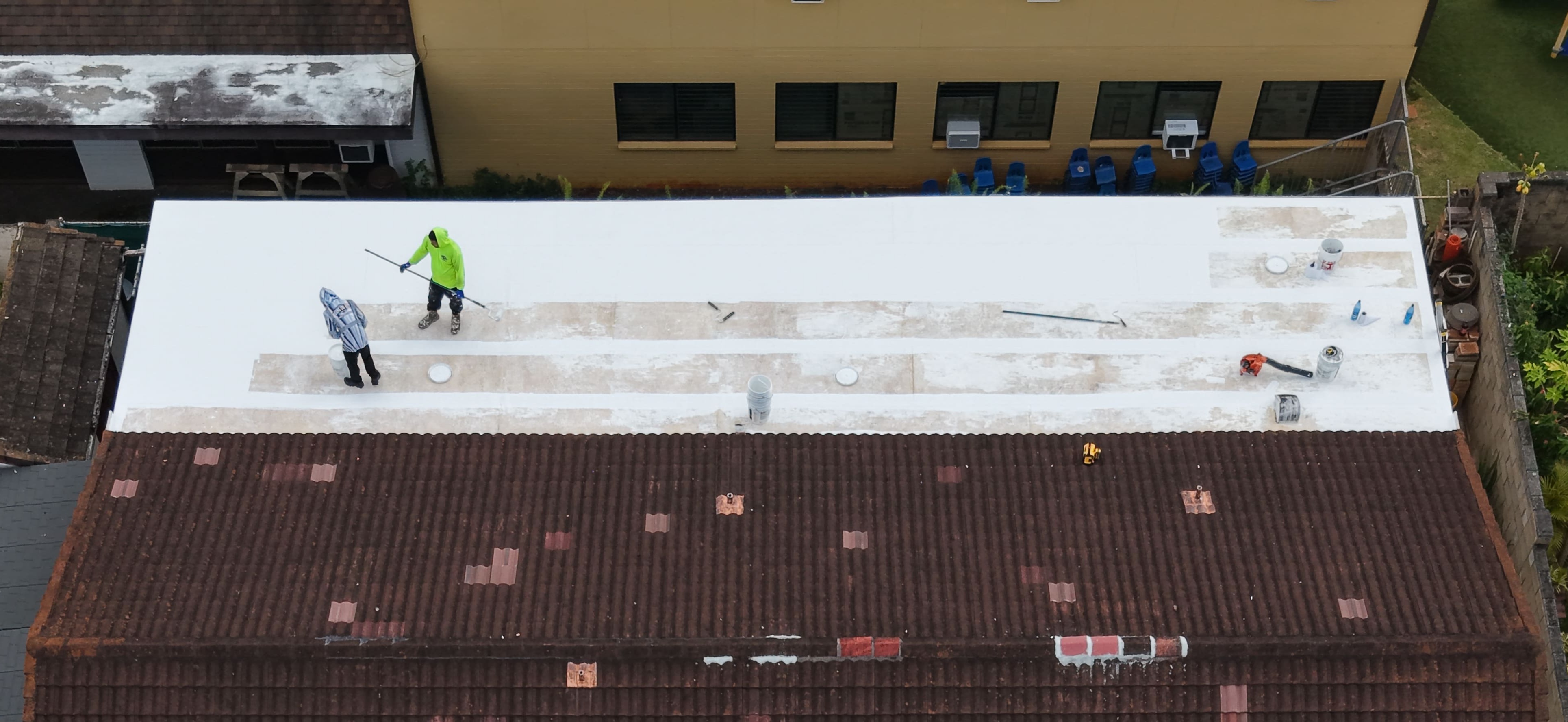
Why Roof Waterproofing Makes Sense in Hawaii
Hawaii's climate is tough on roofs. Intense UV radiation breaks down roofing materials. Heavy tropical rains test waterproofing constantly. Salt air accelerates deterioration near the coast. Roof coatings and waterproofing systems address all these challenges, extending your existing roof's life and improving performance.
Waterproofing isn't just for failing roofs. Proactive coating application protects roofs that are still in good condition, preventing deterioration before it starts. And for roofs showing early wear, coatings can add 10-15 years of service life at a fraction of replacement cost.
Life Extension: Quality roof coatings can extend your existing roof's life by 10-15 years or more. This delays the major expense of full roof replacement while providing excellent protection in the meantime.
Seamless Protection: Unlike roofing materials with seams, joints, and overlaps, coatings create a seamless membrane. This eliminates the weak points where most leaks develop.
UV Reflection: Reflective coatings dramatically reduce UV absorption, protecting underlying materials from sun damage. In Hawaii's intense sun, this UV protection significantly slows roof aging.
Energy Savings: Reflective roof coatings reduce heat absorption, lowering attic temperatures and reducing air conditioning costs. Many homeowners see noticeable reductions in their HECO bills after coating application.
Cost-Effective: Roof coating typically costs 50-70% less than full roof replacement. For roofs that are aging but not failed, coating offers excellent value.
Types of Roof Coatings
Different coating types suit different roofs and conditions. We help you select the right system for your situation:
Silicone Roof Coatings
Silicone coatings are the premium choice for Hawaii conditions, offering superior performance in our demanding climate.
Ponding Water Tolerance: Silicone's greatest advantage is its ability to withstand ponding water. Unlike other coatings that break down when water sits on them, silicone remains stable. This makes silicone ideal for flat roofs where water may pool.
UV Stability: Silicone offers excellent UV resistance, maintaining its properties despite Hawaii's intense sun exposure. It doesn't become brittle or crack from sun damage.
Single-Coat Application: High-solids silicone coatings can often achieve required thickness in a single coat, reducing labor time and cost.
Reflectivity: Silicone coatings are naturally reflective, reducing heat absorption and cooling costs.
Longevity: Quality silicone coatings last 15-20 years in Hawaii conditions with proper application.
Best For: Flat roofs, low-slope roofs, roofs with ponding water issues, and any application where maximum durability is required.
Products We Use: We work with premium silicone coatings including GACO S20 and similar high-performance systems designed for commercial and residential applications.
Acrylic Roof Coatings
Acrylic coatings offer excellent value and performance for appropriate applications.
Cost-Effective: Acrylic coatings cost less than silicone while still providing good protection and reflectivity.
Easy Application: Acrylics apply easily and can be tinted to various colors if aesthetic preference differs from standard white.
Good Reflectivity: Acrylic coatings offer strong UV reflection and can significantly reduce cooling costs.
Flexibility: Acrylics remain flexible, accommodating building movement without cracking.
Recoatability: Acrylic roofs can be easily recoated when the original coating wears, extending protection indefinitely.
Limitations: Acrylics don't tolerate ponding water well. Standing water breaks down acrylic coatings over time. For flat roofs with drainage issues, silicone is preferred.
Best For: Sloped roofs, metal roofs, roofs with positive drainage, and budget-conscious projects where ponding isn't a concern.
Polyurethane Roof Coatings
Polyurethane coatings offer exceptional durability for high-traffic or high-abuse applications.
Impact Resistance: Polyurethane is tougher than silicone or acrylic, resisting foot traffic, hail, and debris impact.
Abrasion Resistance: For roofs with regular maintenance traffic or equipment, polyurethane withstands wear better than other options.
Adhesion: Polyurethane bonds tenaciously to most substrates, making it effective for challenging applications.
Two-Part Systems: Many polyurethanes are two-component systems requiring precise mixing, which demands professional application.
UV Sensitivity: Aromatic polyurethanes can yellow and chalk in UV exposure. Aliphatic polyurethanes resist UV better but cost more. Polyurethane is often used as a base coat under UV-stable topcoats.
Best For: High-traffic roofs, roofs supporting equipment, areas with regular foot traffic, or as base coats in multi-layer systems.
Elastomeric Coatings
Elastomeric coatings stretch and recover, accommodating building movement and bridging small cracks.
Flexibility: These coatings can stretch significantly without cracking, making them ideal for buildings that experience thermal movement.
Crack Bridging: Elastomerics can span small existing cracks, sealing them without separate repair.
Various Chemistries: Elastomeric coatings come in acrylic, silicone, and other formulations, combining stretch with other performance properties.
Best For: Older roofs with minor cracking, buildings with significant thermal movement, and applications requiring flexibility.
Roof Types We Waterproof
Coating systems work on various roof types, each with specific preparation and application requirements:
Flat and Low-Slope Roofs
Flat roofs are ideal candidates for coating systems. Modified bitumen, built-up roofing, single-ply membranes (TPO, EPDM, PVC), and spray foam roofs can all be coated to extend life and improve performance.
Modified Bitumen: Aging mod-bit roofs with intact membranes respond well to silicone coating, adding years of service.
TPO and PVC: Single-ply membranes can be coated to address wear, restore reflectivity, and extend life.
EPDM: Rubber roofs require specific primers and coating types for proper adhesion. We ensure compatible systems.
Built-Up Roofing: Traditional tar and gravel roofs can be coated after proper preparation, avoiding costly tear-off.
Metal Roofs
Metal roofing is an excellent substrate for coating systems. Coatings protect against rust, seal seams and fasteners, and improve energy efficiency.
Rust Prevention: Coatings seal metal surfaces against moisture, preventing rust development and stopping existing rust progression.
Seam and Fastener Sealing: Coating systems seal around fasteners and over seams, addressing the most common leak points on metal roofs.
Reflectivity: Even on metal roofs that are already somewhat reflective, coatings significantly improve solar reflectivity and reduce heat absorption.
Color Change: Coating allows you to change your metal roof's color without replacement, refreshing appearance while adding protection.
Spray Foam Roofs
Spray polyurethane foam (SPF) roofs require protective coatings because foam degrades rapidly in UV exposure. Coating is essential maintenance for foam roofs.
UV Protection: Foam roofs must be coated to survive Hawaii's sun. Unprotected foam deteriorates quickly.
Maintenance Coating: Foam roofs should be recoated every 10-15 years to maintain protection.
Concrete and Masonry
Flat concrete roofs, common on some commercial and multi-family buildings, can be waterproofed with appropriate coating systems.
Waterproofing: Coatings seal concrete against water penetration, protecting the structure below.
Crack Bridging: Elastomeric coatings span hairline cracks common in concrete surfaces.
Shingle Roofs
While less common, certain coating systems can be applied to asphalt shingle roofs to extend life and improve reflectivity.
Limited Applications: Shingle coating is appropriate only for roofs in fair condition, not for failed or severely worn shingles.
Aesthetic Change: Coating changes shingle appearance significantly, which may not suit all homes.
Preparation Requirements: Shingle coating requires thorough cleaning and may require primer, adding to preparation time.
The Waterproofing Process
Quality waterproofing requires proper preparation and application:
Inspection and Assessment
We begin with thorough inspection to determine if coating is appropriate and what preparation is needed:
Roof Condition: Coatings work on roofs that are aging but not failed. Severely deteriorated roofs may need repair or replacement rather than coating.
Existing Problems: Leaks, ponding areas, and damage must be addressed before coating. Coating over problems traps moisture and leads to failure.
Substrate Type: Different substrates require different coating systems and preparation methods. We identify your roof type and specify appropriate products.
Drainage Assessment: For flat roofs, we assess drainage patterns. Ponding areas may need silicone specifically or drainage improvements.
Repairs and Preparation
Proper preparation is essential for coating performance:
Leak Repairs: Any active leaks must be repaired before coating. We identify leak sources and fix them properly.
Seam and Flashing Repair: Failed seams, separated flashings, and compromised details are repaired or replaced.
Surface Cleaning: Roofs must be thoroughly cleaned before coating. Dirt, debris, mold, and contaminants prevent proper adhesion. We pressure wash and treat surfaces as needed.
Rust Treatment: On metal roofs, rust must be treated before coating. We remove loose rust and apply rust-inhibiting primer.
Primer Application: Many substrates require primer for proper coating adhesion. We apply appropriate primers based on your roof type.
Coating Application
We apply coatings using professional techniques for optimal results:
Proper Thickness: Coating performance depends on achieving specified thickness. We measure and verify proper mil thickness throughout application.
Even Coverage: Uniform coating application ensures consistent protection across the entire roof.
Detail Work: Penetrations, edges, and transitions require careful attention. We reinforce these areas with fabric or additional coating as needed.
Weather Considerations: Coatings require proper temperature and dry conditions for application and curing. We schedule work appropriately for Hawaii's weather patterns.
Quality Verification
After application, we verify quality:
Thickness Verification: We confirm proper coating thickness has been achieved.
Coverage Inspection: We inspect for holidays, thin spots, or missed areas.
Detail Check: All penetrations, edges, and transitions are verified for complete coverage.
Benefits of Roof Waterproofing
Coating systems provide multiple benefits beyond basic waterproofing:
Extended Roof Life
Quality coatings add 10-15 years or more to your existing roof's service life. This delays the major expense of full replacement while providing reliable protection. For aging roofs that still have good structure, coating is often the smartest investment.
Energy Savings
Reflective coatings dramatically reduce heat absorption. A dark roof can reach 150°F or more in Hawaii's sun; a reflective coating keeps surface temperatures much lower. This reduces heat transfer to your attic and living spaces, lowering air conditioning costs.
Measured Savings: Studies show cool roof coatings can reduce cooling energy use by 10-30%. In Hawaii's climate where air conditioning runs much of the year, these savings add up.
HECO Bill Reduction: Homeowners regularly report noticeable reductions in electricity bills after coating application, particularly for buildings with poor attic insulation.
Seamless Protection
Coatings create a continuous, seamless membrane with no joints, seams, or laps. This eliminates the weak points where conventional roofing systems most commonly fail. Water has no entry path through a properly applied coating.
UV Protection
Reflective coatings protect underlying materials from UV degradation. By reflecting UV radiation rather than absorbing it, coatings preserve the roof structure beneath. This slows aging and deterioration of existing roofing materials.
Environmentally Friendly
Coating extends existing roof life, keeping materials out of landfills. The energy savings from reflective coatings reduce carbon footprint. And coating application produces far less waste than roof tear-off and replacement.
Our Waterproofing Scope
We coordinate waterproofing projects appropriate to the scope of work:
Smaller Projects: For waterproofing work within Hawaii's current $1,500 handyman exemption limit, we can handle application directly. This may cover small flat sections, lanai roofs, or targeted waterproofing of specific problem areas.
Larger Projects: For waterproofing exceeding the handyman limit, which includes most whole-roof coating projects, we connect you with licensed contractors from our network who specialize in coating applications.
If House Bill 442 passes, the handyman limit will increase to $2,500, allowing us to handle more projects directly. Regardless of where the limit stands, we ensure all work is performed by appropriately qualified professionals in full legal compliance.
Project Coordination: Whether we apply coating directly or coordinate with licensed contractors, we manage the process from assessment through completion. You receive consistent quality and communication throughout.
Waterproofing and Insurance
While roof coating is typically a maintenance investment rather than an insurance claim, there are situations where coverage applies:
Storm Damage Restoration: If storm damage has affected your flat roof and coating is part of the repair scope, coating costs may be included in your claim.
Code Compliance: When repairs require coating for code compliance or manufacturer warranty requirements, these costs may be covered.
Preventive Value: While proactive coating isn't covered by insurance, it can prevent future damage and claims. A well-maintained, coated roof is less likely to develop problems that lead to claims.
We work with all major insurance carriers serving Oahu, including State Farm, Allstate, FICOH, Island Insurance, DTRIC, and all other Hawaii homeowners insurance providers.
Roof Waterproofing Across All of Oahu
We provide waterproofing services across the entire island:
Mililani and Central Oahu: Central Oahu homes with flat sections, carports, and lanai roofs benefit from waterproofing that handles both sun exposure and rain. We serve Mililani and surrounding areas with coating solutions.
Ewa Beach and Kapolei: West Oahu's intense sun makes reflective coatings particularly valuable. The energy savings from cool roof coatings are significant in sunny Ewa Beach and Kapolei.
North Shore (Haleiwa, Kahuku, Laie): North Shore properties face salt air and seasonal heavy rain. We specify coating systems that handle coastal conditions and heavy water exposure.
Kaneohe and Kailua: The Windward coast's frequent rain tests waterproofing constantly. We ensure coating systems are properly applied to handle Kaneohe and Kailua's wet conditions.
Waianae Coast: Coastal exposure plus intense sun creates demanding conditions. We recommend coating systems appropriate for Waianae's environment.
Honolulu and Hawaii Kai: From urban Honolulu commercial buildings to residential Hawaii Kai properties, we provide waterproofing services throughout the metro area.
Why Choose Oahu Roof Support for Waterproofing
We're not just applying coating. We're extending your roof's useful life with appropriate solutions:
Proper Assessment: We determine whether coating is appropriate for your roof or if other solutions make more sense. Not every roof should be coated, and we give honest recommendations.
Right Product Selection: We match coating type to your specific roof and conditions. Silicone for ponding, acrylic for sloped roofs, polyurethane for high-traffic areas—proper selection ensures performance.
Quality Application: Coating performance depends on proper application. We ensure correct preparation, appropriate thickness, and thorough coverage.
Licensed Contractor Network: For projects exceeding handyman exemption limits, we connect you with licensed, experienced coating contractors who deliver professional results.
Realistic Expectations: We explain what coating can and can't do. Coating isn't a solution for failed roofs, but it's excellent for extending the life of roofs that still have good structure.
Hawaii Expertise: We understand which coating systems perform best in Hawaii's unique conditions: intense UV, heavy rain, salt air, and year-round warmth.
Frequently Asked Questions About Roof Waterproofing
How long does roof coating last?
Quality silicone coatings typically last 15-20 years in Hawaii conditions. Acrylic coatings last 10-15 years. Longevity depends on proper application, coating thickness, and roof conditions. Most coatings can be recoated when they wear, extending protection indefinitely.
How much does roof waterproofing cost?
Coating costs vary based on roof size, type, and condition. Generally, coating costs $3-$7 per square foot, compared to $8-$15+ for roof replacement. For most roofs, coating costs 50-70% less than replacement while adding 10-15 years of life.
Can you coat any roof?
Most roofs can be coated, but not all should be. Coating works best on roofs that are aging but still structurally sound. Roofs with extensive damage, rotted decking, or failed membranes need repair or replacement, not coating. We assess your roof and recommend honestly whether coating is appropriate.
What about roofs with ponding water?
Silicone coatings tolerate ponding water well, making them ideal for flat roofs with drainage challenges. Acrylic coatings don't handle ponding and shouldn't be used where water stands. We assess drainage and recommend appropriate products.
Will coating stop my roof from leaking?
Coating creates a seamless waterproof barrier, but existing leaks must be repaired before coating. Coating over active leaks traps moisture and causes problems. We repair leaks first, then coat to prevent future ones.
How much will I save on energy costs?
Reflective coatings typically reduce cooling costs by 10-30%, depending on building characteristics, insulation, and AC efficiency. In Hawaii where cooling runs year-round, annual savings can be significant. Many customers report noticeable HECO bill reductions.
Do you handle the coating application directly?
For projects within Hawaii's $1,500 handyman exemption limit, we can apply coating directly. Larger projects, which include most whole-roof applications, are performed by licensed contractors in our network. All work is done by qualified professionals.
How long does coating application take?
Small projects may be completed in a day. Average residential flat roofs typically take 2-3 days including preparation. Larger or more complex projects take longer. We provide realistic timelines based on your specific project.
What preparation is required?
Roofs must be clean, dry, and free of damage before coating. This typically includes pressure washing, repairs to any damaged areas, seam and flashing treatment, and primer application. Proper preparation is essential for coating performance.
Can I walk on a coated roof?
Yes, but carefully. All coatings can be walked on for maintenance access. Silicone coatings are more slippery when wet than other types. For roofs with regular foot traffic, polyurethane or textured coatings provide better traction.
Is roof coating environmentally friendly?
Yes. Coating extends existing roof life, reducing landfill waste from tear-offs. Energy savings reduce carbon footprint. And coating application produces far less waste and disruption than full roof replacement.
Will my insurance cover roof coating?
Proactive coating is typically a maintenance investment, not an insurance claim. However, if coating is part of storm damage repair or required for code compliance, those costs may be included in a claim. We help you understand what applies to your situation.
Schedule Your Free Waterproofing Assessment Today
If your flat roof, metal roof, or low-slope section is aging but not failed, waterproofing coating may be the ideal solution. Extend your roof's life, improve energy efficiency, and protect against Hawaii's demanding weather—all at a fraction of replacement cost.
Whether you're in Mililani, Ewa Beach, Kaneohe, the North Shore, Honolulu, or anywhere else on Oahu, we provide waterproofing services across the entire island.
What happens when you reach out:
Fill out the form below or call us directly. We'll contact you within 24 hours to schedule. Your assessment includes roof condition evaluation, drainage analysis, coating system recommendations, and a clear estimate for extending your roof's life with professional waterproofing.
Prefer to call? Reach us directly at 808-766-8023