After the Storm: What You Need to Know
When a tropical storm, hurricane, or severe weather event damages your roof, you're facing multiple challenges at once. Your home may be exposed to further damage. You need to navigate an unfamiliar insurance process. And you need repairs from contractors who may be overwhelmed with demand. We specialize in guiding homeowners through this entire process.
Start with the facts of the day: search the Oahu Storm Date Index, a free archive of every storm NOAA has recorded on Oahu since 1996.
Our focus isn't just fixing roofs. It's ensuring you receive the insurance coverage you're entitled to while protecting your home from additional damage. We understand the claims process, documentation requirements, and what it takes to get storm damage properly covered.
Immediate Concerns: Your first priority is preventing additional damage. If your roof is compromised, rain can continue entering your home, causing water damage that compounds daily. Quick action protects your home and demonstrates to your insurance company that you've met your duty to mitigate.
Insurance Process: Storm damage claims require proper documentation, timely filing, and often persistent follow-up. We specialize in this process and guide you through every step to ensure insurance funds that qualify for your damage are properly applied.
Repair Coordination: After major storms, roofing contractors are overwhelmed. Getting quality repairs scheduled takes time. We help you navigate this demand surge while ensuring your home stays protected.
Types of Storm Damage We Address
Hawaii's storms cause various types of roof damage, each requiring specific assessment and repair approaches:
Wind Damage
High winds are the primary cause of storm-related roof damage in Hawaii. Wind doesn't affect roofs uniformly; it creates uplift forces that are strongest at edges, corners, and ridges.
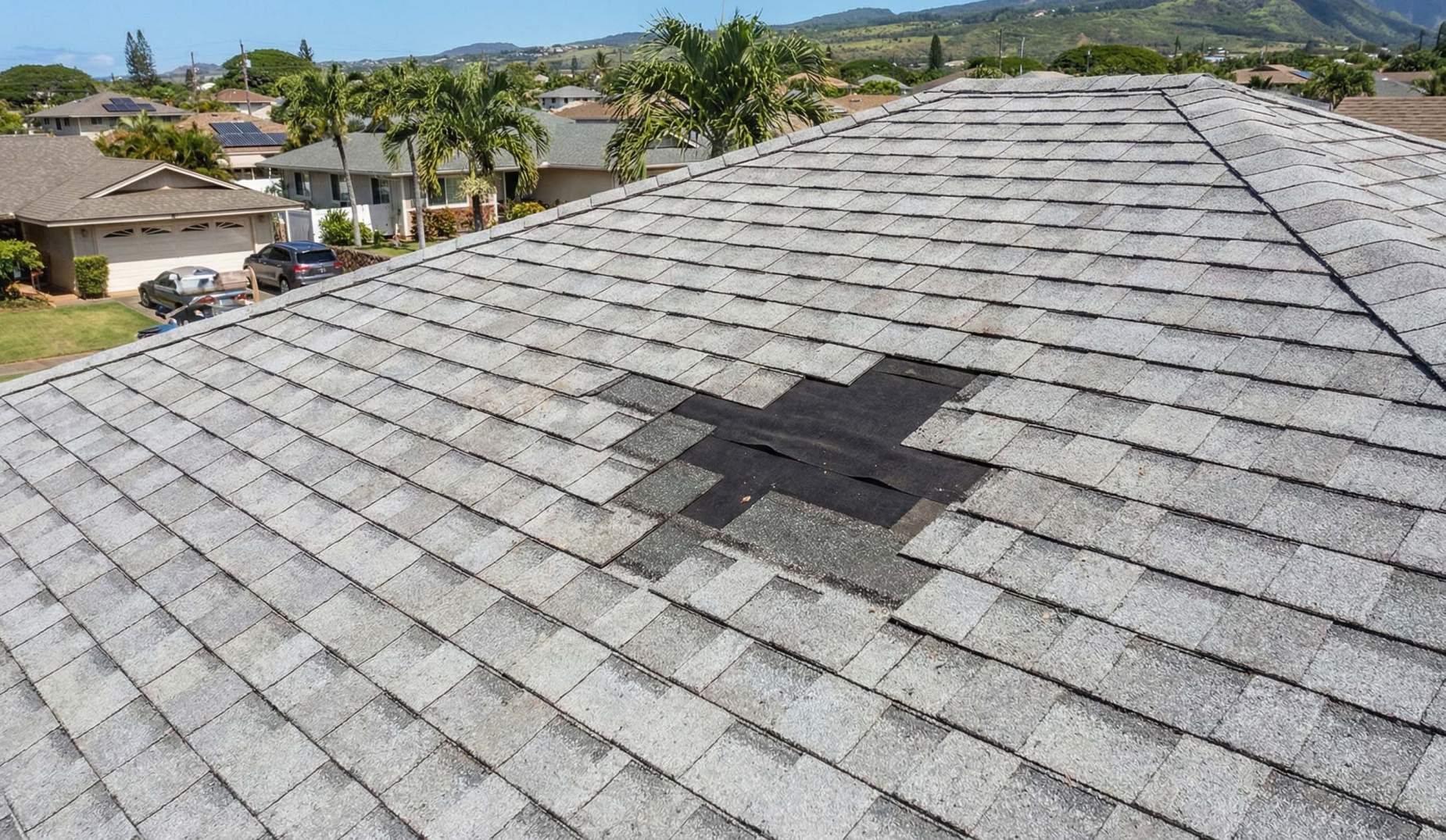
Shingle Damage: Wind lifts shingles, breaking the adhesive seal that holds them down. Once lifted, shingles can crease, tear, or blow off entirely. Even shingles that remain in place may have broken seals that leave them vulnerable to future wind events.
Tile Displacement: Wind can shift, crack, or completely remove concrete and clay tiles. The weight that makes tile durable also means displaced tiles can cause significant damage when they fall.
Metal Panel Lifting: Metal roofing can experience panel lifting, seam separation, and fastener pull-out during high winds. Exposed fastener systems are particularly vulnerable to wind-driven damage.
Flashing Damage: Wind catches flashing edges, bending, lifting, or tearing flashings away from their proper position. Damaged flashings allow water entry even when surrounding roofing materials appear intact.
Debris Impact Damage
Storms turn everyday objects into projectiles. Tree branches, building materials, outdoor furniture, and other debris can impact roofs with significant force.
Punctures: Sharp debris can puncture roofing materials, creating immediate leak points.
Cracks and Breaks: Impact cracks tiles and can damage shingles, even when the debris doesn't fully penetrate.
Dents: Metal roofing can dent from debris impact. While dents may not immediately leak, they can compromise the roof's integrity over time.
Fallen Tree Damage
Trees or large branches falling on roofs cause some of the most severe storm damage. This can include structural damage to framing, not just roofing materials.
Structural Assessment: Fallen tree damage requires assessment beyond just the roofing. We evaluate whether rafters, decking, and other structural elements are compromised.
Emergency Securing: After tree removal, the exposed roof area needs immediate protection from weather until repairs can be completed.
Wind-Driven Rain Damage
Hawaii's storms don't just bring wind; they bring intense, wind-driven rain that can penetrate roofing systems that would otherwise be watertight.
Horizontal Rain: When wind drives rain horizontally, water can enter under shingles, through ridge vents, and around penetrations that normally stay dry.
Water Intrusion: Wind-driven rain damage includes not just the entry point but all interior damage caused by water that entered during the storm.
Hidden Damage: Water that entered during a storm may have soaked insulation, wetted framing, and created conditions for mold growth. This hidden damage is part of your storm damage claim.
Flying Debris From Roof
Storm damage includes materials that blew off your roof, not just damage to what remains. Missing shingles, tiles, ridge caps, and other components need documentation and replacement.
Emergency Mitigation Services
When your roof is damaged and weather threatens, immediate action prevents additional damage and protects your insurance claim:
Emergency Tarping
Professional tarping stops water entry while you work through the insurance and repair process. Quality tarping provides reliable protection for weeks or months.
Immediate Response: We respond to emergency calls 24/7. For active emergencies during daylight hours, we typically arrive within hours.
Professional Installation: Our tarping is properly sized, securely attached, and installed to channel water away from damaged areas. Professional installation outlasts DIY attempts and provides documentation for insurance.
Temporary Repairs
Some damage can be temporarily secured without full tarping. Board-ups, temporary flashing, and emergency sealing can protect specific damage points.
Water Mitigation
If water has already entered your home, mitigation prevents additional damage. Water extraction, drying, and moisture control protect against mold growth and structural deterioration.
Our Mitigation Scope
We can perform mitigation work up to Hawaii's current $1,500 handyman exemption limit. This covers most emergency tarping and temporary protection needs. For mitigation work exceeding this limit, we coordinate with licensed contractors in our network to ensure proper legal compliance while getting your home protected quickly.
If House Bill 442 passes, this limit will increase to $2,500, allowing us to handle more extensive mitigation directly. Regardless of where the limit stands, we ensure all work is performed by appropriately qualified and licensed professionals.
Mitigation and Your Insurance Claim
Your insurance policy requires you to mitigate damage, and mitigation costs are typically covered as part of your claim. Taking prompt action to protect your home demonstrates you've met this obligation and prevents disputes about damage that occurred after the storm versus damage you could have prevented.
We document all mitigation work with photos and detailed records, providing everything your insurance company needs to process mitigation costs as part of your claim.
Our Storm Damage Claims Process
We specialize in guiding homeowners through the storm damage insurance process. This isn't a sideline for us; it's core to what we do. Here's how we help:
Thorough Damage Assessment
We inspect your entire roof for storm damage, not just obvious problems:
Visible Damage: Missing materials, displaced tiles, obvious impact points, and torn flashings are documented thoroughly.
Hidden Damage: We look for damage that isn't immediately obvious, such as shingles with broken seals, hairline cracks in tiles, and compromised flashings that may not show from the ground.
Attic Inspection: We inspect inside the attic when accessible to assess decking condition, identify water intrusion, and document any damage that supports code upgrade requirements.
Interior Damage: Water damage inside your home is part of your storm damage claim. We document ceiling stains, wall damage, and any other interior effects of roof compromise.
Documentation for Insurance
Proper documentation is essential for claim approval and full payment:
Photographic Evidence: We photograph all damage systematically, creating a visual record that supports your claim.
Damage Descriptions: Each damaged area is described in detail, including location, type of damage, apparent cause, and required repairs.
Storm Correlation: We document how damage relates to the specific storm event, supporting the connection between covered weather and resulting damage.
Repair Scope: We outline what repairs are actually needed to restore your roof properly, not minimal patches that leave problems unaddressed.
Claim Filing Assistance
We help you file your claim correctly:
Timely Filing: Storm damage claims should be filed promptly. We help ensure claims are submitted within required timeframes.
Complete Information: Missing information delays claims. We help you provide everything needed for efficient processing.
Supporting Documentation: Your claim is filed with our detailed damage report and photos, giving adjusters clear evidence from the start.
Adjuster Meeting Support
When your insurance adjuster inspects the damage, we're there with you:
Professional Representation: Having a knowledgeable advocate present ensures all damage is identified and properly assessed.
Damage Walk-Through: We guide the adjuster through all documented damage, ensuring nothing is overlooked.
Technical Discussion: We discuss repair requirements, material specifications, and code requirements with adjusters in terms they understand.
Estimate Review and Supplements
Insurance estimates often fall short of actual repair costs:
Estimate Analysis: We review insurance estimates for completeness, accuracy, and appropriate Hawaii pricing.
Supplement Filing: When estimates miss damage or undervalue repairs, we file supplements with supporting documentation to recover what you're owed.
Code Upgrade Documentation: When repairs trigger code compliance requirements, we document these requirements and their costs for supplemental coverage.
Repair Coordination
Once your claim is resolved, we coordinate repairs:
Licensed Contractors: For repair work exceeding Hawaii's handyman exemption limits, we connect you with licensed contractors from our network who deliver quality work.
Scope Alignment: Repairs match the documented damage and approved claim scope, ensuring the work addresses all identified problems.
Recoverable Depreciation: For replacement cost policies, we help you recover withheld depreciation after repairs are completed.
Understanding Storm Damage Insurance Claims
Knowing how storm damage claims work helps you navigate the process:
What's Covered
Wind Damage: Damage from wind, including shingles blown off, tiles displaced, flashings damaged, and materials compromised by wind forces, is covered by standard homeowners policies.
Debris Impact: Damage from wind-blown debris, falling trees, and storm-related impacts is covered.
Wind-Driven Rain: Water damage resulting from wind-driven rain entering through storm-damaged roofing is covered. The key is that storm damage allowed water entry.
Resulting Damage: Interior water damage, damaged insulation, and other secondary effects of storm damage are part of your claim.
Mitigation Costs: Reasonable costs to prevent additional damage, such as emergency tarping, are typically covered.
Common Claim Challenges
Age vs. Storm Damage: Insurers sometimes attribute damage to age rather than storms. Proper documentation of storm-caused damage counters this.
Partial Approvals: Initial approvals often cover less than full repair costs. Supplements frequently recover additional coverage.
Mainland Pricing: Insurance estimates based on mainland costs undervalue Hawaii repairs. We document actual Hawaii pricing.
Missed Damage: Adjusters, especially CAT adjusters brought in from the mainland after major storms, may miss damage. Our documentation ensures nothing is overlooked.
Claim Outcomes
Storm damage claims typically result in one of three outcomes:
Full Denial: Some claims are denied, often incorrectly. Denials can frequently be appealed with additional documentation.
Partial Approval: Most initial approvals cover less than the full repair scope. Partial approvals are starting points for supplements.
Full Replacement: Full roof replacement approval doesn't usually come immediately unless damage is undeniably severe. However, partial approvals often become full replacements through proper supplementation, code requirements, and matching provisions.
Getting from partial approval to full replacement is more common than most homeowners realize, especially in Hawaii where building code updates, discontinued materials, and proper installation requirements often expand repair scope.
Storm Damage Repair Across All of Oahu
We serve storm-damaged properties across the entire island:
Windward Side (Kaneohe, Kailua): The Windward coast takes direct hits from many storms. Heavy rainfall during and after storms makes prompt mitigation especially critical. We respond quickly to Kaneohe and Kailua storm damage.
North Shore (Haleiwa, Kahuku, Laie): The North Shore faces powerful winter storms and occasional tropical systems. Exposed coastal properties experience severe wind and wind-driven rain. We help North Shore homeowners document damage and navigate claims.
Mililani and Central Oahu: Central Oahu's elevation exposes homes to strong winds during storms. We assess and repair storm damage throughout Mililani and surrounding communities.
Ewa Beach and Kapolei: West Oahu experiences storm effects including wind damage and Kona storm rainfall. We serve Ewa Beach and Kapolei homeowners with comprehensive storm damage services.
Waianae Coast: The Waianae Coast faces occasional severe weather that can cause significant damage. We provide storm damage assessment and claims assistance throughout Waianae.
Honolulu and Hawaii Kai: Urban and suburban Honolulu areas experience storm damage from wind, debris, and rainfall. We serve storm-affected properties throughout the metro area.
Insurance Companies We Work With
We have experience with all major carriers serving Oahu homeowners:
State Farm: Hawaii's largest homeowners insurer. We understand their storm damage claims process and documentation requirements.
Allstate: Major carrier with significant Hawaii presence. We work with Allstate on ladder assists and comprehensive claim documentation.
FICOH (First Insurance Company of Hawaii): Local carrier with Hawaii expertise. We work effectively with FICOH adjusters who understand local conditions.
Island Insurance: Hawaii-based carrier familiar with storm patterns and local repair costs.
DTRIC: Growing Hawaii presence. We've helped DTRIC policyholders achieve fair storm damage claim outcomes.
And All Other Carriers: Whatever insurance company covers your home, we can help navigate your storm damage claim.
Why Choose Oahu Roof Support for Storm Damage
We're not just roofers responding to storm calls. We're specialists in the complete storm damage recovery process:
Claims Expertise: We specialize in the insurance claims process. Getting your damage covered isn't something we do on the side; it's central to our work. We guide you through every step to ensure insurance funds that qualify for your damage are properly applied.
Immediate Response: We provide emergency mitigation to protect your home while the claims process unfolds. Quick action prevents additional damage and supports your claim.
Thorough Documentation: Our damage assessments are comprehensive and professionally documented. Adjusters take our reports seriously because they're detailed, accurate, and properly correlate damage to storm events.
Supplement Experience: We routinely file supplements that recover additional coverage when initial estimates fall short. Getting from partial approval to full coverage is something we do regularly.
Licensed Contractor Network: For repairs exceeding handyman exemption limits, we connect you with licensed, qualified contractors who deliver quality work.
Full-Service Support: From emergency tarping through claim resolution to completed repairs, we guide you through the entire process. You're not handed off between companies or left to navigate alone.
Frequently Asked Questions About Storm Damage Repair
What should I do immediately after storm damage?
First, ensure your safety and your family's safety. Then document visible damage with photos if you can do so safely. Contact us for emergency mitigation if your roof is compromised and weather threatens. File your insurance claim promptly. Don't make permanent repairs before the adjuster inspects, but do take reasonable steps to prevent additional damage.
How quickly can you respond after a storm?
We respond to emergency calls 24/7. During normal conditions, we typically arrive within hours for emergencies. After major storms affecting many homes, response times may be longer due to high demand, but we prioritize active emergencies and work through calls as quickly as possible.
Do I need to file an insurance claim, or can I just get repairs done?
If you have storm damage, filing a claim is almost always advisable. Storm damage is exactly what insurance is for. Paying out of pocket for covered damage wastes money. We help you file correctly and pursue full coverage for legitimate damage.
Will my insurance cover my storm damage?
Wind damage, debris impact, and resulting water damage are covered by standard homeowners policies. The key is documenting that storm conditions caused the damage. We provide thorough documentation that supports claim approval.
What if my claim is denied or only partially approved?
Denials can often be appealed with additional documentation. Partial approvals are common initial outcomes that frequently become full coverage through supplements. We're experienced at recovering additional coverage when initial decisions fall short.
How long does the storm damage claims process take?
Simple claims may resolve in 2-4 weeks. Complex claims or those requiring supplements typically take 4-8 weeks. After major storms with high claim volumes, timelines may extend further. We keep the process moving and follow up on delays.
Can you help with mitigation?
Yes. We provide emergency mitigation including tarping and temporary protection up to Hawaii's $1,500 handyman exemption limit. For larger mitigation needs, we coordinate with licensed contractors in our network. All mitigation is documented for your insurance claim.
Should I get multiple contractor estimates before proceeding?
This is a common misconception. The goal isn't finding the cheapest contractor to fit your insurance payout. The goal is maximizing your insurance coverage so repairs are fully funded. We focus on getting you full coverage for legitimate damage, then ensuring repairs are done properly by qualified professionals.
What if my roof was old when the storm hit?
Storm damage to older roofs is still covered. The storm caused the damage, even if the roof's age made it more vulnerable. Older 3-tab shingle roofs and other aging materials regularly qualify for coverage when storms cause damage.
What if my shingles are discontinued and can't be matched?
This actually helps your claim. Hawaii has certain discontinued shingle types. When matching isn't possible, your policy's matching provision often requires coverage for additional replacement to maintain uniform appearance. We document shingle types and research local availability specifically for this reason.
Do I have to use your contractors for repairs?
No. You're free to use any licensed contractor you choose. Our claims assistance is provided regardless of who does repairs. That said, our contractor network delivers quality work and coordinates seamlessly with claims we've documented.
What's your fee for claims assistance?
Our damage inspections and claims guidance are free. We're compensated through repair work if you choose to use our contractor network. If you use a different contractor, you've still received free expert assistance with your claim.
Get Help With Your Storm Damage Today
Storm damage is stressful, but you don't have to navigate it alone. From emergency protection to insurance claims to completed repairs, we guide you through the entire process. Our goal is ensuring your home is protected, your damage is covered, and your repairs are done right.
Whether you're in Kaneohe, Mililani, the North Shore, Ewa Beach, Honolulu, or anywhere else on Oahu, we provide storm damage services across the entire island.
For emergency mitigation, call us directly at 808-766-8023
We answer 24/7 for emergencies. For non-emergency storm damage assessment, fill out the form below and we'll contact you within 24 hours to schedule your free inspection.