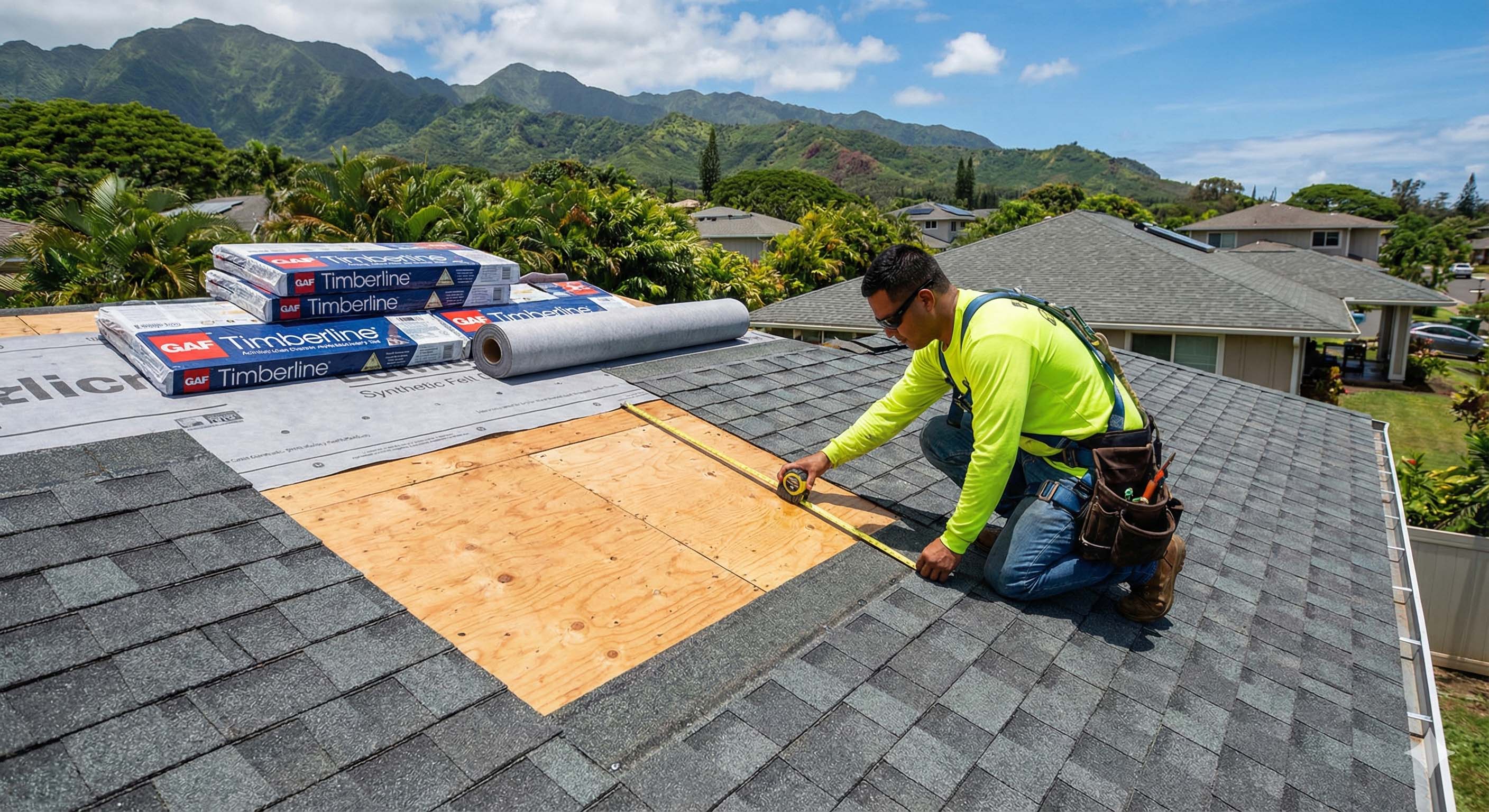
Wind Damage Is Hawaii's Most Common Roof Problem
Living in Hawaii means living with wind. Trade winds blow most days of the year. Kona winds bring occasional powerful gusts from the opposite direction. Tropical storms and hurricanes deliver extreme wind events. All of this wind takes a toll on roofs, making wind damage the most common roofing problem we address.
Curious how hard the wind has actually blown here? Explore Hawaii's Strongest Recorded Winds, all 602 official NOAA wind records for the islands, ranked and searchable.
Wind damage doesn't require a named storm. Regular trade winds, especially during stronger periods, can lift shingles, displace tiles, and compromise flashings. Many homeowners don't realize their roof has wind damage until a leak appears during the next rain. By then, the damage may have been present for weeks or months.
How Wind Damages Roofs: Wind doesn't push down on roofs; it creates uplift. As wind flows over your roof, it creates negative pressure that pulls roofing materials upward. This uplift is strongest at edges, corners, and ridges, which is why these areas fail first.
Cumulative Effects: Even when wind doesn't immediately tear off materials, it stresses adhesive bonds and fasteners. Over time, this cumulative stress weakens your roof's wind resistance, making failure more likely during future wind events.
Insurance Coverage: Wind damage is a covered peril under standard homeowners insurance policies. Whether damage occurred during a major storm or regular trade winds, you may have a valid insurance claim. We specialize in documenting wind damage and guiding homeowners through the claims process to ensure coverage is properly applied.
Types of Wind Damage
Wind affects different roofing materials and components in specific ways:
Shingle Wind Damage
Asphalt shingles are particularly vulnerable to wind because they rely on adhesive strips to hold them down. When wind breaks these seals, damage escalates quickly.
Lifted Shingles: Wind gets under shingle edges and breaks the adhesive bond. Once lifted, shingles may reseal in warm weather, but the bond is never as strong. Lifted shingles are vulnerable to further lifting and eventual tear-off.
Creased Shingles: When wind lifts shingles repeatedly, they can develop creases where they've bent back and forth. Creased shingles are compromised and prone to cracking.
Missing Shingles: Complete shingle loss leaves underlayment or decking exposed. Missing shingles require immediate attention to prevent water damage.
Broken Seal Strips: Even when shingles appear in place, their adhesive seals may be broken. These shingles look fine but will lift in future wind, often tearing or blowing off entirely.
Tile Wind Damage
Concrete and clay tiles are heavy, but wind still affects them, especially if installation or previous repairs were inadequate.
Displaced Tiles: Wind can shift tiles out of position, breaking their overlap pattern and creating gaps where water enters.
Lifted Tiles: Tiles that weren't properly fastened can lift and resettle repeatedly, eventually cracking or dislodging completely.
Broken Tiles: Wind-lifted tiles can crack when they drop back down or when they collide with adjacent tiles.
Missing Tiles: Complete tile loss exposes the underlayment beneath. Missing tiles also become projectiles that can damage other property.
Metal Roof Wind Damage
Metal roofing is generally wind-resistant, but specific components can fail:
Panel Lifting: Metal panels can lift at edges, especially on exposed fastener systems where screws have loosened or washers have deteriorated.
Seam Separation: Standing seam panels can separate at seams if installation was inadequate or if severe wind exceeds design limits.
Fastener Pull-Out: Screws can pull through panels or out of substrates under extreme uplift forces.
Ridge Cap Damage: Ridge caps on metal roofs can lift, bend, or blow off in high winds.
Flashing Wind Damage
Flashings at edges, penetrations, and transitions are vulnerable to wind:
Lifted Edge Metal: Drip edges and rake trim can lift and bend, creating gaps where wind-driven rain enters.
Bent Flashings: Wind catches flashing edges and bends them out of position, compromising their seal.
Separated Flashings: Flashings can pull away from walls, chimneys, and other surfaces, creating leak points.
Missing Flashings: Severe wind can tear flashings off entirely, leaving transitions completely unprotected.
Ridge and Hip Cap Damage
Ridge and hip caps are at the roof's highest points where wind forces are strongest:
Lifted Caps: Wind lifts ridge caps, breaking seals and loosening fasteners.
Missing Caps: Complete loss of ridge or hip caps exposes the ridge opening to water entry.
Compromised Seals: Even caps that remain in place may have broken seals that allow water entry.
Vulnerable Areas: Where Wind Damage Occurs
Wind damage doesn't happen uniformly across roofs. Certain areas are consistently more vulnerable:
Roof Perimeter
Edges and eaves experience the highest wind uplift forces. The perimeter 3-4 feet of your roof is most likely to show wind damage. Building codes require enhanced fastening in perimeter zones for this reason.
Corners
Roof corners experience even higher uplift than edges. The corner zones where two edges meet are the most vulnerable points on any roof.
Ridges and Hips
The peaks of your roof catch wind from multiple directions. Ridge caps and hip caps are commonly damaged by wind.
Windward Faces
Roof slopes facing prevailing winds take the most abuse. In Hawaii, this typically means slopes facing the trade winds (generally northeast) experience more wind stress.
Areas Near Taller Structures
Wind accelerates around buildings, trees, and other structures. Roof areas near taller objects may experience higher wind speeds than surrounding areas.
Wind Damage Assessment
Proper assessment identifies all wind damage, not just obvious problems:
Ground-Level Indicators
Before we go on the roof, we look for signs visible from the ground:
Missing Materials: Obvious gaps where shingles, tiles, or other materials are missing.
Debris in Yard: Roofing materials in your yard or gutters indicate damage above.
Visible Lifting: Shingles or tiles that appear lifted or out of alignment.
Flashing Displacement: Edge metal or flashings that appear bent or out of position.
Roof Surface Inspection
On the roof, we systematically inspect:
Perimeter Zones: We carefully examine the edges, eaves, and corners where wind damage is most likely.
All Roof Faces: We inspect every slope, noting wind exposure and checking for damage throughout.
Ridges and Hips: We examine all ridge and hip caps for lifting, damage, and seal integrity.
Flashings: We check every flashing for displacement, bending, and separation.
Seal Testing: We test shingle seals to identify lifted materials that may have resealed but remain vulnerable.
Attic Inspection
We inspect the attic when accessible to assess:
Daylight Penetration: Visible daylight indicates gaps where wind and water can enter.
Water Staining: Evidence of water entry from previous wind-driven rain events.
Decking Condition: Damage or deterioration that may support code upgrade requirements in your insurance claim.
Documentation
We thoroughly document all findings:
Photographs: Every damage point is photographed clearly with context showing location.
Damage Descriptions: Written descriptions of each damaged area, damage type, and cause.
Repair Requirements: Documentation of what repairs are needed to properly address all damage.
Wind Damage Insurance Claims
Wind damage is a covered peril, and we specialize in helping homeowners navigate the claims process:
Coverage Basics
Wind Is Covered: Standard homeowners policies cover wind damage to roofs. This includes damage from trade winds, Kona winds, tropical storms, hurricanes, and other wind events.
No Named Storm Required: You don't need a hurricane or named storm for coverage. Regular trade wind damage qualifies for claims when it causes legitimate damage.
Resulting Damage: Water damage resulting from wind-compromised roofing is part of your claim. If wind damage allowed water entry, interior damage is covered.
Our Claims Process
We guide you through every step:
Thorough Assessment: We identify all wind damage, including subtle issues adjusters might miss.
Professional Documentation: Our detailed reports and photographs support claim approval and full payment.
Claim Filing Assistance: We help you file correctly with complete information and supporting evidence.
Adjuster Meeting Support: We attend adjuster inspections to ensure all damage is identified and properly assessed.
Supplement Filing: When initial estimates fall short, we file supplements with documentation supporting additional coverage.
Common Claim Challenges
Age Attribution: Insurers sometimes claim damage is from age rather than wind. Proper documentation of wind-caused damage counters this.
Partial Approvals: Initial approvals often cover less than full repair needs. Supplements frequently recover additional coverage.
Matching Requirements: When damaged materials can't be matched, your policy may require coverage for additional replacement. Hawaii has discontinued shingle types that often trigger matching provisions.
Code Upgrades: When repairs require code compliance upgrades, these costs should be covered under ordinance provisions.
Claim Outcomes
Wind damage claims typically result in denial, partial approval, or full replacement approval. Full replacement usually requires documentation and often supplementation. Getting from partial to full coverage is common in Hawaii due to code requirements, discontinued materials, and matching provisions. We specialize in this progression.
Wind Damage Repairs
Once damage is documented and claims are underway, repairs restore your roof's integrity:
Shingle Repairs
Replacement: Missing and damaged shingles are replaced with matching materials when available.
Resealing: Lifted shingles that aren't damaged can sometimes be resealed, though replacement is often more reliable.
Enhanced Fastening: Repairs include proper fastening to resist future wind events.
Tile Repairs
Tile Replacement: Broken or missing tiles are replaced. We work to match existing tiles, accessing salvage materials for discontinued types when necessary.
Repositioning: Displaced tiles are repositioned and properly secured.
Fastener Upgrades: When repairs reveal inadequate original fastening, we recommend upgrades to prevent future damage.
Metal Roof Repairs
Panel Resecuring: Lifted panels are resecured with appropriate fasteners.
Fastener Replacement: Failed fasteners and deteriorated washers are replaced.
Seam Repair: Separated seams are repaired or panels replaced as needed.
Flashing Repairs
Repositioning: Bent or displaced flashings are repositioned and resecured.
Replacement: Damaged flashings are replaced with appropriate materials, including aluminum for coastal properties.
Resealing: All flashing repairs include proper sealing with materials rated for Hawaii's UV exposure.
Reinforcement
Beyond repairing damage, we can reinforce your roof against future wind:
Perimeter Enhancement: Additional fastening in perimeter and corner zones improves wind resistance where it matters most.
Seal Reinforcement: Adhesive reinforcement helps shingles resist lifting.
Upgraded Materials: When replacing damaged materials, high-wind-rated products provide better future performance.
Our Repair Scope
We coordinate repairs appropriate to the scope of work:
Minor Repairs: For repairs within Hawaii's current $1,500 handyman exemption limit, we can handle work directly.
Larger Projects: For repairs exceeding the handyman limit, we connect you with licensed contractors from our network who deliver quality work at fair prices.
If House Bill 442 passes, the handyman limit will increase to $2,500, allowing us to handle more repairs directly. Regardless of where the limit stands, we ensure all work is performed by appropriately qualified professionals in full legal compliance.
Preventing Future Wind Damage
After repairs, steps can be taken to improve wind resistance:
Regular Inspection: Annual inspections catch early wind damage before it becomes severe. We recommend inspection after any significant wind event.
Prompt Repairs: Small wind damage worsens with each subsequent wind event. Prompt repair prevents escalation.
Enhanced Fastening: When re-roofing, specify enhanced perimeter fastening that exceeds minimum code requirements.
Quality Materials: High-wind-rated shingles and proper installation techniques improve long-term wind resistance.
Tree Management: Overhanging branches can damage roofs and deposit debris. Keep trees trimmed away from your roof.
Wind Damage Repair Across All of Oahu
We serve wind-damaged properties across the entire island:
Windward Side (Kaneohe, Kailua): Direct trade wind exposure means Windward roofs work hard. We frequently repair trade wind damage in Kaneohe and Kailua, and we understand the patterns of damage common to this area.
North Shore (Haleiwa, Kahuku, Laie): The North Shore faces both trade winds and powerful winter storm winds. Exposed coastal properties experience severe wind events. We help North Shore homeowners assess, document, and repair wind damage.
Mililani and Central Oahu: Central Oahu's elevation exposes homes to consistent wind. The open terrain allows wind to build speed before reaching homes. We repair wind damage throughout Mililani and surrounding communities.
Ewa Beach and Kapolei: West Oahu experiences trade winds and occasional strong Kona winds from the opposite direction. We serve Ewa Beach and Kapolei homeowners with comprehensive wind damage services.
Waianae Coast: The Waianae Coast's geography creates varied wind patterns. Coastal exposure adds to wind challenges. We provide wind damage assessment and repair throughout Waianae.
Honolulu and Hawaii Kai: Urban terrain affects wind patterns, sometimes accelerating wind through corridors between buildings. Coastal Hawaii Kai faces onshore winds. We serve wind-damaged properties throughout the metro area.
Insurance Companies We Work With
We have experience with all major carriers serving Oahu homeowners:
State Farm. Allstate. FICOH (First Insurance Company of Hawaii). Island Insurance. DTRIC. And all other Hawaii homeowners insurance providers.
Each carrier handles wind damage claims differently. Our experience with these companies ensures appropriate documentation and effective claims navigation for your specific insurer.
Why Choose Oahu Roof Support for Wind Damage
We're specialists in wind damage assessment, insurance claims, and repair coordination:
Wind Damage Expertise: We understand how wind affects roofs and where to look for damage others miss. Our assessments are thorough and catch subtle damage that affects your claim value.
Insurance Claims Specialists: We specialize in the claims process. Documenting wind damage, guiding you through filing, attending adjuster meetings, and filing supplements are core to what we do. We ensure insurance funds that qualify for your damage are properly applied.
Thorough Documentation: Our damage reports are detailed, professional, and designed to support full claim approval. Adjusters take our documentation seriously.
Licensed Contractor Network: For repairs exceeding handyman exemption limits, we connect you with licensed, qualified contractors who deliver quality work.
Full-Service Support: From initial assessment through claim resolution to completed repairs, we guide you through the entire process.
Free Inspections: Our wind damage assessments are free. We document everything at no charge, and our claims guidance is provided without upfront cost.
Frequently Asked Questions About Wind Damage Repair
Does wind damage require a major storm to be covered by insurance?
No. Wind damage from regular trade winds qualifies for insurance claims just like hurricane damage. The key is documenting that wind caused the damage, not whether it was a named storm. We've helped many homeowners get coverage for routine trade wind damage.
How do I know if I have wind damage?
Signs include missing or displaced materials, shingles that appear lifted, materials in your yard after wind events, and new leaks during rain. However, much wind damage isn't visible from the ground. If you've experienced significant wind, a professional inspection can reveal damage you can't see.
My shingles look okay. Could they still be wind damaged?
Yes. Wind can break adhesive seals without visibly displacing shingles. These compromised shingles look fine but will fail in future wind events. We test for broken seals during our assessments.
Will my insurance cover wind damage repairs?
Wind damage is a covered peril under standard homeowners policies. The key is proper documentation showing wind caused the damage. We provide thorough documentation that supports claim approval.
What if my claim is only partially approved?
Partial approvals are common initial outcomes. We file supplements with additional documentation to recover full coverage. Getting from partial to full approval is something we do regularly, especially when matching provisions, code requirements, or additional damage support expanded scope.
How much does wind damage repair cost?
Costs vary widely based on damage extent. Minor repairs might cost a few hundred dollars. Extensive damage requiring significant material replacement can cost thousands. Our goal is getting your damage covered by insurance so you're not paying out of pocket beyond your deductible.
Can you reinforce my roof to prevent future wind damage?
Yes. When repairing wind damage, we can enhance perimeter fastening and recommend upgrades that improve wind resistance. When full re-roofing is needed, high-wind-rated materials and enhanced installation techniques provide better long-term protection.
Do you handle the repairs directly?
For repairs within Hawaii's $1,500 handyman exemption limit, we can handle work directly. For larger projects, we connect you with licensed contractors from our network. All work is performed by appropriately qualified professionals.
How long does the wind damage claim process take?
Simple claims may resolve in 2-4 weeks. Claims requiring supplements typically take 4-8 weeks. We keep the process moving and follow up on delays to ensure timely resolution.
Should I make temporary repairs before filing a claim?
You should prevent additional damage, as your policy requires this. But don't make permanent repairs before the adjuster inspects. We help with appropriate mitigation that protects your home without compromising your claim.
What if I already got estimates from roofing contractors?
That's okay, but understand that those estimates are designed to win your business, not maximize your insurance claim. We focus on documenting damage and pursuing full insurance coverage. The goal is getting repairs paid for by insurance, not finding the cheapest contractor to fit an inadequate payout.
Is your wind damage inspection really free?
Yes. Our inspections and claims guidance are provided at no charge. We're compensated through repair work if you choose to use our contractor network. If you use a different contractor, you've still received free expert assistance.
Schedule Your Free Wind Damage Inspection Today
Wind damage often goes unnoticed until leaks develop or the next wind event makes it worse. If you've experienced significant winds or notice any signs of damage, a professional assessment identifies problems and starts the process toward repair and recovery.
Whether you're in Kaneohe, Mililani, the North Shore, Ewa Beach, Honolulu, or anywhere else on Oahu, we provide wind damage services across the entire island.
What happens when you reach out:
Fill out the form below or call us directly. We'll contact you within 24 hours to schedule. Your inspection includes thorough assessment of all roof areas, testing for hidden damage, complete documentation for insurance purposes, and clear guidance on next steps.
Prefer to call? Reach us directly at 808-766-8023