Why Pipe Jacks Are Hawaii's #1 Leak Source
If your roof is leaking, there's a good chance the pipe jack is the culprit. Pipe jacks (also called pipe boots, vent flashings, or roof boots) seal the gaps where plumbing vents, exhaust pipes, and other penetrations pass through your roof. When they fail, water goes straight into your home.
Hawaii's climate is exceptionally hard on pipe jacks. Intense UV radiation degrades rubber and plastic components faster than mainland conditions. Salt air corrodes metal flashings. Temperature swings stress materials daily. The result: pipe jacks that might last 15-20 years on the mainland often fail in 8-12 years in Hawaii.
Why Pipe Jacks Fail First: Your roof's field shingles or tiles are designed for UV exposure. Pipe jack boots are typically made of rubber, neoprene, or plastic that wasn't engineered for Hawaii's intense sun. While your shingles may have decades of life remaining, the pipe jack boot can crack and fail much sooner.
Hidden Damage: Pipe jack leaks often go unnoticed until significant damage has occurred. Water entering around a pipe jack runs down inside the pipe chase or along rafters, emerging far from the actual leak source. By the time you see a water stain, the leak may have been active for months.
Multiple Penetrations: Most homes have multiple pipe jacks for plumbing vents, bathroom exhausts, dryer vents, and other penetrations. Each one is a potential leak point. If one has failed, others installed at the same time may be close behind.
Easy to Fix, Expensive to Ignore: Pipe jack repair is one of the most affordable roof repairs. But ignoring a failed pipe jack leads to rotted decking, damaged rafters, mold growth, and ruined insulation. A $200-400 repair becomes a $2,000-5,000 problem when left unaddressed.
Types of Pipe Jack Failures
Understanding how pipe jacks fail helps you identify problems early and understand repair needs:
Cracked Rubber Boots
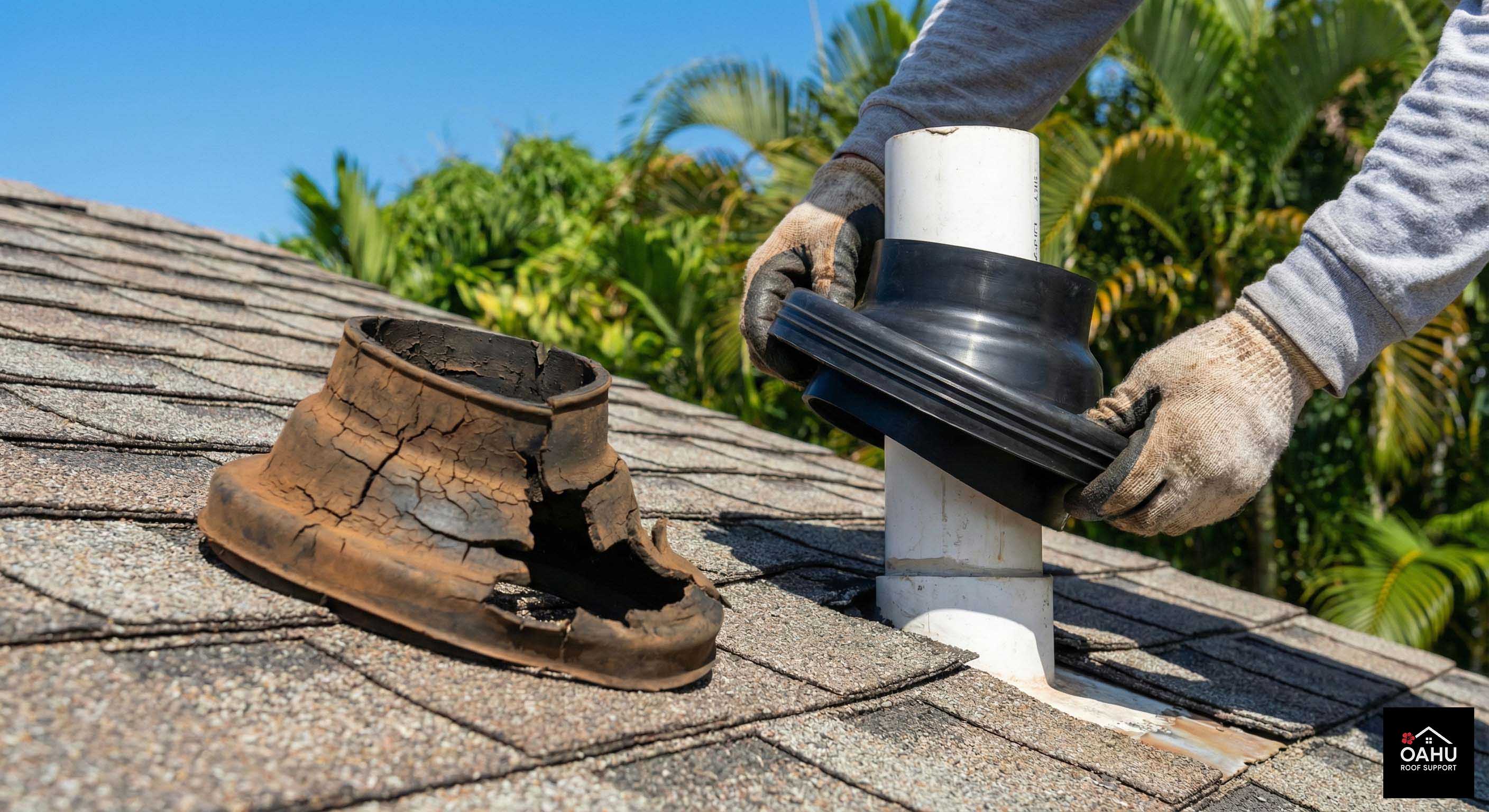
The most common pipe jack failure in Hawaii is a cracked rubber boot. The flexible rubber or neoprene collar that seals around the pipe degrades in UV light, becoming brittle and cracking.
How It Happens: UV radiation breaks down the polymers in rubber and neoprene. The material loses flexibility, shrinks slightly, and develops cracks. Hawaii's intense sun accelerates this process dramatically compared to mainland conditions.
What You'll See: Visible cracks in the rubber collar, especially on the sun-facing side. The rubber may appear dry, faded, or brittle. In advanced cases, chunks of rubber may be missing entirely.
The Repair: We replace the entire pipe boot with a new unit featuring UV-resistant materials rated for Hawaii conditions. Simply patching cracked rubber is a temporary fix at best.
Rusted Metal Flashings
The metal base of pipe jacks corrodes over time, especially in Hawaii's salt air environment. Rust creates holes and weakens the seal between the flashing and roof surface.
How It Happens: Salt-laden trade winds deposit corrosive particles on your roof. Standard galvanized flashings eventually rust through, particularly at edges and seams. Coastal properties experience accelerated corrosion.
What You'll See: Orange or brown rust stains on the flashing, rough or pitted metal surfaces, holes in severe cases. Rust may be visible from the ground on lighter-colored roofs.
The Repair: We replace rusted flashings with new materials appropriate for your location. For coastal properties, we specify aluminum or stainless steel flashings that resist salt air corrosion.
Failed Sealant
Pipe jacks rely on sealant to create watertight bonds between the flashing and roof surface. This sealant degrades over time, creating gaps where water enters.
How It Happens: UV exposure and temperature cycling break down roofing sealants. The sealant shrinks, cracks, or pulls away from surfaces. In Hawaii's conditions, sealant failure is common within 5-10 years.
What You'll See: Gaps between the flashing edge and roof surface, cracked or missing sealant, sealant that has become hard and brittle rather than flexible.
The Repair: We remove old sealant, clean surfaces, and apply new high-quality sealant rated for Hawaii's UV exposure. For flashings that are otherwise sound, resealing can extend service life significantly.
Mechanical Damage
Pipe jacks can be damaged by foot traffic, falling debris, or improper handling during other roof work.
How It Happens: Workers accessing your roof for solar, satellite, HVAC, or other service may step on pipe jacks or knock them with equipment. Falling branches can crack boots or dent flashings.
What You'll See: Bent or dented flashings, torn boots, displaced or crooked pipe jacks. Damage is often obvious if you know to look.
The Repair: Damaged pipe jacks require replacement. We install new boots and ensure proper alignment and sealing.
Improper Installation
Pipe jacks that weren't installed correctly from the start are prone to early failure. Common installation defects include wrong-size boots, inadequate sealant, improper flashing overlap, and poor integration with surrounding roofing.
How It Happens: Previous roofers may have used whatever boot was on the truck rather than the correct size. Rushed installations skip proper sealing. DIY repairs often use inappropriate materials.
What You'll See: Boots that don't fit snugly around pipes, visible gaps, flashings that sit above surrounding shingles rather than beneath them, excessive or messy sealant application.
The Repair: We properly install correctly sized pipe jacks with appropriate integration into your roofing system.
Pipe Jack Materials for Hawaii Conditions
Not all pipe jacks are created equal. We specify materials engineered to withstand Hawaii's demanding environment:
EPDM Rubber Boots
EPDM (Ethylene Propylene Diene Monomer) rubber is the standard material for quality pipe boots. It offers good UV resistance and flexibility across a wide temperature range.
Standard EPDM: Basic EPDM boots are a significant upgrade from cheap rubber alternatives. They typically last 10-15 years in Hawaii conditions.
High-Temperature EPDM: For pipe jacks near hot exhaust vents or in areas of concentrated sun exposure, high-temperature EPDM boots handle temperatures up to 250°F without degrading.
Silicone Boots
Silicone pipe boots offer superior UV resistance compared to EPDM, making them excellent for Hawaii's intense sun exposure.
Advantages: Better UV stability means longer life in Hawaii conditions. Silicone remains flexible over a wider temperature range. Premium silicone boots can last 15-20+ years in Hawaii.
Best For: South and west-facing roof slopes with maximum sun exposure. Properties where accessing the roof for maintenance is difficult or expensive.
Metal Flashings
The metal base of pipe jacks must withstand Hawaii's corrosive environment:
Aluminum: Naturally corrosion-resistant, aluminum flashings are ideal for coastal Hawaii properties. They never rust, even in direct salt spray exposure.
Galvanized Steel: Standard galvanized steel works for inland properties with limited salt exposure. Not recommended for coastal or ocean-facing installations.
Lead: Traditional lead flashings are extremely durable and malleable but are being phased out due to environmental concerns. We can work with existing lead flashings or recommend alternatives.
Stainless Steel: For maximum durability in severe coastal exposure, stainless steel flashings provide excellent corrosion resistance.
All-In-One Solutions
Modern pipe jack systems combine boots and flashings into integrated units designed for reliable performance:
Perma-Boot: A retrofit solution that fits over existing pipe jacks, providing a new seal without removing old flashings. Useful when the existing flashing is sound but the boot has failed.
Master Flash: Flexible EPDM or silicone boots with aluminum bases, available in multiple sizes and configurations for different pipe diameters and roof pitches.
Other Roof Penetration Repairs
Pipe jacks aren't the only roof penetrations that fail. We repair all types of penetration flashings:
Exhaust Vent Flashings
Bathroom exhaust fans, range hood vents, and dryer vents all penetrate your roof and require proper flashing. These flashings fail in the same ways as plumbing vent pipe jacks.
HVAC Penetrations
Air conditioning refrigerant lines, condensate drains, and other HVAC components may pass through your roof. Proper sealing prevents leaks around these penetrations.
Electrical and Communication Conduits
Solar panel wiring, satellite cables, and electrical conduits create penetrations that require proper sealing. We ensure these penetrations are properly flashed and sealed.
Skylight Flashings
Skylights are major penetrations with complex flashing requirements. Failed skylight flashings cause significant leaks. We repair or replace skylight flashing systems to restore watertight integrity.
Chimney Flashings
Where chimneys meet roofs, step flashings, counter flashings, and cricket installations must work together to prevent leaks. Chimney flashings are common failure points that we repair using proper techniques and materials.
Pipe Jack Repair Across All of Oahu
We provide pipe jack and penetration flashing repairs across the entire island:
North Shore (Haleiwa, Kahuku, Laie): Direct ocean exposure means salt air corrosion is severe on the North Shore. We specify aluminum or stainless steel flashings for North Shore pipe jack repairs. Standard galvanized materials won't last.
Windward Coast (Kaneohe, Kailua): Higher rainfall on the Windward side means pipe jack leaks cause damage faster. We respond quickly to Kaneohe and Kailua calls because frequent rain accelerates water intrusion damage.
Ewa Beach and Kapolei: West Oahu's intense sun is exceptionally hard on rubber pipe boots. We see accelerated UV degradation in Ewa Beach and Kapolei and recommend premium UV-resistant boots for these areas.
Waianae Coast: Extreme sun exposure plus coastal salt air creates challenging conditions. We specify materials that handle both UV and corrosion for Waianae pipe jack repairs.
Mililani and Central Oahu: While further from the coast, Central Oahu still experiences salt-laden trade winds. Standard materials often work here, but we assess each property's specific exposure.
Honolulu and Hawaii Kai: Varied microclimates across Honolulu mean different requirements by neighborhood. Coastal Hawaii Kai needs salt-resistant materials, while inland areas may use standard flashings.
Insurance Coverage for Pipe Jack Damage
Pipe jack failures themselves are typically considered maintenance issues not covered by insurance. However, secondary damage from pipe jack leaks may be covered, and storm-damaged pipe jacks are generally covered:
Storm Damage: If wind, debris, or hail damaged your pipe jack, the repair is typically covered by homeowners insurance. A branch that cracks a pipe boot or high winds that tear a flashing loose are covered events.
Water Damage: Interior water damage resulting from any roof leak, including pipe jack failures, may be covered by your homeowners policy. The key is documenting when the leak was discovered and what damage resulted.
Maintenance vs. Sudden Damage: Insurance covers sudden, accidental damage, not gradual deterioration. A pipe jack that cracked from UV exposure over years isn't covered. A pipe jack damaged in last week's storm is covered. We document damage appropriately to support legitimate claims.
Our Approach: We inspect pipe jacks as part of comprehensive roof assessments. When we find storm-related damage, we document it for insurance purposes. When we find age-related deterioration, we recommend repair before it causes costly water damage.
Working With Your Insurance Company
We work with all major insurance carriers serving Oahu homeowners:
State Farm. Allstate. FICOH (First Insurance Company of Hawaii). Island Insurance. DTRIC. And all other Hawaii homeowners insurance providers.
Each insurance company handles pipe jack and penetration claims differently. Our experience with these carriers helps ensure appropriate documentation and claim handling.
The Pipe Jack Repair Process
Proper pipe jack repair requires more than slapping on a new boot. Here's our process:
Inspection: We inspect all pipe jacks and roof penetrations, not just the obvious problem. If one pipe jack has failed, others may be close behind. We check boots for cracking, flashings for rust, and sealant for integrity.
Damage Assessment: We examine the area around failed pipe jacks for water damage. If water has been entering, we check for rotted decking, damaged underlayment, and moisture in the attic space.
Material Selection: We specify replacement materials appropriate for your location and conditions. Coastal properties get corrosion-resistant metals. High-UV areas get premium boots. One size doesn't fit all.
Removal: We carefully remove failed pipe jacks, including old sealant and any deteriorated roofing material immediately surrounding the penetration.
Deck Repair: If decking around the penetration has rotted, we repair or replace it before installing new flashings. New pipe jacks on rotted deck won't last.
Installation: We install new pipe jacks according to best practices, with proper integration into surrounding roofing materials. Flashings go under upslope shingles and over downslope shingles to ensure water shedding.
Sealing: We apply appropriate sealant at all critical points, using products rated for Hawaii's UV exposure. Proper sealing is essential for long-term performance.
Final Inspection: We verify that all repairs are complete and watertight. You receive documentation of work performed.
Why Choose Oahu Roof Support for Pipe Jack Repairs
We're not a roofing contractor. We're your local advocate who ensures you get the best outcome for your pipe jack repair needs:
Free Inspections: No obligation inspections for homeowners concerned about pipe jacks or experiencing leaks. We check all penetrations and provide honest assessments.
Material Expertise: We specify the right materials for your location, not whatever's on the truck. Coastal properties get corrosion-resistant metals. High-UV areas get premium boots. This attention to materials prevents premature failure.
Comprehensive Approach: We don't just fix the leaking pipe jack. We check all penetrations and surrounding areas, catching problems before they cause damage.
Insurance Navigation: When pipe jack damage is storm-related, we document it appropriately for insurance claims. We help you understand what's covered and what's maintenance.
Independence: We're not tied to any single roofing company. We recommend repairs when repairs make sense and full roof assessment when pipe jack failure indicates broader problems.
Licensed Contractors: Every contractor we work with is licensed, insured, and experienced with penetration flashing repairs.
Frequently Asked Questions About Pipe Jack Repair
Why should I use Oahu Roof Support instead of calling a roofer directly?
Many roofers treat pipe jack repair as an afterthought, using whatever materials are convenient rather than what's best for your location. I ensure you get appropriate materials for Hawaii conditions, including corrosion-resistant metals for coastal areas and UV-resistant boots for high-exposure locations. I also provide comprehensive inspection of all penetrations, not just the obvious problem.
Do I pay more by going through Oahu Roof Support?
No. Roofing companies include their costs in pricing regardless of how you find them. The difference is that I ensure proper materials and comprehensive inspection. You're getting better quality work, not higher prices.
How much does pipe jack repair cost?
Basic pipe jack replacement typically runs $200 to $400 per penetration. More complex repairs involving deck damage, multiple penetrations, or specialty materials range from $400 to $800+. Given that a failed pipe jack can cause thousands in water damage, this is one of the best-value roof repairs available.
How do I know if my pipe jacks need repair?
Warning signs include water stains on ceilings (especially near bathrooms or kitchens), visible cracks in rubber boots, rust on metal flashings, or gaps between flashings and roof surface. If your roof is 10+ years old, a pipe jack inspection is worthwhile even without visible problems.
How long do pipe jacks last in Hawaii?
Standard rubber pipe boots typically last 8-12 years in Hawaii's intense UV environment. Premium EPDM or silicone boots can last 15-20+ years. Metal flashings last longer but depend on material and coastal exposure. Aluminum flashings last indefinitely; standard galvanized may rust within 10-15 years in coastal areas.
Can I just seal the crack in my pipe boot?
Sealing a cracked boot is a temporary fix at best. Once the rubber has degraded enough to crack, it will continue cracking. Proper repair means replacing the boot entirely. Sealant repairs typically last 1-2 years; replacement lasts 10-20 years.
Will my insurance cover pipe jack repair?
Pipe jack failure from age and UV exposure is typically not covered, as it's considered maintenance. However, pipe jacks damaged by storms, wind, or debris are covered. Interior water damage from pipe jack leaks may also be covered. We help you understand what's claimable and document appropriately.
Should I replace all pipe jacks at once?
If one pipe jack has failed from age, others installed at the same time are likely close behind. Replacing all pipe jacks at once is often more economical than multiple service calls. We inspect all penetrations and recommend the most cost-effective approach.
Can pipe jack leaks cause mold?
Yes. Water entering around a pipe jack creates the moisture conditions mold needs. Hawaii's warmth and humidity accelerate mold growth. A small leak can lead to significant mold problems if left unaddressed. This is why prompt pipe jack repair is important.
What if my deck is rotted around the pipe jack?
If water intrusion has rotted the decking, we repair or replace affected sections before installing new pipe jacks. Installing new flashings on rotted deck just continues the cycle of failure. Deck repair adds cost but is essential for lasting results.
How often should pipe jacks be inspected?
We recommend inspecting pipe jacks annually and after any significant storm. For older roofs (10+ years), periodic inspection catches deteriorating pipe jacks before they leak. It's much cheaper to proactively replace a failing pipe jack than to repair water damage.
What if I'm not happy with the contractor's work?
Because I'm independent, I have real accountability. If a contractor in my network does poor work or uses inappropriate materials, I address it. My reputation depends on connecting you with contractors who do quality pipe jack repairs.
Schedule Your Free Pipe Jack Inspection Today
Pipe jacks are Hawaii's #1 source of roof leaks, and repair is one of the most affordable ways to protect your home from water damage. Whether you've noticed a leak, want to check aging pipe boots, or just want peace of mind, we're here to help.
Whether you're in Mililani, Ewa Beach, the North Shore, Kaneohe, Waianae, Honolulu, or anywhere else on Oahu, we provide pipe jack inspections and repairs across the island.
What happens when you reach out:
Fill out the form below or call us directly. We'll contact you within 24 hours to schedule. Your inspection is typically completed within 48 hours. You'll receive a comprehensive assessment of all pipe jacks and roof penetrations, with honest recommendations for repair or monitoring.
Prefer to call? Reach us directly at 808-766-8023