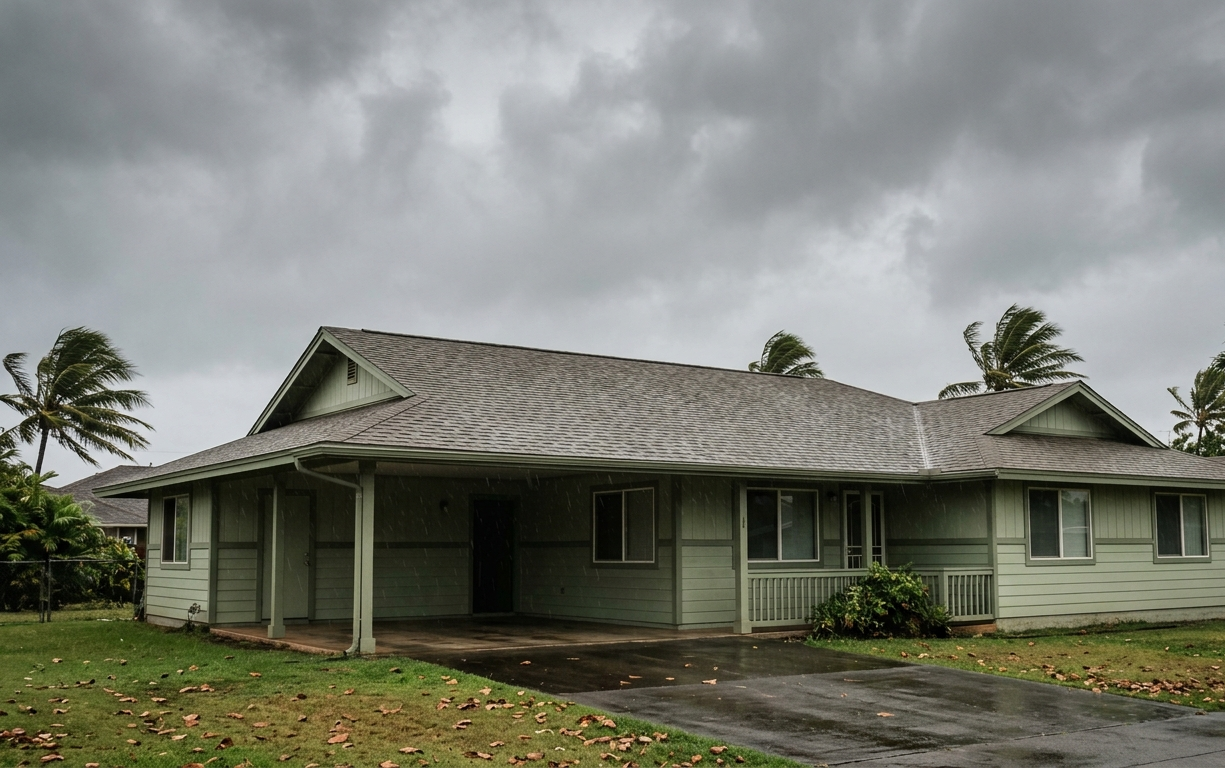
Hurricane Coverage in Hawaii Is Its Own Animal
Aloha. Most Hawaii homeowners assume their insurance has them covered if a hurricane hits. The reality is more complicated, and the gaps tend to surprise people at the worst possible time. With NOAA forecasting an above-normal 2026 season, now is the time to understand exactly what your policy does and does not do.
Here is hurricane insurance in Hawaii, in plain English.
Hurricane Damage Is Not the Same as Regular Wind Damage
This is the first thing to get straight. Everyday wind and storm damage, like the kind from a passing trade-wind squall or a Kona Low, is generally covered under your standard homeowners policy with your normal deductible. We cover that in detail in our guide to wind-damage claims.
A declared hurricane is different. When a named storm triggers your hurricane coverage, a separate set of rules and a separate, usually much larger, deductible kicks in. Knowing which one applies to your situation can be the difference of thousands of dollars.
The Hurricane Deductible: The Number That Catches People Off Guard
Unlike your standard deductible, which is usually a flat dollar amount, a hurricane deductible is commonly a percentage of your home's insured value, often somewhere in the range of 1% to 5%. That sounds small until you do the math.
Here is an illustration. Say your home is insured for $700,000 and your hurricane deductible is 2%. That means you would pay the first $14,000 of hurricane damage out of pocket before your coverage pays a dime. At 5%, it would be $35,000. This is not meant to scare you, it is meant to make sure you know your number now, not after a storm.
Find your declarations page, look for the hurricane or named-storm deductible, and calculate your actual dollar figure today.
What Hurricane Insurance Does and Does Not Cover
Coverage varies by policy, but in general:
- Usually covered: wind damage to your roof and structure, and rain that gets in because the wind first damaged the building, for example rain through a roof the storm tore open.
- Usually not covered: flooding and storm surge. Flood is a separate kind of coverage, typically through a flood policy or the National Flood Insurance Program. If a hurricane pushes water into your home from the ground up, that is a flood claim, not a wind claim.
That wind-versus-water distinction is one of the most common sources of denied claims, so it is worth understanding before you need it. If you are in or near a flood-prone area, ask your agent whether you need separate flood coverage.
Why Premiums Keep Climbing
If your insurance bill has jumped, you are not imagining it. Hawaii is in the middle of a property-insurance squeeze that the state has officially recognized. The Maui wildfire, rising global reinsurance costs, and a hardening market have pushed premiums up and made some coverage harder to get.
It got serious enough that in July 2025, Governor Green signed a law to help stabilize the market. He called the rising cost of insurance "yet another unbearable burden" for Hawaii residents, which is exactly how a lot of homeowners feel at renewal time.
The Hawaii Hurricane Relief Fund, Then and Now
Hawaii has been here before. After Hurricane Iniki devastated Kauai in 1992, private insurers pulled back from the market, and the state created the Hawaii Hurricane Relief Fund in 1993 to fill the gap. At its peak, by early 1999, it provided hurricane coverage for roughly 155,000 policyholders statewide. It even offered premium credits for hardening your home, including a discount for a new roof properly tied into the walls.
The fund went dormant for years once private insurers returned. The 2025 law reactivated it, but with an important limit that every homeowner should understand: the reactivated fund currently provides hurricane coverage for condo and townhouse associations, not individual single-family homeowner policies. In other words, you cannot go buy a relief-fund policy for your house today, and those old roof-hardening credits are no longer offered. The history is still useful, though, because it proves a point that has always been true here: a stronger, well-anchored roof has real value when the wind comes.
Condo and Townhouse Owners: Pay Extra Attention
If you own a condo or live in a townhouse governed by an association, your hurricane risk has a twist. Your building's master policy, carried by the AOAO, is where a lot of the hurricane exposure sits, and many associations have faced steep premium hikes or coverage shortfalls. The relief fund's reactivation was aimed squarely at this problem. If you are on or near your association board, it is worth confirming the building's hurricane coverage is adequate, because a shortfall there can land on owners through special assessments.
How to Get Your Policy Hurricane-Ready
- Read your declarations page and write down your hurricane deductible as a real dollar figure.
- Photograph and inventory your home and roof while they are in good shape, so you can prove what the storm changed.
- Ask about flood coverage if you are anywhere water could reach you.
- Talk to your agent about whether your dwelling coverage actually reflects what it would cost to rebuild today.
- Keep your roof in good, documented condition. Insurers increasingly look at roof condition, and a solid roof helps you stay insurable at a fair price.
If a Hurricane Damages Your Home
Document everything before you touch it, do not throw damaged materials away, and get your own professional inspection before you accept the insurer's first number. The adjuster who comes out works for the insurance company, so having independent documentation on your side levels the playing field. For larger or disputed claims, you can also hire a licensed public adjuster to advocate for you. We help homeowners across the island document damage and navigate the process with insurance claim assistance, so you are not going it alone.
Frequently Asked Questions
Does my homeowners insurance cover hurricane damage in Hawaii?
Often it is a separate piece. Everyday wind damage usually falls under your standard policy, but a declared hurricane typically triggers separate hurricane coverage with its own, larger deductible. Read your policy to see how yours is structured.
How much is a hurricane deductible in Hawaii?
It is commonly a percentage of your home's insured value rather than a flat amount, often in the 1% to 5% range. On a home insured for $700,000, a 2% deductible is $14,000. Check your declarations page for your exact figure.
Does hurricane insurance cover flooding?
Generally no. Flooding and storm surge are usually excluded and require separate flood coverage, often through the National Flood Insurance Program. Wind damage and wind-driven rain are handled under your hurricane or homeowners coverage.
Can I buy coverage from the Hawaii Hurricane Relief Fund?
Not as an individual homeowner right now. The reactivated fund currently serves condo and townhouse associations, not single-family homeowner policies. Your hurricane coverage today comes through your private insurer.
Is it worth hiring a public adjuster?
For a large or disputed claim, it can be. A licensed public adjuster works for you, not the insurance company, and can help document and negotiate your claim. For many homeowners, starting with an independent roof inspection and good documentation is the first step.
Do Not Face the Storm, or the Insurer, Alone
I am Art, and I run Oahu Roof Support. We help homeowners across Oahu, from the North Shore to Mililani, Ewa, Kapolei, the Waianae Coast, Waipahu, and Kaneohe, understand their coverage, document their roofs, and handle storm-damage claims the right way. We will inspect your roof, tell you straight what shape it is in, and coordinate trusted, licensed crews for any work you need. No pressure, no mainland storm chasers, just honest guidance from people who know Hawaii roofs and Hawaii insurance.
Want a clear picture before the season peaks? Call or text us at (808) 517-5387, or fill out the form below, and we will set up a free roof check.
Stay safe out there, and mahalo for reading.
This article is general information, not insurance or legal advice. Coverage varies by policy, so check your own policy and talk with your agent about your specific situation. Insurance facts reflect Hawaii law and market conditions as of June 2026.